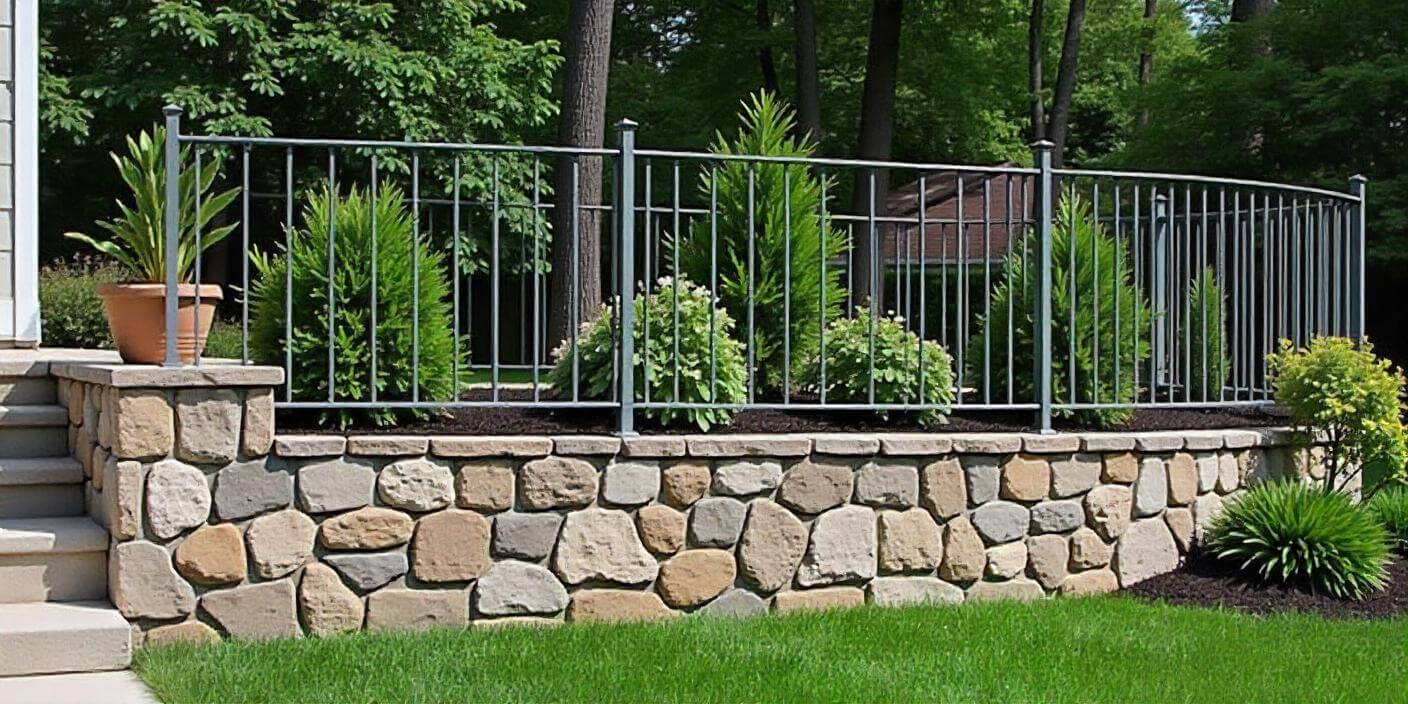
If you have ever seen a traditional stone boundary, garden wall, or retaining wall made from carefully arranged stones with no visible cement joints, you have seen an example of stone not packed with mortar walls. These walls are commonly known as dry stone walls or dry-stone walls.
Unlike conventional masonry, dry stone construction does not depend on cement or mortar to bond individual stones together. Instead, stability comes from the weight of the stones, friction, careful positioning, interlocking shapes, wall geometry, and a properly prepared foundation.
Stone not packed with mortar walls are used for property boundaries, gardens, landscaping, rural properties, retaining walls, terraces, and traditional architecture. Their natural appearance and ability to allow water to pass through the wall make them particularly useful in outdoor environments.
Table of Contents
ToggleWhat Are Stone Not Packed With Mortar Walls?
Stone not packed with mortar walls are walls constructed by carefully placing and interlocking natural stones without using mortar or cement as a bonding material. The commonly accepted construction term is dry stone wall.
The stones are positioned so that their weight and shape create a stable wall. Larger stones are generally used toward the foundation and structural areas, while smaller stones can be used to fill gaps and improve stability.
A dry stone wall should not be confused with randomly stacking stones. Professional dry stone construction involves deliberate stone selection, a stable foundation, appropriate wall thickness, correct stone placement, and suitable wall geometry.
The technique is particularly useful where natural drainage is important because water can move through the spaces between stones rather than becoming trapped behind an impermeable mortar layer.
How Do Stone Not Packed With Mortar Walls Stay Together?
Stone not packed with mortar walls stay together through gravity, friction, interlocking stones, correct wall geometry, and careful construction rather than cement or mortar.
Several factors work together:
- Gravity: The weight of each stone presses downward and helps stabilize the wall.
- Friction: Rough stone surfaces create resistance against movement.
- Interlocking: Stones are positioned so that adjacent pieces support and lock against each other.
- Wall thickness: A sufficiently thick wall provides greater stability.
- Wall batter: Many dry stone walls are built with a slight inward slope toward the top.
- Foundation: A stable base prevents excessive settlement or movement.
- Stone placement: Large, stable stones form the primary structure while smaller stones can fill voids.
- Drainage: Water can pass through a properly constructed wall, reducing pressure behind retaining walls.
This combination is what makes dry stone construction different from simply placing stones on top of one another.
How Are Stone Not Packed With Mortar Walls Built?
A stable dry stone wall starts with proper ground preparation and foundation work, followed by carefully arranged layers of interlocking stones.
1. Prepare the Ground
The first step is preparing the area where the wall will be constructed. Loose soil, vegetation, roots, and unstable material should be removed.
The wall alignment should then be marked according to the required length and shape. Ground conditions are particularly important when the wall will retain soil or be exposed to significant loads.
2. Build a Stable Foundation
The foundation is one of the most important parts of a mortarless stone wall because the entire wall depends on a stable base.
A suitable foundation should be prepared according to the site conditions and wall type. Larger stones are generally placed toward the bottom, where they provide a stable base for the courses above.
For retaining walls and larger structures, foundation requirements should be assessed according to soil conditions, wall height, drainage, and expected loads.
3. Place the Base Stones
The largest and most stable stones are positioned at the bottom of the wall.
Each stone should sit securely without excessive rocking. The objective is to create a stable first course that can support the rest of the wall.
4. Build the Wall Layer by Layer
The wall is gradually built upward using carefully selected stones.
Stones should be positioned so that joints do not form continuous vertical lines through multiple courses. Interlocking arrangements distribute loads more effectively and help prevent individual stones from becoming loose.
The wall should also maintain an appropriate thickness and profile throughout its height.
5. Use Smaller Stones for Packing
Smaller stones can be positioned within gaps between larger stones.
These stones help improve the overall stability of the wall. However, loose material should not be used as a substitute for proper structural arrangement.
6. Create the Correct Wall Angle
A slight inward slope, known as batter, can improve the stability of a dry stone wall.
Instead of building every course perfectly vertical, the wall may gradually slope inward toward the top. This helps keep the center of gravity within the wall and can improve resistance to outward movement.
The appropriate geometry depends on the wall’s height, width, purpose, stone type, and site conditions.
7. Add Through Stones
Longer stones can extend deeper into the wall structure and help tie different sections together.
Through stones are particularly useful in wider walls because they help connect the outer faces with the interior of the wall.
8. Finish With Cap or Coping Stones
The final course consists of carefully selected top stones, often called coping or cap stones.
These stones provide a finished appearance and can help protect the top of the wall from weather exposure. Their arrangement should contribute to the overall stability of the wall.
Types of Stone Not Packed With Mortar Walls
Stone not packed with mortar walls can be designed for different purposes, including boundaries, landscaping, retaining soil, and traditional architecture.
Dry Stone Boundary Walls
Dry stone boundary walls are commonly used to separate properties, gardens, agricultural land, and rural areas.
They provide a natural alternative to concrete or conventional masonry boundaries and can blend easily with surrounding landscapes.
Dry Stone Retaining Walls
Dry stone retaining walls are designed to hold back soil while allowing water to drain through the wall.
They can be useful on sloped properties, terraces, gardens, and landscaped areas. However, retaining walls experience lateral soil pressure, so their design requires more consideration than a simple decorative wall.
Wall height, soil characteristics, drainage, foundation conditions, surcharge loads, and wall geometry should all be considered.
Dry Stone Garden Walls
Low dry stone walls can define flower beds, pathways, lawns, terraces, and outdoor seating areas.
They are particularly effective in natural landscape designs because the stone provides texture without creating a highly artificial appearance.
Freestanding Dry Stone Walls
Freestanding walls support themselves rather than retaining soil.
They can be used as property boundaries, landscape features, garden dividers, and architectural elements around residential properties.
Traditional Dry Stone Walls
Dry stone construction has been used in many regions for agricultural boundaries, rural structures, terraces, and heritage landscapes.
Traditional construction techniques vary according to locally available stone, regional climate, building traditions, and the intended purpose of the wall.
Best Stones for Stone Not Packed With Mortar Walls
The best stone for a dry stone wall is durable, weather-resistant stone that is suitable for the local environment and can be arranged securely.
Common options include:
- Granite
- Limestone
- Sandstone
- Fieldstone
- Slate
- Other durable locally available natural stones
Stone selection should consider durability, shape, size, density, weather resistance, availability, and the purpose of the wall.
For example, stone that works well for a decorative garden wall may not automatically be appropriate for a retaining wall. Local climate and stone characteristics also influence long-term performance.
Advantages of Stone Not Packed With Mortar Walls
The main advantages of stone not packed with mortar walls are their natural appearance, drainage capability, durability, and ability to be repaired without rebuilding the entire wall.
Natural Appearance
Dry stone walls have an organic appearance that works particularly well with gardens, landscaping, farms, and traditional architecture.
No Mortar Required
The construction does not rely on cement or mortar joints between individual stones. This can simplify the material composition of the wall, although skilled labour remains important.
Excellent Drainage
One of the major advantages of dry stone construction is its permeability.
Water can move through spaces within the wall, which can be particularly beneficial for certain retaining wall applications. Proper drainage design remains essential because drainage alone does not eliminate soil pressure.
Can Accommodate Some Movement
A properly constructed dry stone wall can accommodate certain minor movements without behaving like a completely rigid mortared structure.
This does not mean that any movement is safe. Significant displacement, bulging, cracking in surrounding structures, or instability should be professionally assessed.
Easier Localized Repairs
If an individual stone becomes displaced, it may be possible to reposition or replace that stone without demolishing the entire wall.
Long Service Life
Well-designed and properly constructed dry stone walls can remain functional for many years. Their service life depends on stone durability, foundation conditions, drainage, workmanship, weather, and maintenance.
Disadvantages of Stone Not Packed With Mortar Walls
The main disadvantages are the need for skilled workmanship, careful stone selection, longer construction time, and limitations for certain structural applications.
A dry stone wall is not automatically easier or cheaper to construct simply because it does not use mortar.
Poorly arranged stones can become unstable. Inadequate foundations can cause settlement, while poor drainage and incorrect wall geometry can create serious problems in retaining applications.
For tall walls, retaining walls, walls near buildings, or walls exposed to heavy loads, professional assessment is recommended.
Stone Not Packed With Mortar Walls vs Mortared Stone Walls
| Feature | Stone Not Packed With Mortar Walls | Mortared Stone Walls |
|---|---|---|
| Mortar | Not used | Used |
| Stability | Gravity, friction and interlocking | Mortar bonding and stone arrangement |
| Drainage | Generally permeable | Depends on wall design |
| Appearance | Natural and rustic | More uniform |
| Construction | Requires careful stone placement | Conventional masonry methods |
| Repair | Individual stones may be repositioned | Mortar joints may require repair |
| Flexibility | Can accommodate some movement | Generally more rigid |
The right system depends on the project. A homeowner choosing a garden boundary has different requirements from someone constructing a retaining wall beside a building.
Are Stone Not Packed With Mortar Walls Strong?
Yes, properly designed and constructed dry stone walls can be strong and durable, but their strength depends on construction quality and site conditions.
Important factors include:
- Foundation stability
- Stone quality
- Stone arrangement
- Wall thickness
- Wall height
- Batter
- Interlocking
- Through stones
- Drainage
- Soil pressure
- Expected loads
A low decorative garden wall and a tall retaining wall should not be treated as the same construction problem.
If a wall is retaining soil, located near a building, exposed to vehicle loads, or supporting a significant load, professional structural assessment should be considered.
Can Stone Not Packed With Mortar Walls Be Used as Retaining Walls?
Yes, dry stone construction can be used for retaining walls, but the wall must be designed to resist soil pressure and manage water effectively.
Retaining walls are different from simple boundary walls because the retained soil applies lateral pressure to the wall.
Drainage is especially important. Water accumulating behind a retaining wall can increase pressure and contribute to instability. The wall’s height, thickness, foundation, batter, drainage arrangement, soil conditions, and loads above the retained area must therefore be considered.
For larger or structurally important retaining walls, consult a qualified structural or civil engineering professional before construction.
Cost of Stone Not Packed With Mortar Walls
The cost of stone not packed with mortar walls depends more on stone, labour, foundation, wall dimensions, transportation, and site conditions than on mortar alone.
Key cost factors include:
- Type and quality of stone
- Local stone availability
- Transportation distance
- Wall height
- Wall thickness
- Total wall length
- Ground preparation
- Foundation requirements
- Skilled labour
- Site accessibility
- Drainage requirements
Removing mortar from the specification does not automatically make a wall inexpensive. Dry stone construction requires careful stone selection and skilled placement, which can increase labour requirements.
For an accurate project estimate, the wall dimensions, stone type, site conditions, location, and intended use should be assessed before quoting a final cost.
Maintenance of Stone Not Packed With Mortar Walls
Dry stone walls require periodic inspection to identify loose stones, erosion, vegetation growth, drainage problems, or changes in wall alignment.
Maintenance may include:
- Checking for displaced stones.
- Repositioning loose stones where appropriate.
- Replacing damaged stones.
- Removing problematic vegetation.
- Checking drainage around retaining walls.
- Inspecting the wall after heavy rainfall.
- Maintaining surrounding soil to reduce erosion.
Early maintenance is generally preferable to allowing a small displaced section to develop into a larger structural problem.
Where Are Stone Not Packed With Mortar Walls Used?
Stone not packed with mortar walls are commonly used where a natural, durable, and permeable wall is desirable.
Applications include:
- Residential gardens
- Farm properties
- Property boundaries
- Retaining walls
- Driveways
- Landscaping
- Terraced gardens
- Rural architecture
- Heritage restoration
- Natural landscape design
Their versatility makes them suitable for both functional and decorative applications.
Stone Not Packed With Mortar Walls for Modern Homes
Modern homes can use dry stone walls as landscape and architectural features that connect contemporary buildings with natural materials.
They can be incorporated around:
- Main entrances
- Driveways
- Garden boundaries
- Outdoor seating areas
- Terraces
- Sloped landscapes
- Garden pathways
Natural stone can provide visual contrast against concrete, glass, metal, wood, and other contemporary materials.
For residential design, the wall should be selected according to the home’s architectural style, surrounding landscape, local stone availability, and functional requirements.
Stone Not Packed With Mortar Walls vs Randomly Stacked Stones
A properly constructed dry stone wall is engineered through stone placement and geometry, while randomly stacked stones may have little structural stability.
This distinction is important.
Dry stone construction involves a stable foundation, carefully selected stones, interlocking courses, appropriate wall thickness, suitable batter, and deliberate placement.
Simply piling stones on top of one another does not provide the same level of control.
If stones are poorly positioned or the wall lacks a stable foundation, individual pieces may move and the wall may eventually become unstable.
Safety and Structural Considerations
Stone not packed with mortar walls should be professionally assessed when they are tall, retain soil, are close to buildings, or are exposed to significant loads.
Particular attention should be given to:
- Retaining walls
- Tall boundary walls
- Walls near buildings
- Walls beside roads or driveways
- Walls exposed to vehicle loads
- Sloping sites
- Poor soil conditions
- Areas with significant water movement
Local construction requirements may also apply depending on the location and type of project.
The safest approach is to distinguish decorative landscaping from structural construction. A low garden wall may have relatively simple requirements, while a retaining wall supporting soil beside a building can have significant engineering implications.
Conclusion
Stone not packed with mortar walls are a durable and natural form of wall construction that uses carefully arranged stones instead of cement or mortar joints.
Their stability comes from gravity, friction, interlocking stones, correct wall geometry, foundation preparation, and skilled construction. This makes them fundamentally different from randomly stacked stones.
Dry stone walls can be used for garden boundaries, landscaping, rural properties, retaining walls, terraces, driveways, and traditional architecture. Their natural appearance and permeability make them particularly attractive for outdoor applications.
However, the absence of mortar does not mean that the construction is simple or automatically inexpensive. Proper stone selection, foundation preparation, wall thickness, batter, drainage, and stone placement all affect performance.
For a low decorative wall, dry stone construction can be an attractive landscaping option. For retaining walls, tall boundaries, walls near buildings, or structures exposed to significant loads, professional design and assessment are the safer approach.
The core principle is simple: stone not packed with mortar walls work because the stones are carefully engineered through placement and geometry, not because they are simply stacked without cement.
Frequently Asked Questions
What are stone not packed with mortar walls called?
Stone not packed with mortar walls are commonly called dry stone walls or dry-stone walls. They are constructed without using mortar between the stones and depend on careful placement, gravity, friction, and interlocking.
How do stone not packed with mortar walls stay together?
They stay together through gravity, friction, interlocking stones, proper wall geometry, and a stable foundation. The arrangement of the stones is critical to the wall’s stability.
Are stone walls without mortar strong?
Yes, a properly constructed dry stone wall can be strong and durable. Its performance depends on the foundation, stone quality, wall geometry, drainage, construction technique, and intended use.
Can stone not packed with mortar walls be used for retaining walls?
Yes, they can be used for retaining applications, but retaining walls require careful structural and drainage design. Larger or heavily loaded retaining walls should be assessed by a qualified professional.
What is the best stone for a wall without mortar?
Durable natural stone such as granite, limestone, sandstone, fieldstone, or suitable local stone can be used. The best choice depends on durability, stone shape, weather conditions, availability, and the purpose of the wall.
Are stone not packed with mortar walls cheaper?
Not necessarily. Although mortar is not required, the project can still involve substantial costs for natural stone, transportation, foundations, site preparation, and skilled labour.
How long do stone walls without mortar last?
A well-built dry stone wall can remain functional for decades or much longer when durable stone, proper construction, drainage, and maintenance are used. Actual service life depends heavily on local environmental and structural conditions.
Can I build stone not packed with mortar walls myself?
Small decorative garden walls may be suitable for experienced DIY construction, but retaining walls and structurally important walls should be professionally designed and constructed. Safety becomes increasingly important as wall height, soil pressure, and nearby loads increase.