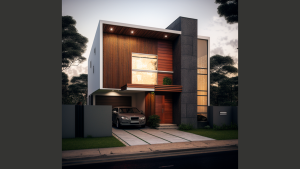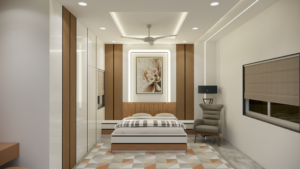
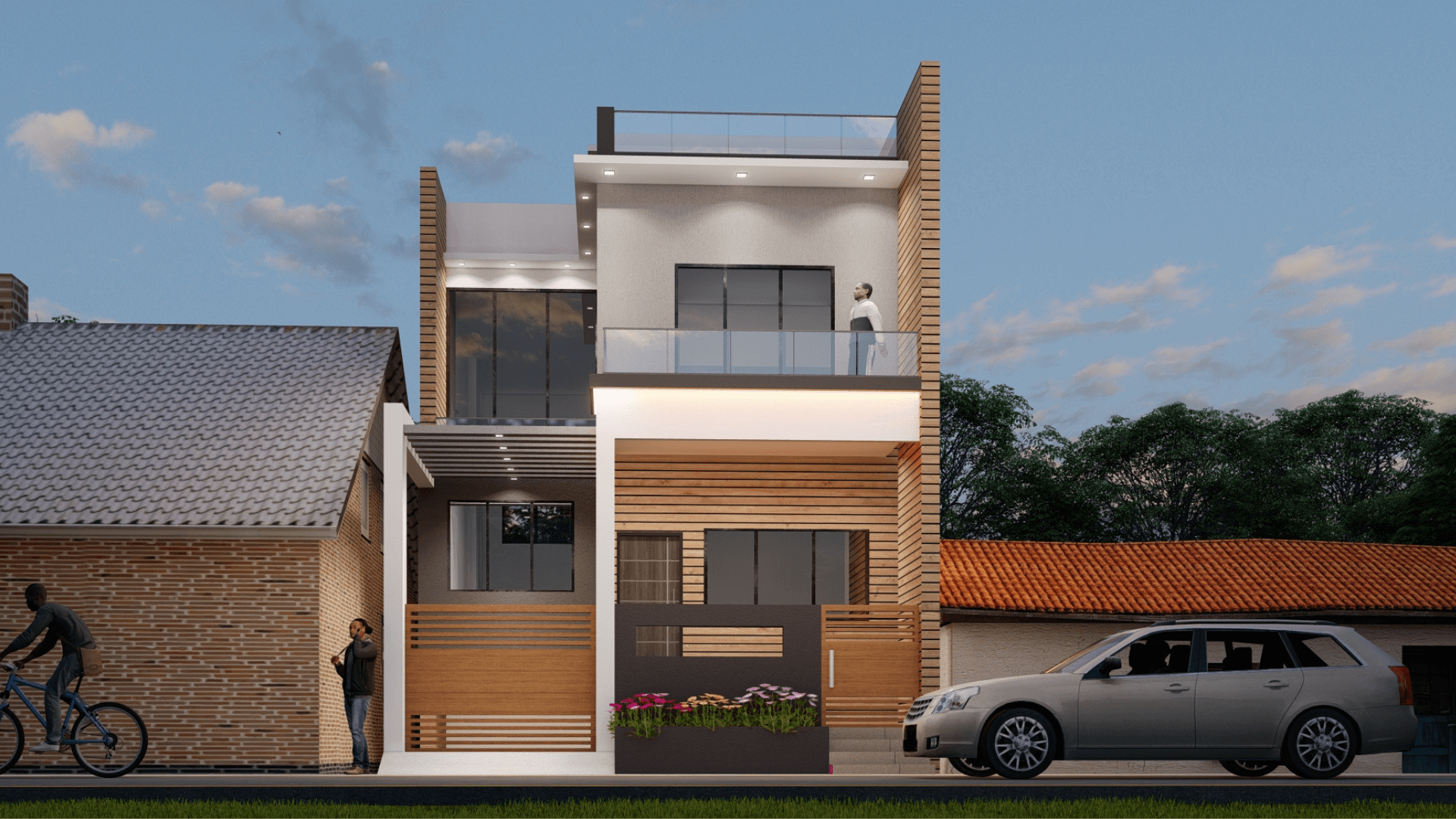
Planning a home on a 25×45 plot is one of the smartest decisions a middle-class Indian family can make in 2026. You get 1,125 square feet of total plot area, which is enough to build a proper 2BHK with parking, a decent elevation, and even scope for a first floor later. This plot size works beautifully in most Indian cities because it fits standard residential layouts without feeling cramped or oversized.
What makes 25×45 so popular is its proportions. The 25-foot width is wide enough to fit two rooms side by side (each around 10 feet wide after accounting for wall thickness), and the 45-foot depth gives you room to stack your living area, bedrooms, kitchen, and utility zone one behind the other without the plan feeling like a corridor. You can realistically plan a 2BHK on the ground floor, leave structural provision for a first floor, and still have space for covered parking at the front.
In this guide we cover 2BHK layout ideas, east, west, and north facing Vastu plans, car parking design, G+1 options, 3D elevation styles, and actual construction costs for 2026.
Table of Contents
ToggleUnderstanding the 25×45 House Plan (1125 Sq Ft Layout Guide)
Before any design begins, understanding your net buildable area matters. On a 25×45 plot, you rarely build across the full footprint. Most municipal bodies in India require a front setback of 3 feet, side setbacks of 1.5 feet on each side, and a rear setback of 1.5 to 3 feet. After these deductions, your actual ground floor built-up area lands somewhere between 850 and 950 sq ft depending on your local bylaws.
Within that footprint, a typical structural grid for a 25×45 home uses column spacing of around 10 to 12 feet in the width direction and 12 to 15 feet in the depth direction. This gives you three structural bays across the depth (front, middle, rear) and two bays across the width, which naturally divides your floor plan into functional zones. The front bay becomes your living and parking zone, the middle bay holds bedrooms, and the rear bay handles kitchen, utility, and toilet blocks.
Wall thickness in load-bearing construction is typically 9 inches for external walls and 4.5 inches for internal partition walls. In RCC framed structures, you can bring external walls down to 6 inches because the columns carry the load. This distinction matters because on a 25-foot wide plot, every inch of wall thickness you save translates to more usable room width.
Slab-to-slab height is typically kept at 10 to 10.5 feet for the ground floor in Indian residential construction, giving you a finished ceiling height of around 9 to 9.5 feet after flooring and plaster.
25×45 House Plan 2BHK Layout Ideas
Standard 2BHK Layout (Ground Floor)
A well-resolved standard 2BHK on a 25×45 plot typically distributes spaces this way. The entry foyer or passage is about 4×5 feet just inside the main door. The living room occupies the front zone and measures roughly 12×13 feet, which comfortably seats a 3+2 sofa set with a TV unit and still has circulation space.
Behind the living room sits the master bedroom at around 11×12 feet with an attached toilet of 5×6 feet. The second bedroom is around 10×10 feet with access to a common toilet of 4×6 feet. The kitchen is placed toward the rear and is typically 8×9 feet in an L-shaped or straight layout, opening into a small dining area of around 8×8 feet. A utility or wash area of 4×5 feet sits at the very back near the rear setback zone.
The circulation passage connecting bedrooms is kept at 3.5 feet wide minimum to meet NBC (National Building Code) guidelines and allow furniture movement. The staircase, if planned for future G+1, is accommodated in a 9×4 feet slot either along the side wall or at the rear of the plan.
Compact 2BHK with Smart Space Use
For families that prefer an open, airy feel over compartmentalized rooms, a few layout modifications make a big difference. Removing the wall between kitchen and dining and replacing it with a kitchen counter or island creates an open kitchen concept that visually enlarges the rear half of the house. This works especially well when the kitchen receives rear or side natural light.
The living room can double as a study or work-from-home zone by placing a built-in desk unit along one wall. Wardrobes are best built into the wall thickness itself (niche wardrobes) rather than placed as furniture, saving 1.5 to 2 feet of floor area per bedroom. A loft above the kitchen platform at 7 feet height adds storage without eating into usable floor space.
25×45 House Plan East Facing (Vastu-Friendly Design)
On an east facing 25×45 plot, the 25-foot side faces east toward the road. This orientation is considered highly auspicious in Vastu Shastra and also has a practical advantage: the main living areas receive direct morning sun from the east, which is gentle, warming, and energizing without the harsh heat of afternoon sun.
Vastu-Based Room Placement:
The main entrance is placed in the east direction, ideally in the Indra or Jayanta pada (northeast quadrant of the east wall as per the Vastu Purusha Mandala). The living room occupies the northeast zone of the plan, which keeps it open, bright, and light-filled. The kitchen is placed in the southeast corner (the Agni direction), which aligns with both Vastu principles and practical planning since the rear east-facing plots often have service lane access from this side. The master bedroom goes to the southwest because it is considered the most stable, grounded zone of the plot. Bathrooms are placed in the northwest or west zones.
From a sun path perspective, an east facing home in central India (like Nagpur, which sits at approximately 21 degrees north latitude) receives direct morning sun from roughly 6 AM to 10 AM on the east facade. By noon, the sun has moved overhead and the east facade is in shade, keeping the living room and bedrooms cool through the afternoon. This is a genuine thermal comfort advantage.
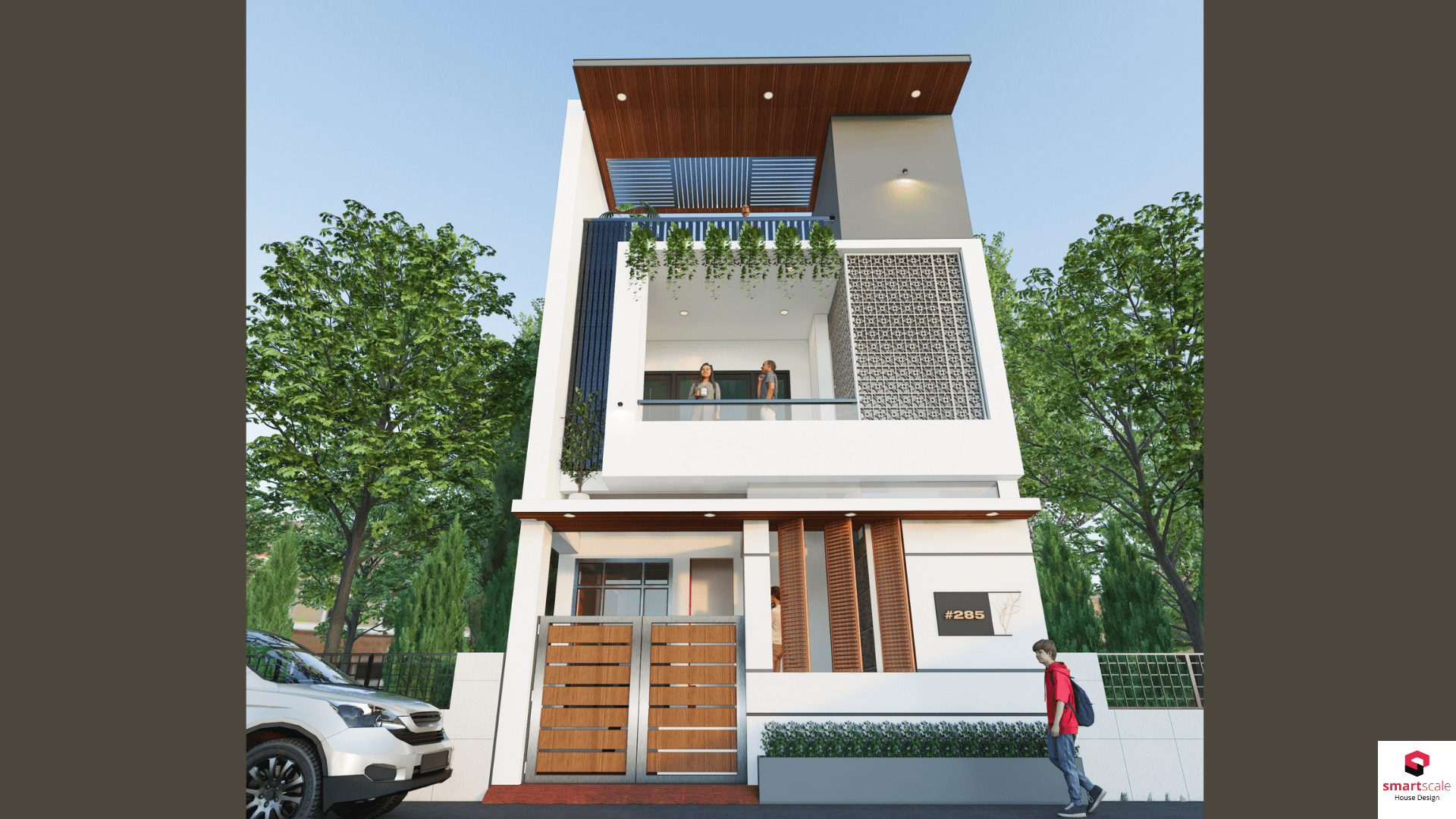
25×45 House Plan West Facing (Modern and Practical Layout)
West facing plots have an unfair reputation in Vastu discussions, but most qualified Vastu consultants will tell you that a well-designed west facing home is perfectly fine. In urban settings these plots often have wider road frontage, better visibility, and sometimes lower land cost, all of which work in your favor.
Layout Planning for West Facing:
The main entrance is placed in the west, but care is taken to avoid the southwest corner of the west wall (Nirrti pada), which is considered inauspicious. The ideal entrance position is in the Varun or Sugriva pada (center to slightly northwest on the west wall). The living room is placed along the west and northwest zone, and bedrooms go to the south and southwest.
The bigger design challenge with a west facing home in India is managing afternoon heat. The west facade receives direct sun from 1 PM to 6 PM, which can cause significant heat gain in summer months. The architectural solutions for this include projecting sun shades (chajjas) of at least 2 feet over all west-facing windows, using vertical fins or jaalis on the elevation to break direct sunlight, keeping west-facing window openings smaller (1×1.2 meter maximum) and placing larger windows on the north side for diffused light. A double wall or cavity wall on the west side with 2 to 3 inches of air gap also significantly reduces heat transmission.
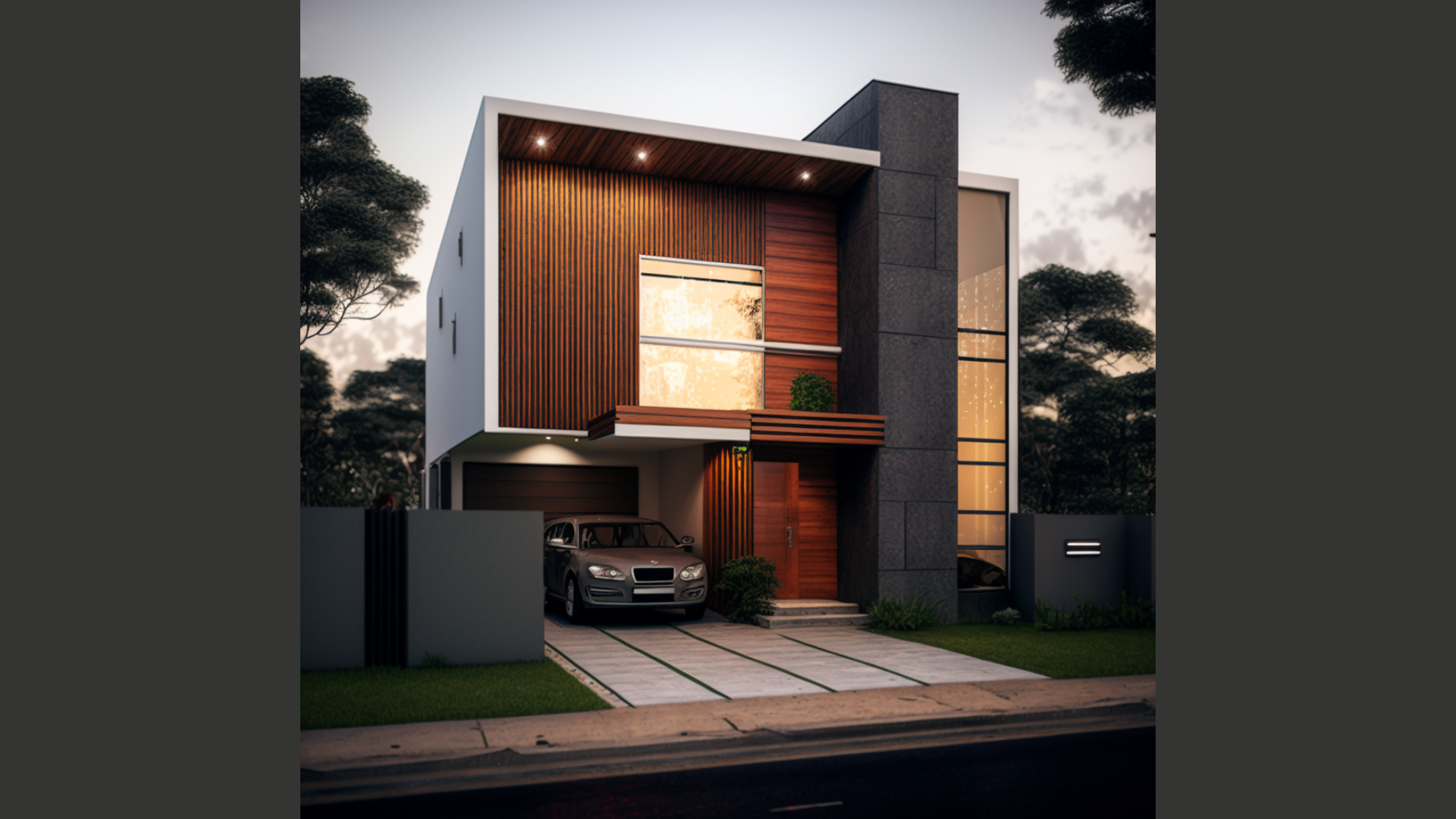
In terms of elevation design, west facing plots actually produce some of the best-looking modern facades because the afternoon light creates dramatic shadows across geometric box-type elevations, vertical fins, and textured surfaces.
25×45 House Plan North Facing (Best for Natural Light)
North facing plots are second only to east facing in Vastu preference and are genuinely the best orientation for consistent, diffused natural light throughout the day. In the northern hemisphere, the north sky provides soft, shadow-free daylight that is ideal for living areas and workspaces.
Layout Highlights:
The entrance is placed in the north, ideally in the northeast quadrant of the north wall (Soma or Bhallat pada as per Vastu). The living room faces north and receives consistent daylight from morning to evening without any direct harsh sun, making it comfortable year-round. Bedrooms are placed toward the south and southwest zones, which keeps them away from road noise and gives them privacy. The kitchen sits in the southeast or northwest corner.
From a sun path angle, a north facing home in Nagpur (21 degrees north) means the south facade receives the maximum sun exposure. This is actually a heating advantage in winters, where passive solar gain through south-facing bedroom windows can reduce heating requirements. In summers, the sun’s high angle means the south facade is largely shaded by its own roof overhang if a proper chajja of 2 to 2.5 feet is provided.
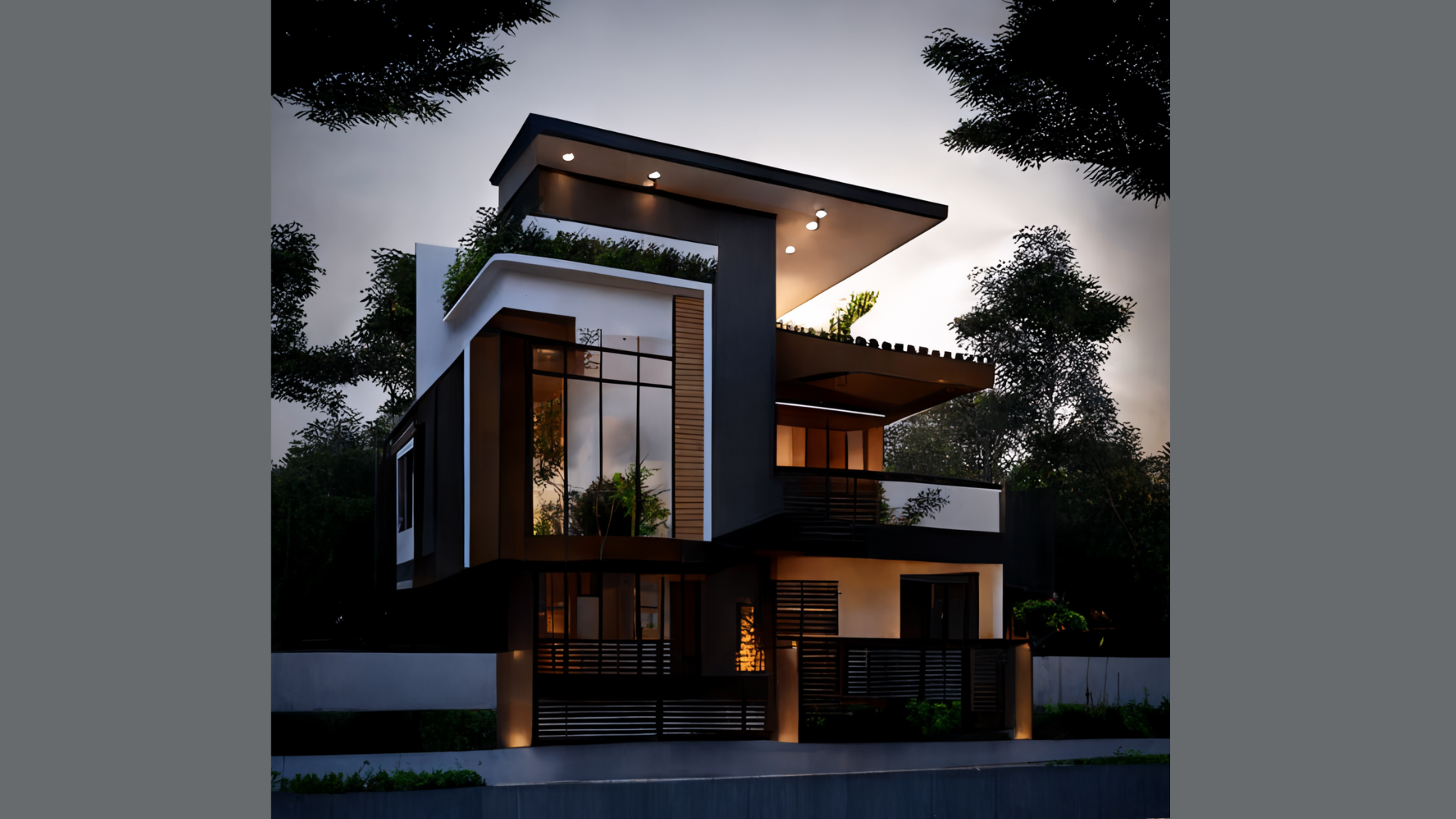
North facing plots also tend to have better cross-ventilation because prevailing summer winds in most parts of central and western India blow from the southwest, entering through south-facing openings and exiting through north-facing ones, creating a natural draft through the house.
25×45 House Plan with Car Parking
Parking on a 25-foot wide plot requires careful planning because a standard car needs a clear width of 8 feet and a length of 16 feet for comfortable parking and door opening. This means parking consumes about one-third of your plot width, leaving 17 feet for the building entrance and walkway.
Front Open Parking: The simplest option is an open driveway in the front setback zone. Most municipal bylaws allow parking within the setback area as long as it does not block the footpath. A 9×18 feet open parking bay in the front setback comfortably accommodates a sedan with space to open all four doors.
Covered Parking with Elevation: A covered parking porch at ground level with the main entrance beside it is the most common design for 25×45 homes. The porch slab is typically kept at 9 feet height to allow SUV clearance, and the slab itself projects 9 to 10 feet from the building line. This slab can double as a terrace or balcony for the first floor if you plan a G+1.
Stilt Parking for G+1 Homes: If you’re building ground plus one, a stilt floor with partial or full parking is an efficient option. In this case, the ground floor is raised by 3 to 4 feet and the stilt space below accommodates parking without consuming any floor plate. The stilt height needs to be at least 2.4 meters (approximately 7.9 feet) as per NBC norms for it to count as a parking level and not a floor.
Gate and Boundary Design: A sliding gate is preferred over a swinging gate on narrow plots because a swinging gate requires the car to stop further back to allow the gate arc. A 12-foot wide driveway gate with a 2-foot pedestrian wicket gate beside it is the standard configuration for 25-foot wide plots.
25×45 House Plan G+1 Ideas (Rental Plus Self-Use)
A ground plus one design on a 25×45 plot is one of the most financially smart decisions you can make, especially in cities like Nagpur where rental demand for 1BHK and 2BHK units is consistently strong.
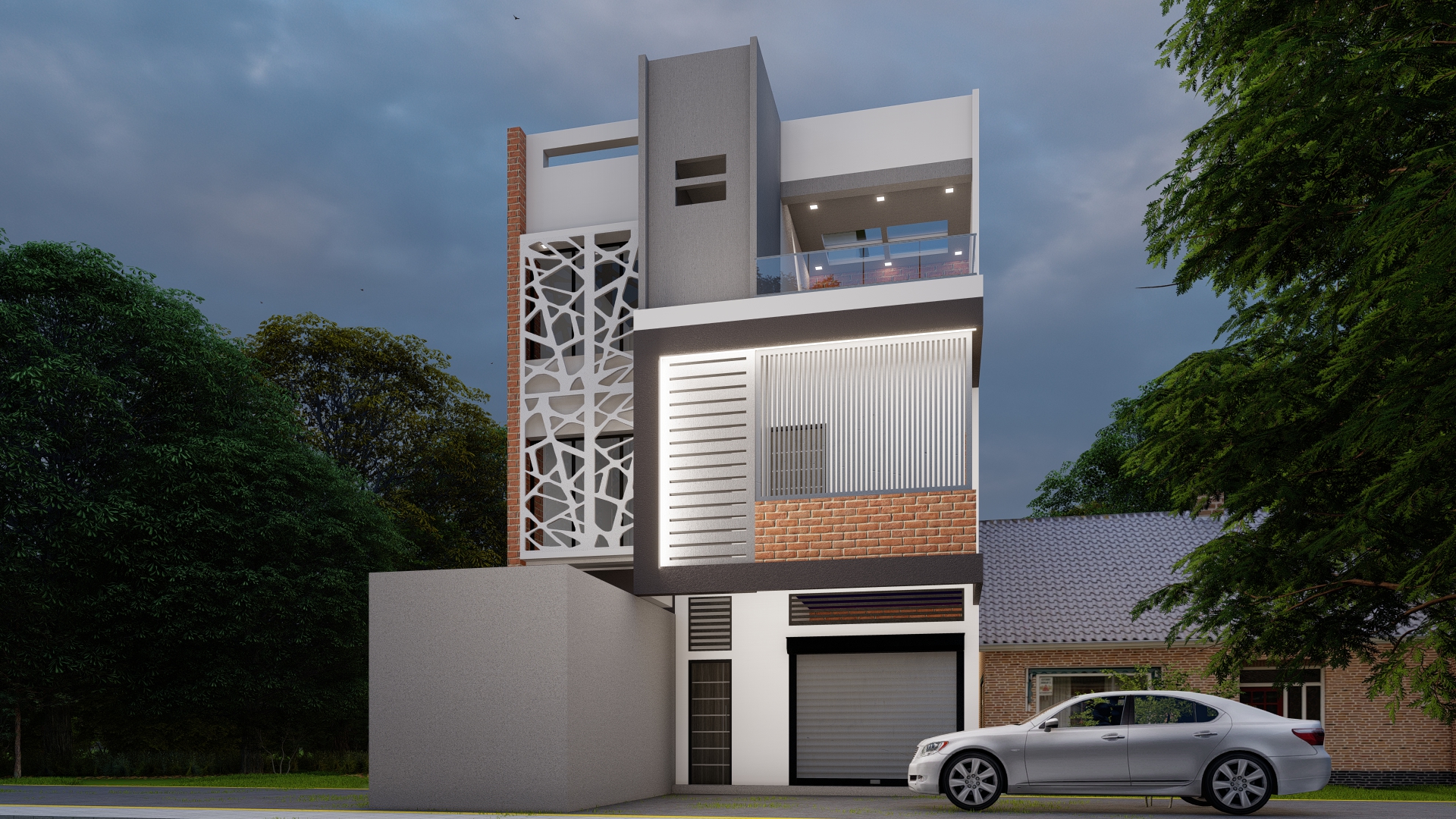
The typical arrangement has the ground floor as the owner’s residence with the full 2BHK layout described earlier. The first floor is designed as a separate rental unit with its own entrance through an external staircase (usually placed along the side or rear wall), its own electric meter, and a self-contained 1BHK or 2BHK layout. A separate staircase is strongly recommended over a shared internal one because it gives the tenant complete privacy and prevents access to the ground floor.
Structurally, if you’re planning a G+1 from the beginning, your column sizes, footing depths, and slab reinforcement should be designed for two floors from day one. Retrofitting a first floor on a structure designed for single-floor loading is possible but requires additional column jacketing and footing widening, which adds cost and disruption. A standard RCC frame for a G+1 on a 25×45 plot typically uses 9×9 inch columns with M20 grade concrete and Fe500 steel.
Modern 25×45 House Plan 3D Elevation Designs
Simple Elevation (Budget-Friendly)
A simple elevation uses a flat or gently articulated facade with white and grey exterior texture paint, minimal projections, and standard window sizes. The main visual interest comes from a contrasting color band at lintel level or a projected entrance canopy. Construction cost for a simple elevation adds roughly 2 to 4 percent over the base structure cost. This is the right choice if you’re building on a tight budget or planning to upgrade the elevation in a second phase.
Box-Type Elevation
Box-type or contemporary geometric elevations are the most popular style in Indian residential construction right now. The facade is composed of flat, projecting, and recessed rectangular volumes that create strong shadow lines. Typical features include a projected first floor slab that cantilevers 2 to 3 feet over the parking, flush-frame windows (where the window frame sits flush with the outer wall surface), and a parapet wall with a flat top terrace. Exterior finishes alternate between smooth texture paint and rough stone cladding panels (usually Kota stone or artificial stone sheets). This style adds 5 to 8 percent to the base construction cost.
Premium Elevation Design
A premium elevation incorporates materials and features that place the home visually above the surrounding streetscape. Glass balcony railings with stainless steel or MS handrails, engineered wood or WPC (Wood Plastic Composite) cladding panels on accent walls, LED linear lighting in facade grooves (powered through a separate 5-amp circuit), and aluminium composite panel (ACP) cladding around the main entrance are the hallmarks of a premium finish. Louver fins in aluminium or concrete on the facade serve both as a shading device and a strong visual element. Budget an additional 12 to 18 percent over base construction for a premium elevation.
Construction Cost of a 25×45 House in India (2026)
Construction costs in India vary significantly by city, contractor grade, and finish level. Here is a realistic breakdown for 2026.
At the basic level (simple finishes, standard fixtures, no elevation features), expect a cost of Rs 1,500 to Rs 1,800 per sq ft. For a single ground floor of 900 sq ft built-up, the total construction cost comes to approximately Rs 13.5 lakh to Rs 16 lakh.
At the mid-range level (box-type elevation, vitrified tile flooring, modular kitchen, branded sanitary fittings), costs run from Rs 1,900 to Rs 2,400 per sq ft. The same 900 sq ft ground floor costs Rs 17 lakh to Rs 22 lakh.
At the premium level (glass railings, ACP cladding, premium Italian tiles, home automation, landscaping), you are looking at Rs 2,500 to Rs 3,500 per sq ft, putting a 900 sq ft ground floor at Rs 22.5 lakh to Rs 31.5 lakh.
For a full G+1 home with 1,800 sq ft total built-up at the mid-range level, total construction cost typically falls between Rs 34 lakh and Rs 43 lakh, not including the land cost.
Factors that significantly affect cost include soil type (soft soil requires deeper and wider footings, adding 3 to 6 percent to the foundation cost), the number of bathrooms (each bathroom adds Rs 40,000 to Rs 90,000 depending on fitting grade), and whether you use an RCC frame or load-bearing construction (RCC is more expensive but gives you G+1 flexibility).
Budget Tips for a 25×45 House Design
The single biggest cost saving on a 25×45 home is keeping the structural grid simple. Every deviation from a rectangular plan, such as angled walls, curved surfaces, or irregular column positions, multiplies formwork cost and construction time. A clean rectangular layout with straight walls saves 8 to 12 percent compared to a complex plan.
For elevation, investing in texture paint and shadow line grooves gives you a modern look at a fraction of the cost of stone cladding or ACP panels. A well-detailed simple elevation with good proportions consistently looks better than an overloaded premium facade with too many competing elements.
Choose vitrified tiles over natural stone for flooring in primary areas. A good quality 800×800 mm vitrified tile at Rs 60 to Rs 80 per sq ft looks excellent and is far easier to maintain than marble or granite. Use natural stone only as an accent, such as a feature wall in the living room or the entrance floor inlay.
Plan your electrical and plumbing conduits before the slab is cast, not after. Cutting slabs for conduit routing after casting is a common mistake that weakens the slab at critical points and adds significant cost.
Who Should Choose a 25×45 House Plan
This plot size is ideal for small nuclear families of three to four members who need a comfortable 2BHK without excess maintenance area. It is also excellent for first-time builders because the limited footprint simplifies design decisions and keeps construction management straightforward. Rental investors find it attractive because a G+1 on this plot gives two independent units with a total investment that is typically recovered within 12 to 15 years in Tier-2 Indian cities. Budget-conscious buyers appreciate that a well-designed 25×45 home can be built at a lower absolute cost than larger plots while still offering all the comforts of a modern home.
Why Choose SmartScale House Design for Your 25×45 House Plan
Designing a perfect home on a 25×45 plot requires the right balance of space planning, aesthetics, and budget control. That’s where SmartScale House Design stands out. With a strong focus on modern Indian homes, SmartScale helps you turn your ideas into a practical and visually stunning reality.
Custom 2BHK Layouts Designed for Your Lifestyle
Every family has different needs, and a one-size-fits-all plan doesn’t work. SmartScale creates custom 25×45 house plan 2BHK layouts that maximize space, improve functionality, and ensure comfortable living. Whether you need extra storage, a larger living room, or a work-from-home setup, everything is planned according to your requirements.
Vastu-Based Designs (East, West & North Facing)
Vastu plays an important role in Indian home design. SmartScale specializes in east facing, west facing, and north facing 25×45 house plans, ensuring proper placement of rooms, entrance, kitchen, and bedrooms. This helps create a home that feels balanced, positive, and aligned with traditional principles.
Realistic 3D Elevation Visualization
With SmartScale, you don’t have to imagine how your home will look you can see it before construction begins. Their 3D elevation designs give you a clear visual of your home’s exterior, including colors, textures, balconies, and lighting. This helps you make better design decisions and avoid costly changes later.
Smart Budget Planning & Cost Control
Building a house can get expensive if not planned properly. SmartScale provides budget-friendly house planning solutions, helping you choose the right materials, elevation styles, and layout options without overspending. The goal is to give you a modern, attractive home within your budget.
Get Started Today
Get your custom 25×45 house plan with 3D elevation designed by SmartScale experts today.
Conclusion
A 25×45 plot is genuinely one of the most versatile residential plot sizes available in Indian real estate. With the right layout, the right facing orientation, smart elevation choices, and honest budget planning, you can build a home that is comfortable, Vastu-compliant, visually impressive, and structurally sound for decades.
Whether you go with an east facing Vastu plan for auspiciousness, a north facing layout for consistent natural light, or a west facing modern design with good sun shading, the key is to plan early, design holistically, and avoid the common mistakes that cost time and money during construction.