A small bathroom does not have to feel cramped, dark, or frustrating. With the right planning, even the most compact space can feel like a well-designed retreat. The 5×7 bathroom is one of the most common bathroom sizes found in apartments, guest rooms, and older homes across the world, and millions of homeowners face the same challenge: how do you make 35 square feet feel functional, stylish, and comfortable?
The truth is, size has very little to do with how good a bathroom looks or works. What matters far more is the layout, the fixtures you choose, the lighting you install, and the way you use every inch of available space. A poorly planned large bathroom can feel chaotic and wasteful, while a well-designed 5×7 bathroom can feel clean, open, and even luxurious.
In this guide, you will find everything you need to plan, design, or renovate your 5×7 bathroom with confidence. From layout ideas and design styles to color combinations, tile choices, lighting strategies, and storage solutions, this is your complete reference for creating a bathroom that works beautifully within a compact footprint.
Understanding a 5×7 Bathroom Layout
Standard Dimensions Explained
A 5×7 bathroom measures five feet in width and seven feet in length, giving you a total floor area of 35 square feet. While that may sound small, it is actually sufficient for a full bathroom, meaning a space that includes a toilet, a sink or vanity, and either a bathtub or a shower.
It is worth distinguishing this from a half bath, which typically only contains a toilet and a sink and usually measures around 20 square feet. A 5×7 bathroom, by contrast, is a full bath and can comfortably serve as the primary bathroom in a small apartment or as a secondary bathroom in a larger home.
The key to working with these dimensions is understanding exactly where plumbing can go, how much clearance each fixture needs, and which layout arrangement will give you the most usable space.
What Can Fit Inside a 5×7 Bathroom?
Despite the compact size, a 5×7 bathroom can accommodate all the essential fixtures without feeling crowded, as long as placement is carefully planned.
A standard toilet requires a minimum of 30 inches of width and about 24 to 30 inches of clearance in front of it. A vanity can range from 18 to 24 inches in depth and can be placed along the shorter or longer wall depending on your layout. A standard bathtub measures 60 inches in length and 30 to 32 inches in width, which fits neatly along the seven-foot wall. If you prefer a shower instead, a 32×32 inch corner shower or a 36×36 inch walk-in shower can be accommodated with space to spare.
Additional elements like open shelving, recessed wall niches, a mirror cabinet, and small decorative touches can all be incorporated without overwhelming the room.
Common Layout Arrangements
There are three primary layout arrangements used in 5×7 bathrooms, and each has its own strengths.
The side-by-side layout places the toilet and vanity along the same wall, with the bathtub or shower on the opposite wall. This keeps plumbing on one side of the room and creates a clear pathway through the center.
The opposite wall layout places the vanity on one wall and the toilet on the facing wall, with the tub or shower at the far end. This arrangement creates a balanced feel and works well when natural light enters from a window at the end of the room.
The wet room layout removes traditional enclosures and allows the shower to flow into the rest of the space using waterproof flooring and drainage throughout the floor. This is a growing trend in modern compact bathrooms and creates a beautifully open, spa-like feel.
Best 5×7 Bathroom Layout Ideas
Traditional Tub and Shower Combo Layout
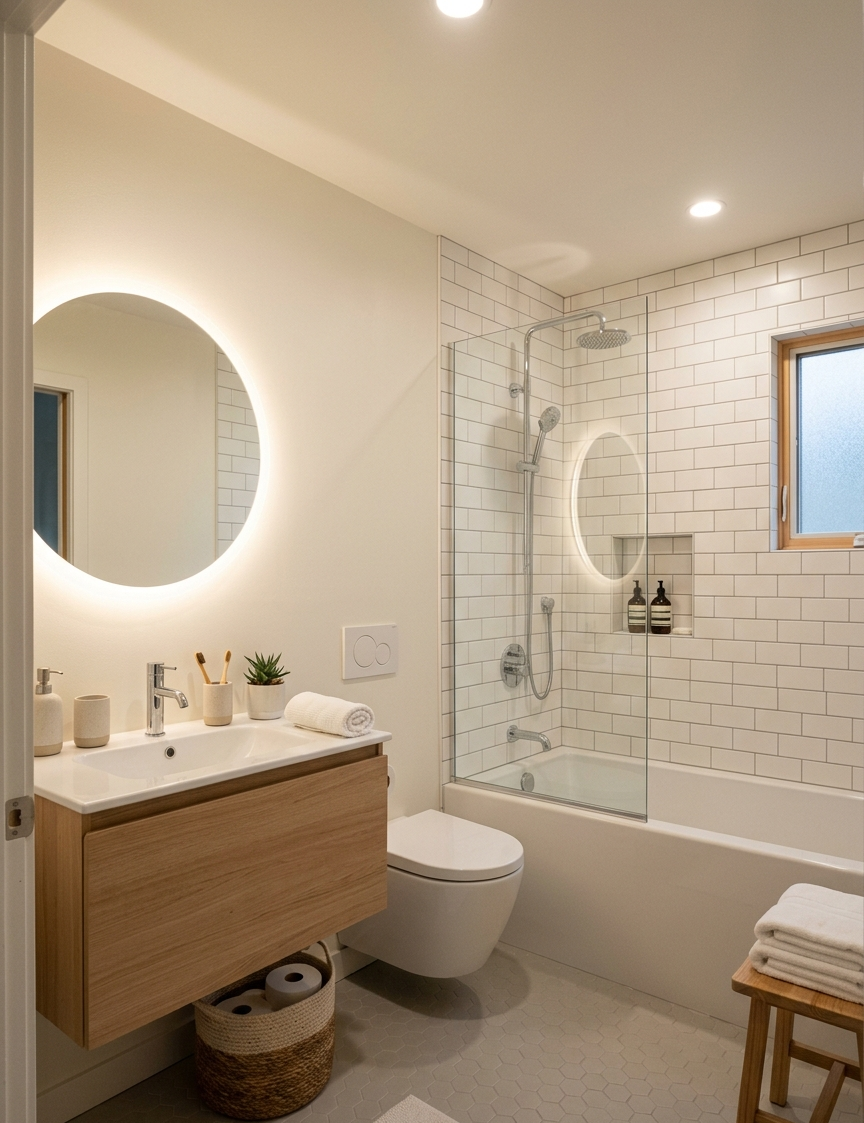
The tub-shower combo remains one of the most practical choices for a 5×7 bathroom, especially for households with children or for homes where resale value is important. A standard 60-inch bathtub fits perfectly along the longer wall of the bathroom, and combining it with a showerhead and a simple curtain or glass panel means you get two functions from a single fixture footprint.
The vanity in this layout typically sits along the shorter end wall, while the toilet occupies the remaining wall space beside or across from the tub. The result is a complete, functional bathroom that requires no unusual plumbing work and uses familiar, widely available fixtures.
The main advantage of this layout is its versatility and low cost. The downside is that a full-size bathtub takes up a significant portion of the floor area, leaving less room for storage or movement.
Walk-In Shower Layout for Small Bathrooms
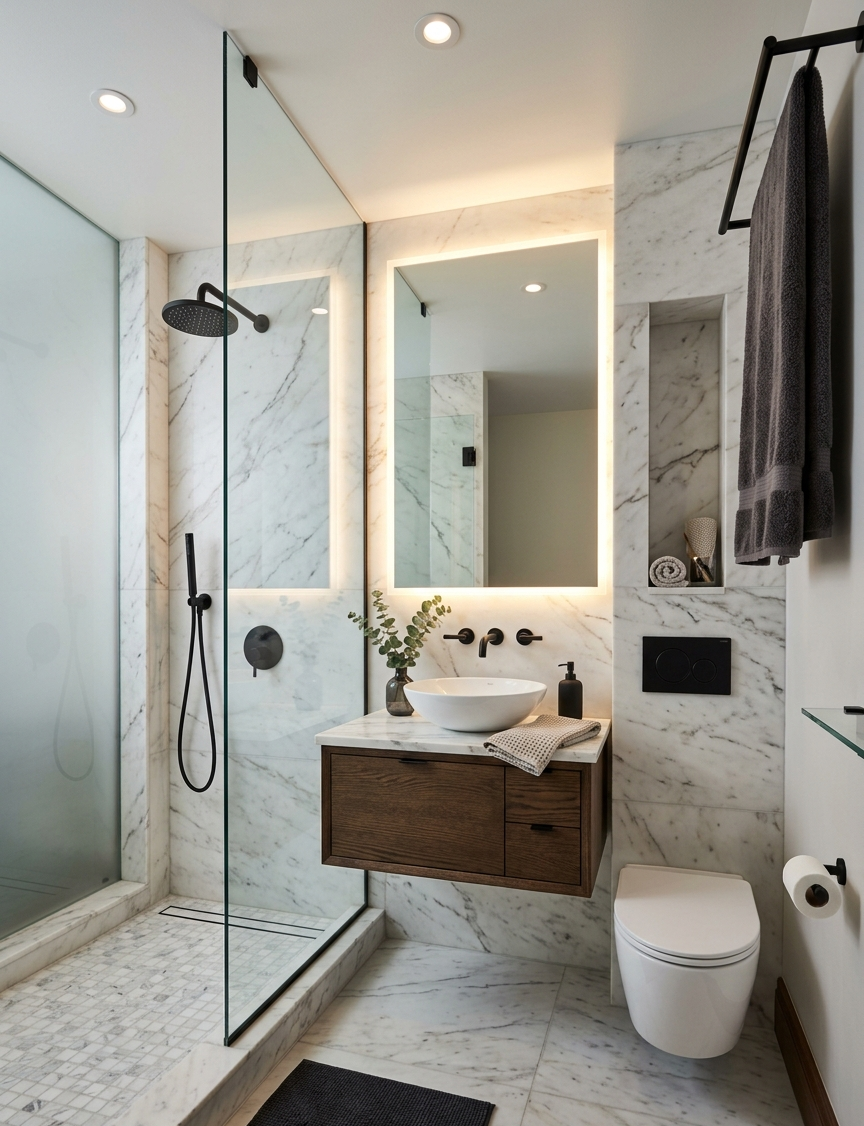
Replacing the bathtub with a walk-in shower is one of the most popular upgrades in small bathroom design today, and for good reason. A shower stall takes up considerably less floor space than a tub, and when enclosed with frameless glass panels, it creates a sense of openness that makes the entire bathroom feel larger.
A 36×36 inch or 36×48 inch shower can be positioned in the corner of the room, freeing up the rest of the floor for a wider vanity, more storage, or simply more breathing room. Linear drains installed along one edge of the shower floor allow for a sleek, modern look while also making tile installation easier.
Frameless glass enclosures are strongly recommended for this layout because they eliminate the visual weight of a frame or curtain and allow the eye to travel through the entire room uninterrupted.
Corner Sink Bathroom Layout
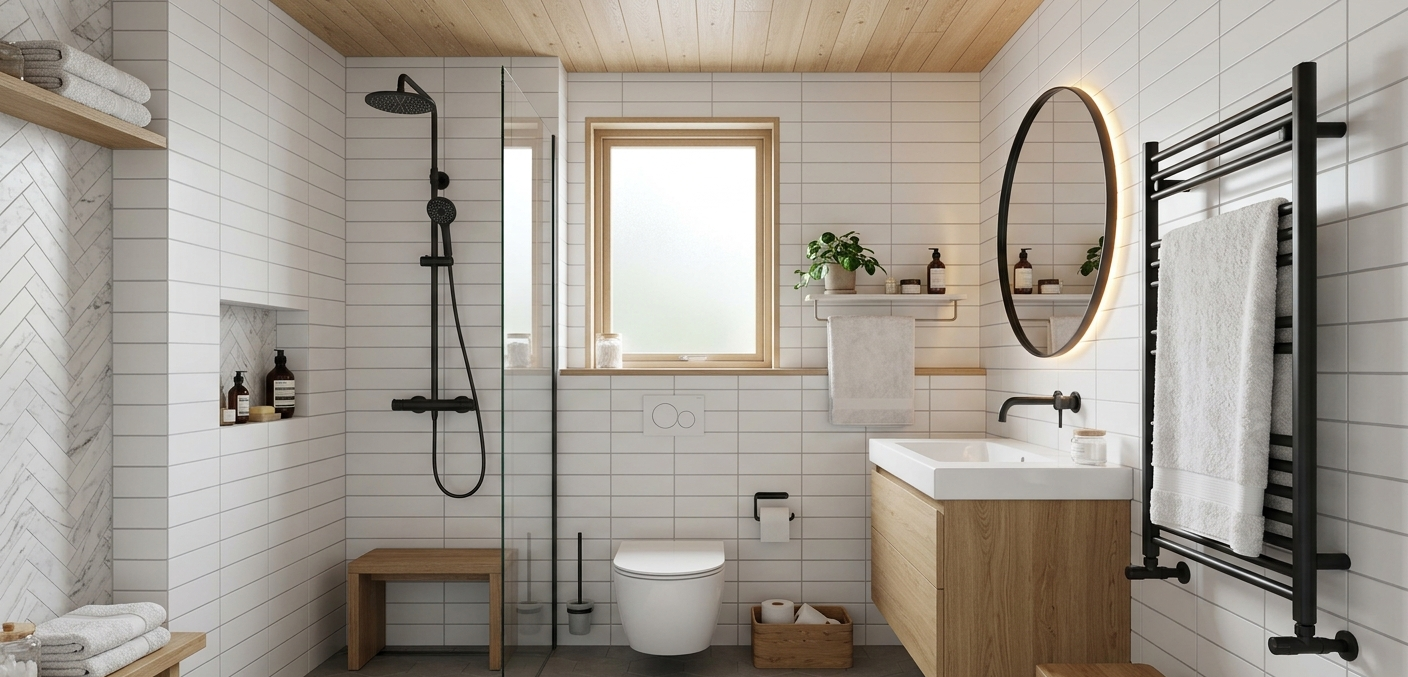
A corner sink or corner vanity is a clever solution for maximizing the usable floor area in a small bathroom. By positioning the sink diagonally in one corner of the room, you free up wall space on two sides and create a wider pathway through the center of the room.
This layout works especially well in bathrooms where movement between the toilet, shower, and exit feels tight with a standard straight vanity. Corner vanities are available in wall-mounted and freestanding styles and can include compact storage drawers or open shelving below the basin.
The main trade-off is that corner units tend to offer less countertop surface than a full-width vanity, so they work best in single-occupant bathrooms or guest bathrooms where storage needs are minimal.
Floating Vanity Layout
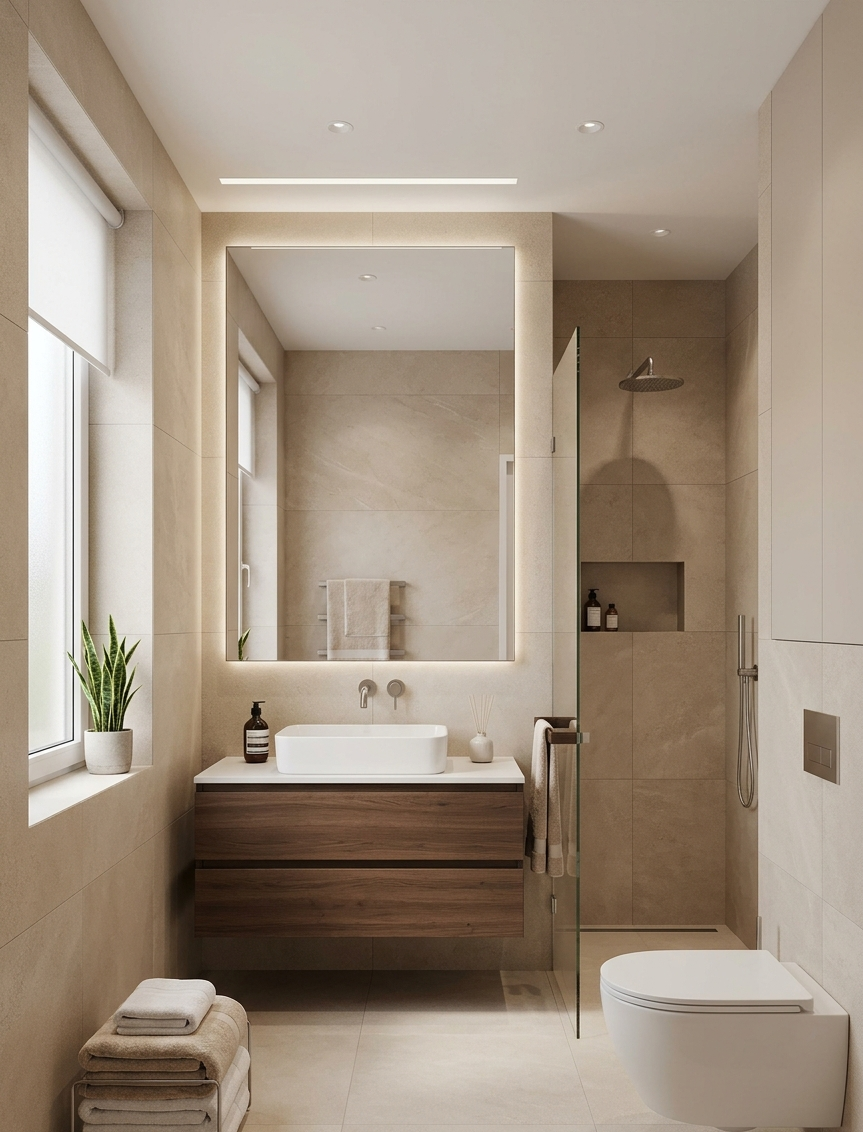
A wall-mounted or floating vanity is one of the single most effective design choices you can make in a small bathroom. By lifting the vanity off the floor and mounting it directly to the wall, you expose the floor beneath it, which creates an immediate visual impression of more space.
The floating vanity can be positioned at whatever height suits you best, and the open space below can even be used for storing small baskets or rolled towels. Many floating vanities also include drawers or cabinets that extend up to the bottom of the sink basin, offering generous hidden storage without taking up any additional floor space.
Paired with a large mirror and soft under-cabinet lighting, a floating vanity can transform an ordinary 5×7 bathroom into a space that looks and feels far more premium than its square footage suggests.
Wet Room Style Bathroom
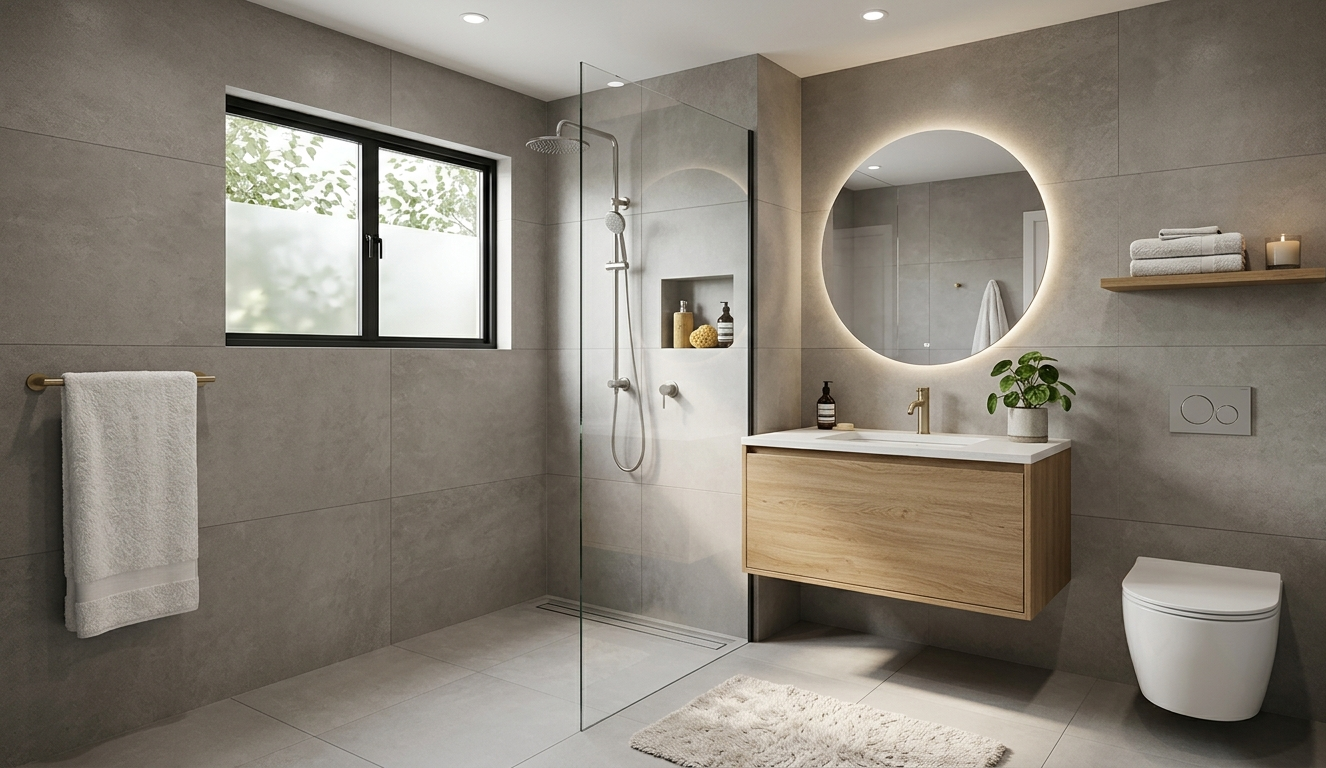
The wet room concept eliminates the boundary between the shower area and the rest of the bathroom. Instead of a shower tray, curtain, or glass enclosure, the entire bathroom floor is waterproofed and gently sloped toward a central or linear drain. The shower simply exists as a designated zone within the same open space.
This layout creates a remarkable sense of openness in a compact bathroom. With no enclosure interrupting the sightline, the room feels continuous and spacious. It also makes cleaning considerably easier since there are no corners, frames, or shower trays to scrub.
Wet rooms require proper waterproofing throughout and are best planned with a professional, but the investment pays off in both aesthetics and functionality. Anti-slip tiles are essential for safety, and a quality rainfall showerhead completes the spa-inspired look.
Space-Saving Ideas for a 5×7 Bathroom
Use Sliding or Pocket Doors
A standard swing door requires a clear arc of about 9 to 10 square feet to open fully. In a 35 square foot bathroom, that is a significant chunk of usable space. Replacing a swing door with a sliding or pocket door immediately reclaims that area and eliminates the awkward dance of stepping back every time the door opens.
Pocket doors slide directly into the wall cavity and are completely invisible when open, making them the most space-efficient option. Barn-style sliding doors are a more decorative alternative that mounts on the outside of the wall and works well in industrial or rustic-modern bathrooms. Both options are available in wood, glass, and composite materials.
Install Wall-Mounted Fixtures
Wall-mounted toilets and sinks are increasingly popular in modern bathroom design, and they offer real practical benefits beyond their clean appearance. Mounting the toilet tank inside the wall removes a bulky object from the room and positions the toilet seat at whatever height you prefer. It also makes mopping and cleaning the floor significantly easier.
Wall-mounted sinks work well in very small bathrooms where there is no room for a full vanity cabinet. They can be paired with a small under-sink storage unit or a mirror cabinet above to compensate for the lack of built-in storage.
Add Vertical Storage
When floor space is limited, the solution is to build upward. Tall slim cabinets, open wall shelves, and recessed wall niches all take advantage of vertical space that would otherwise go unused.
Recessed niches are particularly valuable because they are built directly into the wall cavity, meaning they add storage without consuming any floor or wall projection space at all. A recessed niche in the shower is perfect for shampoo and soap. A deeper niche above the toilet can hold folded towels, candles, or decorative plants.
Open shelves mounted high on the wall work well for items you use occasionally, while lower shelves near the vanity are better for everyday essentials.
Use Large Mirrors
A large mirror is one of the simplest and most cost-effective tools for making a small bathroom feel bigger. Mirrors reflect both natural and artificial light back into the room, brightening dark corners and creating a sense of depth that visually doubles the perceived size of the space.
A mirror that spans the full width of the vanity wall is ideal. If your bathroom has a window, positioning the mirror on the wall opposite the window will maximize the reflection of natural light. LED-backlit mirrors add a soft, flattering glow while also serving as a primary or supplementary light source.
Modern 5×7 Bathroom Design Styles
Minimalist Bathroom Design
Minimalist bathrooms are defined by simplicity: neutral colors, clean lines, concealed storage, and a deliberate absence of clutter. In a 5×7 bathroom, this approach is not just aesthetically pleasing but genuinely practical. Every unnecessary object removed from the space makes the room feel larger and more breathable.
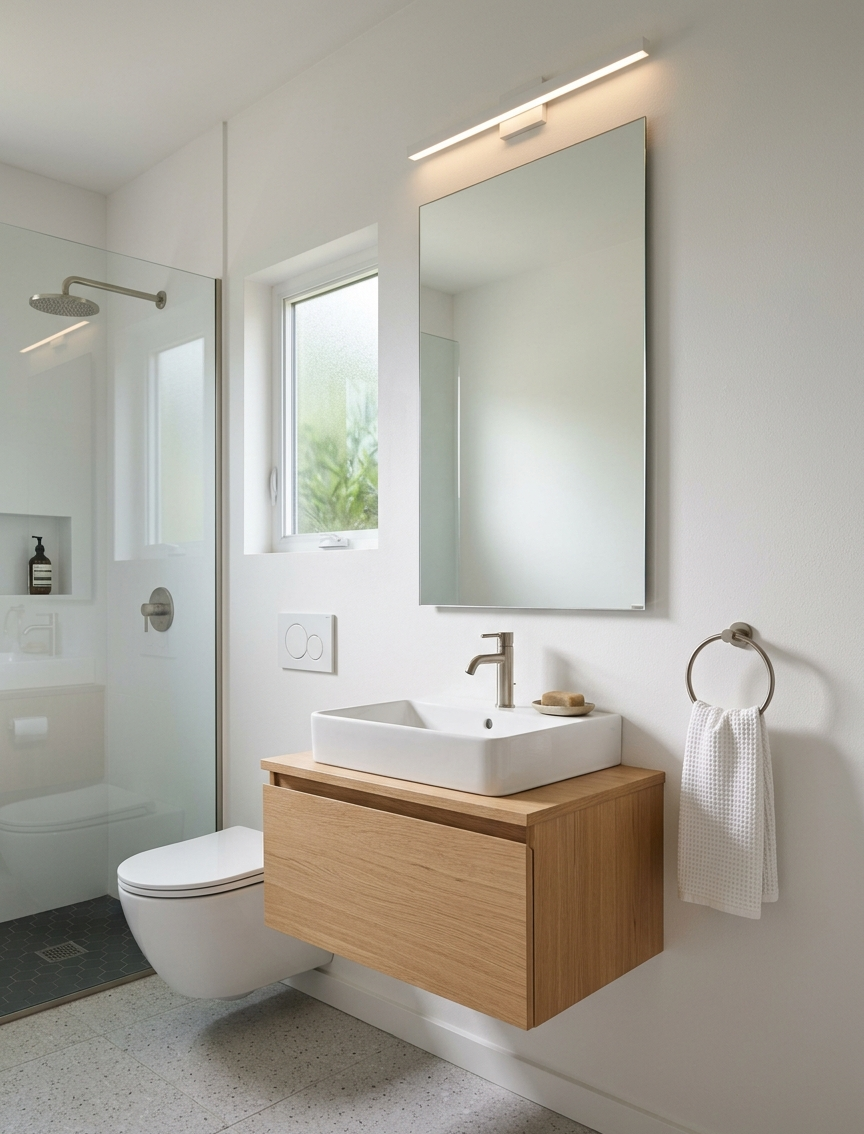
White or light grey walls, a floating vanity with handleless drawers, a frameless mirror, and matte or gloss white tiles are the foundation of a minimalist bathroom. Fixtures are typically simple and angular, and accessories are kept to a bare minimum.
Scandinavian Bathroom Style
Scandinavian design brings warmth into the minimalist framework by introducing natural materials, particularly wood. A teak or oak vanity, a wooden bath mat, open wood shelving, and woven baskets bring texture and warmth to an otherwise simple white interior.
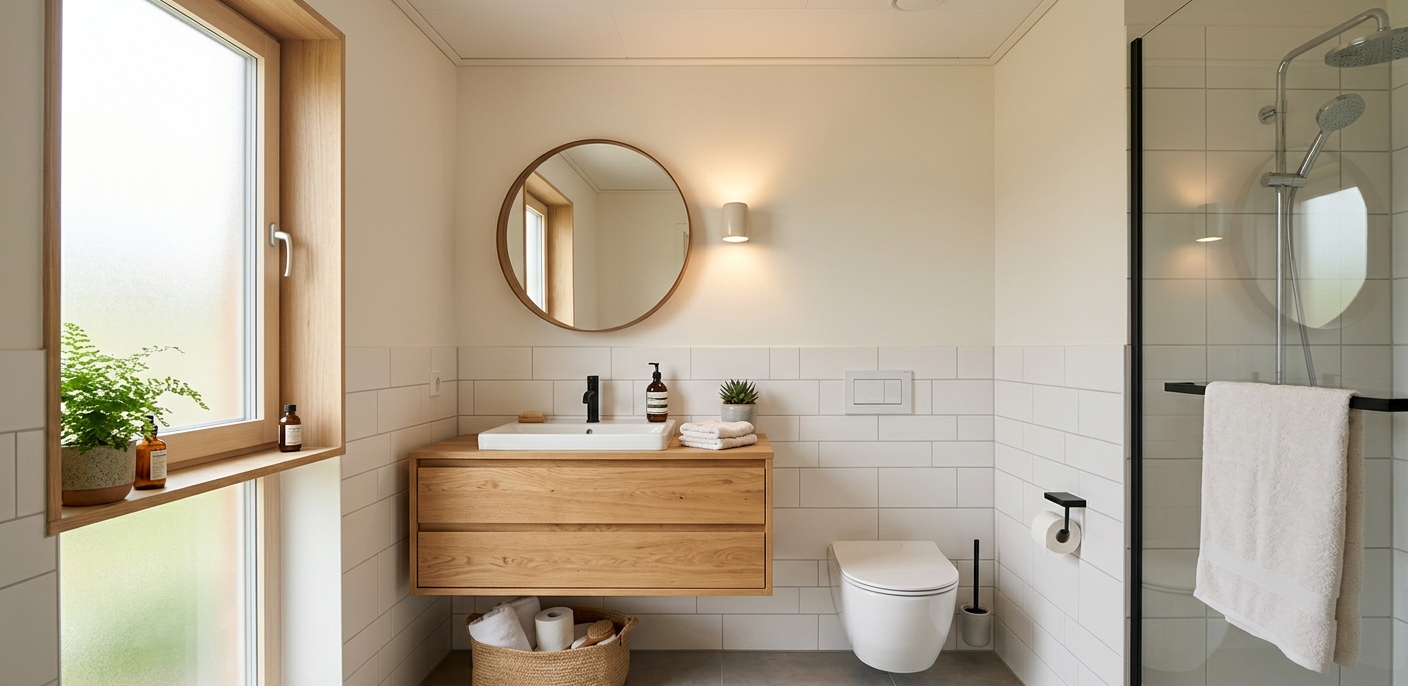
This style works beautifully in bathrooms that receive natural light, as the wood tones glow warmly in daylight and create a cozy, spa-like atmosphere in the evenings with warm lighting. Plants are a natural addition to the Scandinavian bathroom and add life and color without visual noise.
Luxury Modern Bathroom Style
A luxury bathroom does not require a large footprint. Marble-effect tiles on the walls and floor, matte black or brushed gold fixtures, a frameless glass shower panel, and a backlit LED mirror are all it takes to elevate a 5×7 bathroom into something that feels genuinely premium.
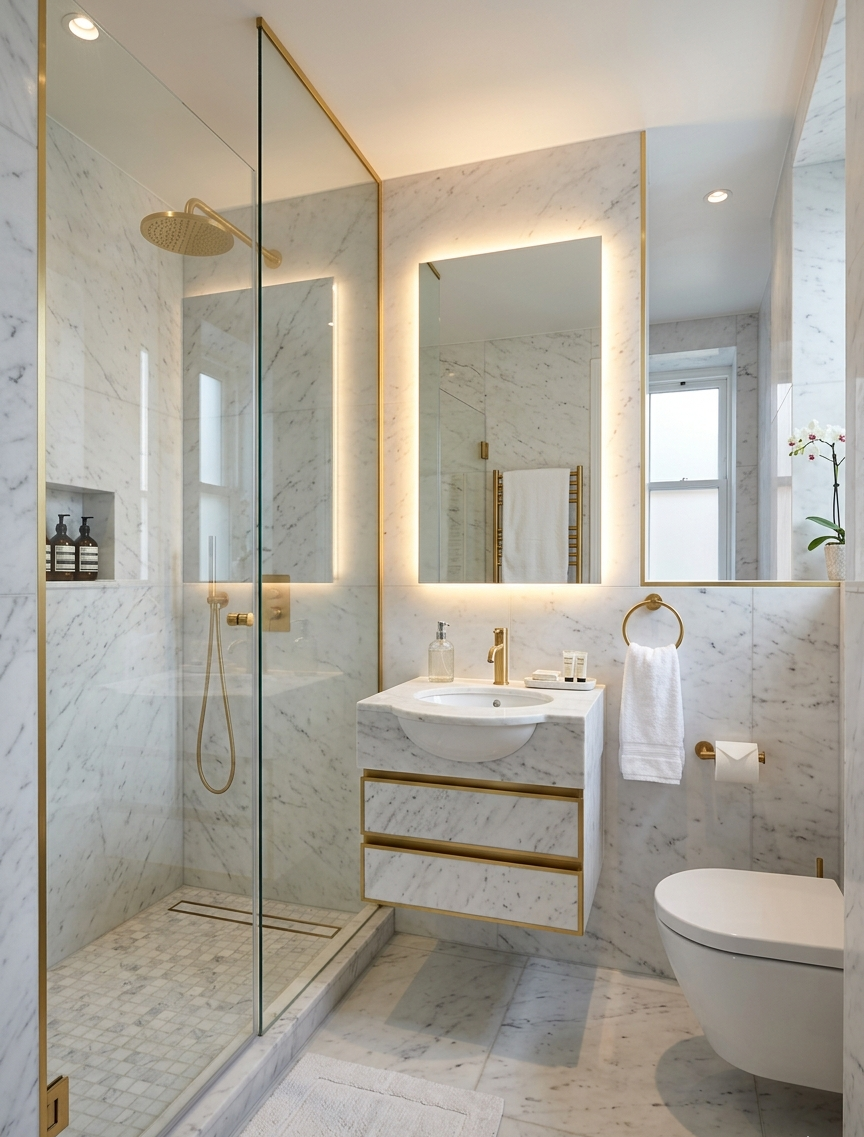
The key to luxury in a small space is restraint. Rather than layering multiple expensive materials, choose one or two statement elements, such as a marble feature wall or a sculptural basin, and let them do the work. Everything else should be clean, simple, and high quality.
Industrial Bathroom Design
Industrial bathrooms draw inspiration from urban loft spaces and feature raw, unfinished textures paired with dark hardware. Concrete-effect tiles or actual polished concrete walls, matte black faucets and towel bars, exposed pipe details, and Edison bulb lighting all contribute to the aesthetic.
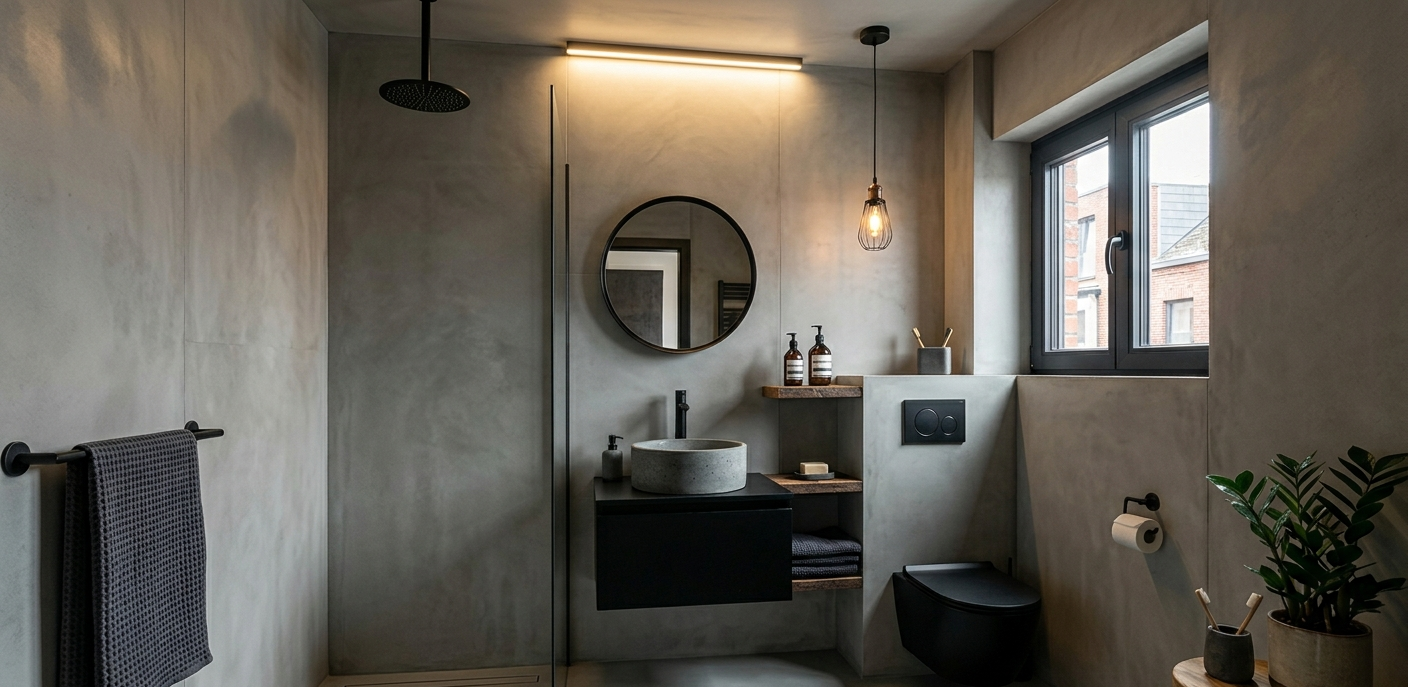
This style works particularly well for male-oriented bathrooms or in homes with an open-plan, urban design theme. It pairs naturally with dark grout lines, charcoal floor tiles, and a simple rectangular undermount sink.
Best Color Combinations for a Small Bathroom
Color is one of the most powerful tools in small bathroom design because it directly affects how large, bright, or welcoming a space feels.
White and grey is the classic combination for small bathrooms. White expands the room visually while grey adds depth and sophistication without darkening the space.
Beige and wood texture creates a warm, organic feel that is increasingly popular in contemporary interiors. Light beige walls paired with a wood-tone vanity and natural fiber accessories feel calm and grounded.
Black and white contrast is bold and timeless. It works well in small bathrooms because the high contrast creates strong visual interest without relying on space or multiple colors. Keep black to accents and fixtures rather than large wall surfaces.
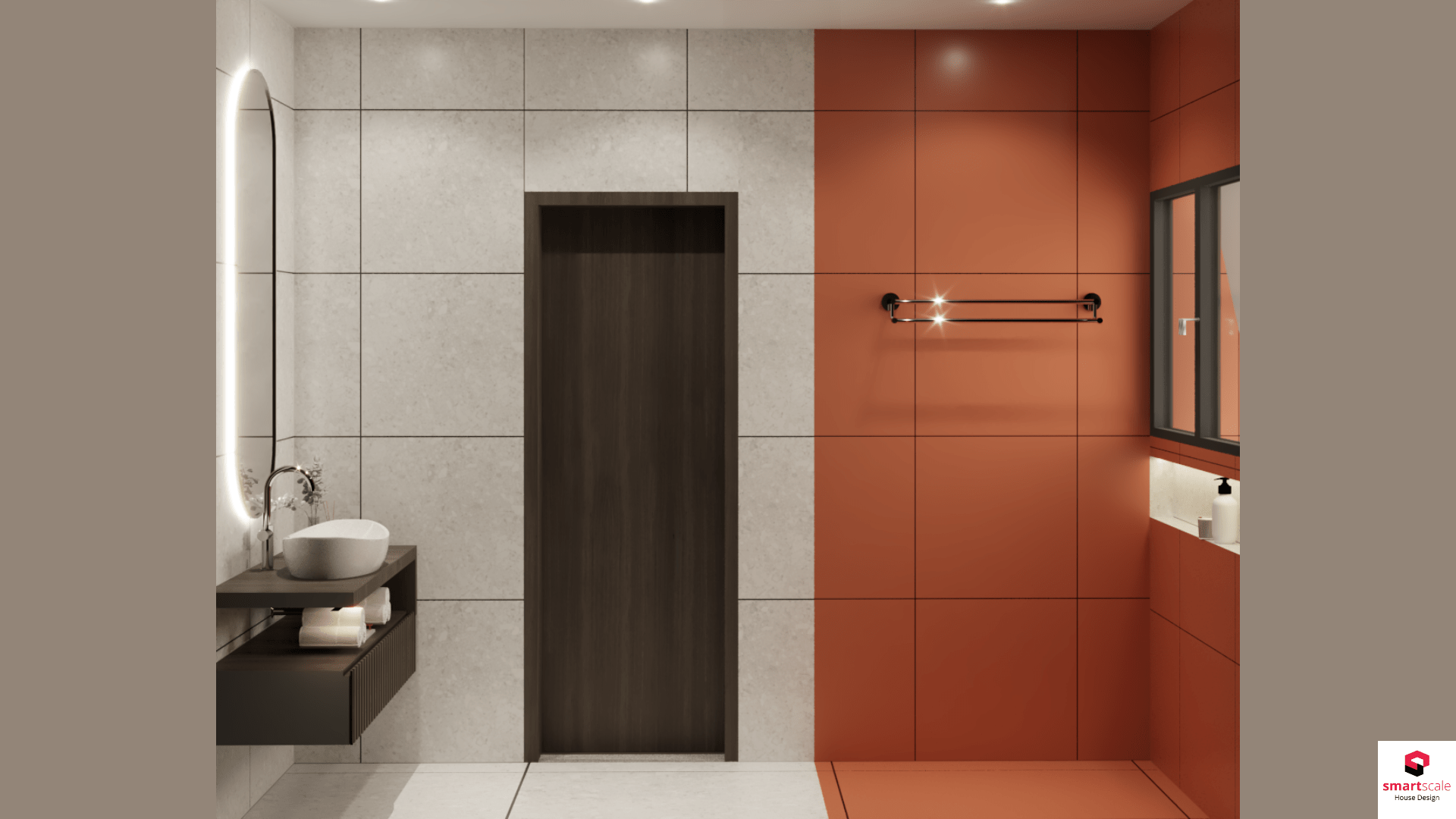
Earthy neutrals including terracotta, warm sand, and olive green are trending strongly and work well in bathrooms that aim for a natural, organic aesthetic. These tones feel cozy without being dark.
Blue and white is perfect for bathrooms that aim for a coastal or fresh feel. Light navy, powder blue, or aqua paired with white creates a crisp, airy atmosphere that feels clean and uplifting.
As a general rule, lighter and cooler tones make rooms feel larger, while warmer and darker tones make them feel cozier but potentially smaller. Use light tones on walls and floors and reserve darker accents for fixtures, hardware, and accessories.
Best Tiles for a 5×7 Bathroom
Large Format Tiles
Large format tiles, those measuring 24×24 inches or larger, have fewer grout lines than smaller tiles. Fewer grout lines mean fewer visual interruptions, which makes the floor or wall appear to stretch further than it actually does. This creates a surprisingly effective illusion of more space.
Glossy Tiles
Glossy tiles reflect light, which brightens the room and enhances the feeling of openness. They work especially well on walls in bathrooms with limited natural light. The reflective surface bounces artificial lighting around the room, reducing shadows and dark corners.
Matte Tiles
Matte tiles are anti-slip, which makes them the preferred choice for bathroom floors. They also have a clean, modern appearance that suits minimalist and Scandinavian styles particularly well. Matte large format tiles on the floor paired with glossy tiles on the walls is a widely used and highly effective combination.
Vertical Tile Patterns
Running tiles vertically on walls, either in a stacked or offset pattern, draws the eye upward and makes the ceiling appear higher than it actually is. This technique is especially useful in bathrooms where the ceiling height feels low or the room feels wide but short.
Lighting Ideas for a 5×7 Bathroom
Lighting is arguably the most underestimated element in bathroom design. The right lighting makes a small bathroom feel bright, spacious, and welcoming, while the wrong lighting creates shadows, distortion, and a generally unpleasant atmosphere.
Ceiling lighting provides the general ambient light for the room. A central flush-mount fixture or a series of recessed downlights works well. Avoid placing a single ceiling light directly above the shower or bath for safety reasons.
Vanity lighting is essential for grooming tasks. Side-mounted lights at eye level on either side of the mirror eliminate the unflattering shadows cast by overhead-only lighting. If side lights are not possible, a wide horizontal bar light above the mirror is a good alternative.
LED mirror lighting combines the mirror and light source into a single fixture. A backlit or front-lit LED mirror provides even, flattering illumination across the face and adds a modern, upscale look to the room.
Natural lighting from a frosted window is the best source of light available. If your bathroom has a window, keep it unobstructed or use a sheer frosted covering that lets light through while maintaining privacy.
For color temperature, 2700K to 3000K (warm white) is recommended for bathrooms used in the mornings and evenings, as it is softer and more flattering. 4000K (neutral white) is brighter and better suited to bathrooms where detailed grooming tasks take place.
Smart Storage Solutions for Small Bathrooms
Storage is the most common complaint in small bathrooms, but with thoughtful planning, a 5×7 bathroom can have enough organized space for all daily essentials.
Under-sink storage is often wasted in bathrooms with pedestal sinks. Switching to a vanity cabinet with drawers or doors instantly provides dedicated space for toiletries, cleaning supplies, and extra rolls.
Mirror cabinets hide a surprising amount of storage behind the mirror. A recessed mirror cabinet installed flush with the wall stores medications, skincare products, and small accessories without projecting into the room at all.
Floating shelves mounted above the toilet or beside the vanity are perfect for items used daily. Keep them organized with small baskets or containers to prevent the shelving from looking cluttered.
Over-the-toilet cabinets take advantage of the vertical space above the toilet, which is almost always unused. A slim wall cabinet or open shelving unit above the toilet can hold towels, toilet paper, and decorative items.
Hidden storage niches recessed into the wall are ideal for shower products, candles, and accessories. They add storage without reducing floor space and look intentional and architectural when finished with matching tiles.
Common Mistakes to Avoid in a 5×7 Bathroom
Using oversized fixtures is the most frequent error in small bathroom design. A double vanity, a deep soaking tub, or a large freestanding basin may look beautiful in a showroom but will overwhelm a 35 square foot room. Always verify the dimensions of every fixture against your floor plan before purchasing.
Poor lighting placement can make even a well-designed bathroom feel dark and unwelcoming. Avoid relying on a single overhead light and always include vanity-level lighting for task visibility.
Too many dark colors can make a small bathroom feel enclosed and heavy. Dark accent tiles or fixtures add character, but large dark wall or floor surfaces in a small bathroom will make it feel significantly smaller.
Ignoring ventilation is a serious practical mistake. Without adequate airflow, moisture builds up, leading to mold, peeling paint, and deteriorating fixtures. Ensure your bathroom has either a window or a properly sized exhaust fan rated for the room’s cubic footage.
Overcrowding the space with too many decorative objects, too many different tile patterns, or too many competing styles creates visual noise that makes the room feel smaller. Simplicity is always the right approach in a compact bathroom.
Budget-Friendly 5×7 Bathroom Renovation Ideas
Renovating a small bathroom does not require a large budget to achieve a meaningful transformation. Some of the highest-impact changes are also among the most affordable.
Affordable tile alternatives include ceramic tiles that mimic the look of marble or stone at a fraction of the cost. Large format ceramic tiles are widely available at accessible price points and provide the same space-enhancing effect as premium stone.
Budget vanity ideas include refinishing an existing vanity with new paint and hardware, replacing only the sink faucet, or purchasing a ready-to-assemble flat-pack vanity from a home improvement store.
DIY bathroom decor tips include regrouting existing tiles to make them look fresh, replacing toilet hardware, installing new light fixtures, and adding open shelves. These tasks require minimal skill but produce visible results.
Low-cost lighting upgrades include replacing old incandescent bulbs with LED equivalents and adding an inexpensive LED strip light behind the mirror for a modern backlit effect.
Space-saving budget solutions include adding an over-the-toilet storage unit, installing a tension rod shelf inside a cabinet to double its capacity, and replacing a swing door with an affordable sliding barn door kit.
Estimated Cost of Designing a 5×7 Bathroom
The cost of a 5×7 bathroom renovation varies widely depending on the quality of materials, the extent of plumbing work required, and local labor rates. Here is a general overview to help with budget planning.
Basic bathroom design covers surface-level updates such as new tiles, a replacement vanity, updated fixtures, and fresh paint. This level of renovation typically ranges from $3,000 to $7,000 and produces a noticeably improved space without relocating any plumbing.
Mid-range bathroom renovation includes higher-quality tiles and fixtures, a new shower enclosure or tub replacement, improved lighting, and professional installation. Costs at this level typically fall between $8,000 and $15,000.
Luxury bathroom interior involves premium materials such as natural stone tiles, custom cabinetry, designer fixtures, a wet room conversion, or a heated floor system. This tier generally starts at $15,000 and can exceed $25,000 depending on material choices.
Key factors that affect the total budget include whether plumbing needs to be relocated, the cost of waterproofing, the price differential between standard and premium tile formats, and whether the project is managed independently or through a full-service design and build firm.
Tips to Make a 5×7 Bathroom Look Bigger
Use frameless glass shower panels. Framed shower enclosures and opaque shower curtains create a visual barrier that divides the room. Frameless glass panels maintain the sightline across the entire bathroom, making it feel open and continuous.
Install large mirrors. A full-width mirror above the vanity reflects the room back on itself, effectively doubling the visual depth of the space.
Keep flooring continuous. Using the same tile material and format on both the bathroom floor and the shower floor without a visible threshold or transition strip creates a seamless, uninterrupted surface that reads as one large area.
Use floating fixtures. Wall-mounted toilets, floating vanities, and wall-hung shelves all expose the floor beneath them. The visible expanse of uninterrupted floor makes the room feel larger.
Minimize decorative clutter. Every additional object in a small bathroom competes for attention and makes the room feel busier. Choose one or two meaningful decorative pieces, such as a single plant or a quality soap dispenser, and keep everything else stored out of sight.
Why Choose SmartScale House Design for Bathroom Planning
Designing a 5×7 bathroom that genuinely works requires more than aesthetic inspiration. It requires precise spatial planning, knowledge of plumbing constraints, understanding of material behavior in wet environments, and the ability to visualize the finished result before a single tile is laid.
SmartScale House Design specializes in exactly this kind of work. Their team combines technical expertise with modern design sensibility to create compact bathroom layouts that are both beautiful and highly functional. Whether you are working with a new build, a renovation, or a complete gut remodel, SmartScale provides customized 2D and 3D visualization services that let you see your finished bathroom in full detail before committing to any purchases or construction.
From space optimization and fixture selection to material coordination and lighting planning, SmartScale House Design delivers complete bathroom planning solutions tailored to your specific dimensions, lifestyle, and budget.
Get your custom 5×7 bathroom layout and modern house design from SmartScale House Design today.
Conclusion
A 5×7 bathroom is a design challenge that millions of homeowners share, and the good news is that it is a very solvable one. The principles that make compact bathrooms work are consistent: choose the right layout for your lifestyle, use wall-mounted and floating fixtures to free up floor space, select light colors and reflective surfaces to brighten the room, invest in smart storage rather than storing things in the open, and keep the design focused and uncluttered.
Whether you are drawn to a minimalist white bathroom, a warm Scandinavian interior, a luxury marble finish, or an urban industrial aesthetic, all of these styles can be executed beautifully within 35 square feet. The size of the room is a constraint, but constraints often produce the most creative and considered design outcomes.
Before beginning any renovation, take the time to plan thoroughly. Measure everything, draw your layout to scale, confirm fixture clearances, and think carefully about how the room will be used daily. Small decisions made at the planning stage, such as choosing a pocket door over a swing door or opting for a floating vanity over a floor-standing one, have a large cumulative impact on how the finished bathroom feels to live with.
With the right approach, your 5×7 bathroom can be one of the most impressive and enjoyable rooms in your home.