The single most common misconception we encounter as designers is that a small bathroom simply cannot accommodate a bathtub. After working on hundreds of compact bathroom projects, we can tell you with confidence: a small bathroom can absolutely have a bathtub and it can look stunning.
The key is not the size of the room. The key is the intelligence of the design.
Choosing the Right Tub for a Compact Space
Through our experience working with tight floor plans apartments, older homes, narrow terraced houses we have found that tub selection is the most critical decision in a small bathroom project. The wrong tub overwhelms the space. The right one anchors it beautifully.
For most small bathrooms, we recommend one of three approaches:
Alcove bathtubs remain our most recommended solution for limited square footage. Recessed between three walls, an alcove tub uses its own footprint with no wasted space around it. A 54-inch or 60-inch alcove tub integrates cleanly into most layouts while leaving sufficient room for a vanity, toilet, and comfortable movement through the space.
Corner bathtubs are an excellent choice when a room has an underutilized corner. Positioning the tub diagonally or in a corner recess draws the eye into the room, creates visual depth, and frees up the center of the floor making the space feel larger and more open.
Japanese soaking tubs are ideal for homeowners who prioritize the bathing experience over tub length. Shorter but significantly deeper than a standard Western tub, these allow for a full, shoulder-deep soak while occupying considerably less floor area.
How We Make Small Bathrooms Feel Larger
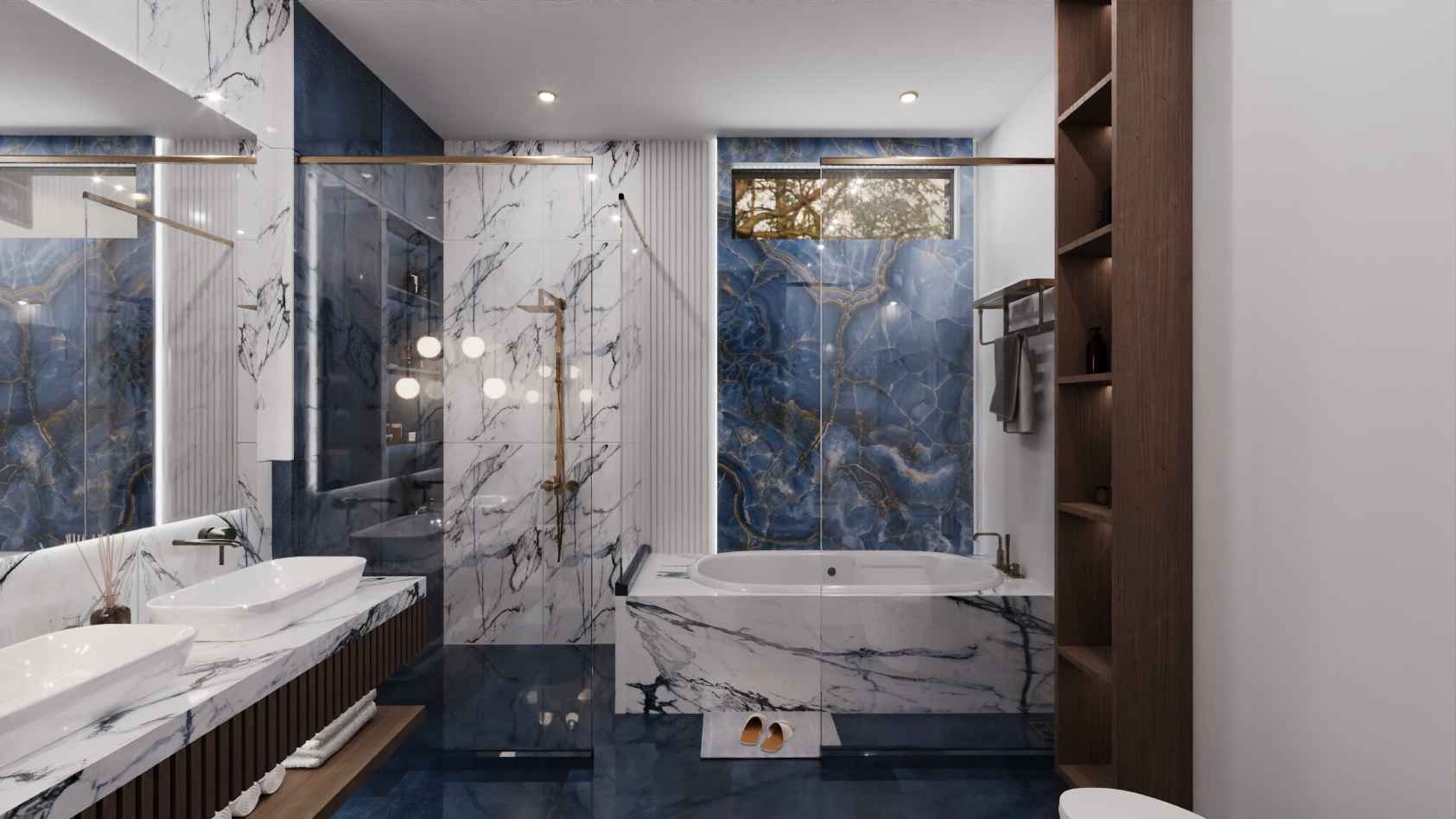
Surface choices are just as important as layout. In our small bathroom projects, we consistently work with large-format tiles in soft, light tones pale whites, warm creams, soft sage greens, and cool greys applied continuously across both floors and walls. The effect is a seamless, uninterrupted visual field that makes the room feel significantly more spacious than its actual dimensions suggest.
We eliminate every unnecessary projection from the room. Recessed storage niches are built directly into the tub surround walls, keeping toiletries accessible without adding any visual bulk. Wall-mounted faucets replace floor-standing or deck-mounted fixtures wherever possible. Frameless glass shower screens if a shower is also present preserve sightlines rather than closing the space off.
Lighting plays a defining role. A frosted window above the tub line brings in soft natural light without sacrificing privacy. LED-backlit mirrors amplify that light and create a warm, spa-like glow that makes even the smallest bathroom feel like a retreat.
Design Principles for Small Bathrooms with Bathtubs
- Select an alcove, corner, or Japanese soaking tub matched to your actual floor dimensions
- Apply large-format light-toned tiles continuously across floors and walls
- Install wall-mounted or deck-mounted faucets to keep surfaces clear
- Build recessed niches into the tub surround for clutter-free storage
- Use a large mirror to visually expand the perceived depth of the space
- Maintain a restrained palette of two to three tones throughout
- Maximize natural light with frosted windows or a skylight above the tub zone
A small bathroom with a well-chosen bathtub and considered design is not a compromise. It is a deliberate, intelligent use of space and the results, as our portfolio consistently shows, can be genuinely breathtaking.
Combining a bathtub and a shower in one bathroom is, in our experience, the configuration most homeowners ultimately want. It gives you the efficiency of a fast morning shower and the restorative luxury of an evening soak both available whenever you need them, in the same thoughtfully designed space.
The challenge our designers consistently solve is making both fixtures feel intentional and cohesive, rather than like two separate afterthoughts crammed into one room.
Layout Strategies That Work
The layout of a combined tub-and-shower bathroom determines everything the flow of the room, the visual weight of each fixture, and how easily both can be used day to day.
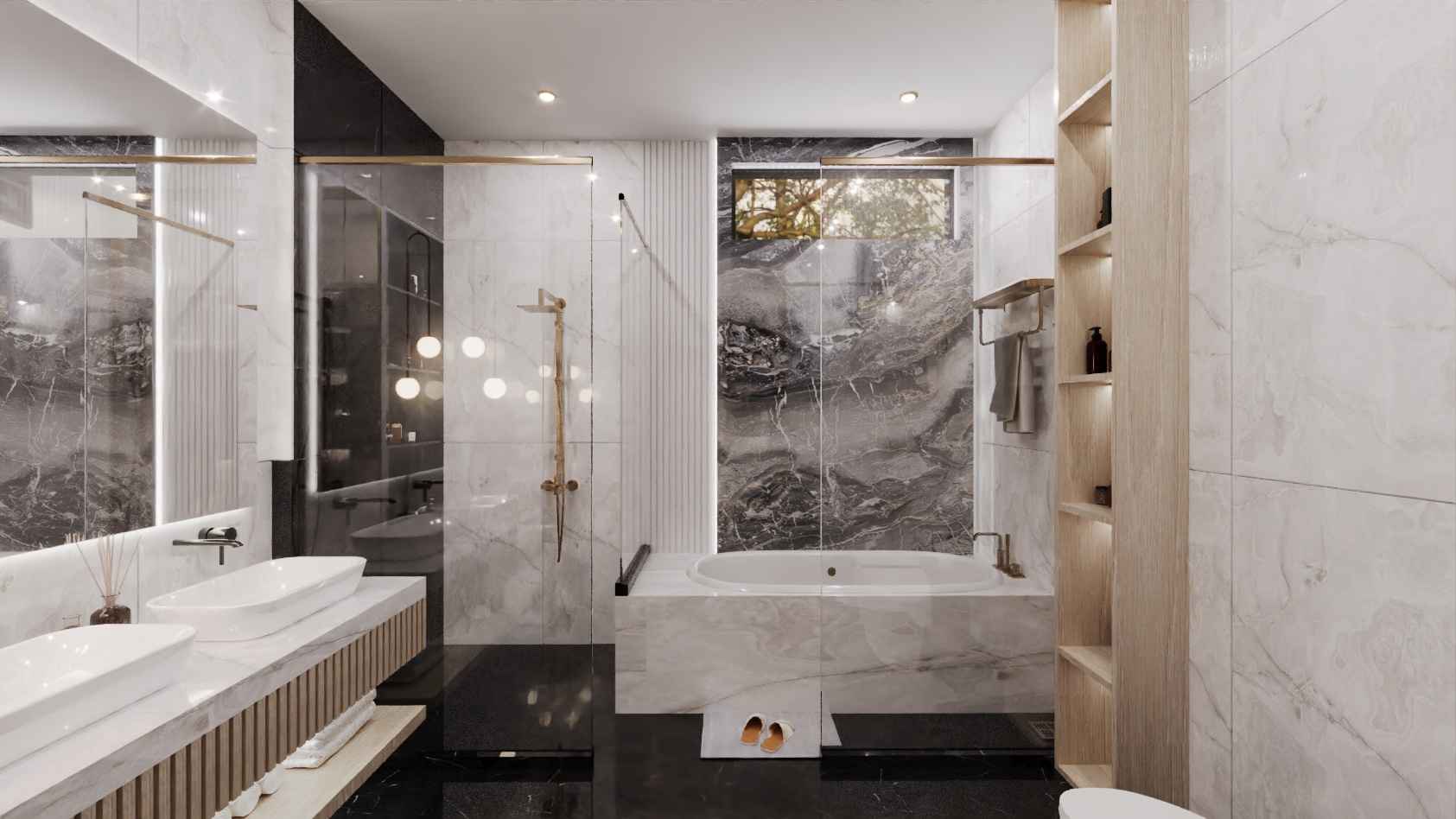
In larger bathrooms, our preferred approach is to separate the tub and shower into distinct zones while connecting them visually through shared materials and finishes. A freestanding bathtub positioned against a feature wall or centered in the room serves as a sculptural focal point, while a walk-in shower with a frameless glass enclosure occupies one end of the room. The glass keeps the space visually open while creating a clearly defined wet zone.
In medium-sized bathrooms, we often design a combined tub-shower alcove a single wet zone where both a soaking tub and overhead shower share the same tiled enclosure. Adding a ceiling-mounted rainfall showerhead above a deep soaking tub is one of our most popular design moves. It is practical, strikingly beautiful, and eliminates the need for two entirely separate wet areas.
Achieving Visual Cohesion Between Tub and Shower
The most common mistake in combined tub-shower bathrooms is a disconnect between the two fixtures different tiles, different finishes, different visual languages. Our approach is to treat the entire bathroom as a single design system, with the tub and shower as two elements within it rather than two separate features.
This means using the same tile across the shower walls and tub surround, matching all hardware finishes precisely whether that is brushed brass, matte black, or polished chrome and ensuring that the proportions and visual weight of both fixtures are balanced within the overall room.
Design Principles for Bathtub and Shower Bathrooms
- Match tile, grout color, and hardware finish across both tub and shower zones
- Use frameless glass shower enclosures to preserve sightlines and openness
- Position the bathtub near a natural light source wherever the layout allows
- Consider a rainfall showerhead above the tub for a dual-function wet zone
- Install proper mechanical ventilation to manage humidity from both fixtures
- Use waterproof large-format tiles on all wet surfaces for longevity and easy maintenance
- Balance the visual weight of both fixtures within the overall room composition
When a bathtub and shower are designed together as a unified system, the result is a bathroom that genuinely serves every need and looks exceptional doing it.
Modern bathroom design is defined by one overriding principle: every element must earn its place. There is no room for ornament for its own sake, no tolerance for visual clutter, and no compromise on material quality. When a bathtub enters a modern bathroom, it does so as the room’s undisputed centrepiece a sculptural object as much as a functional fixture.
This is the category of bathroom design our team finds most creatively exciting, and it consistently produces some of the most striking results in our portfolio.
The Aesthetic Language of Modern Bathtub Design
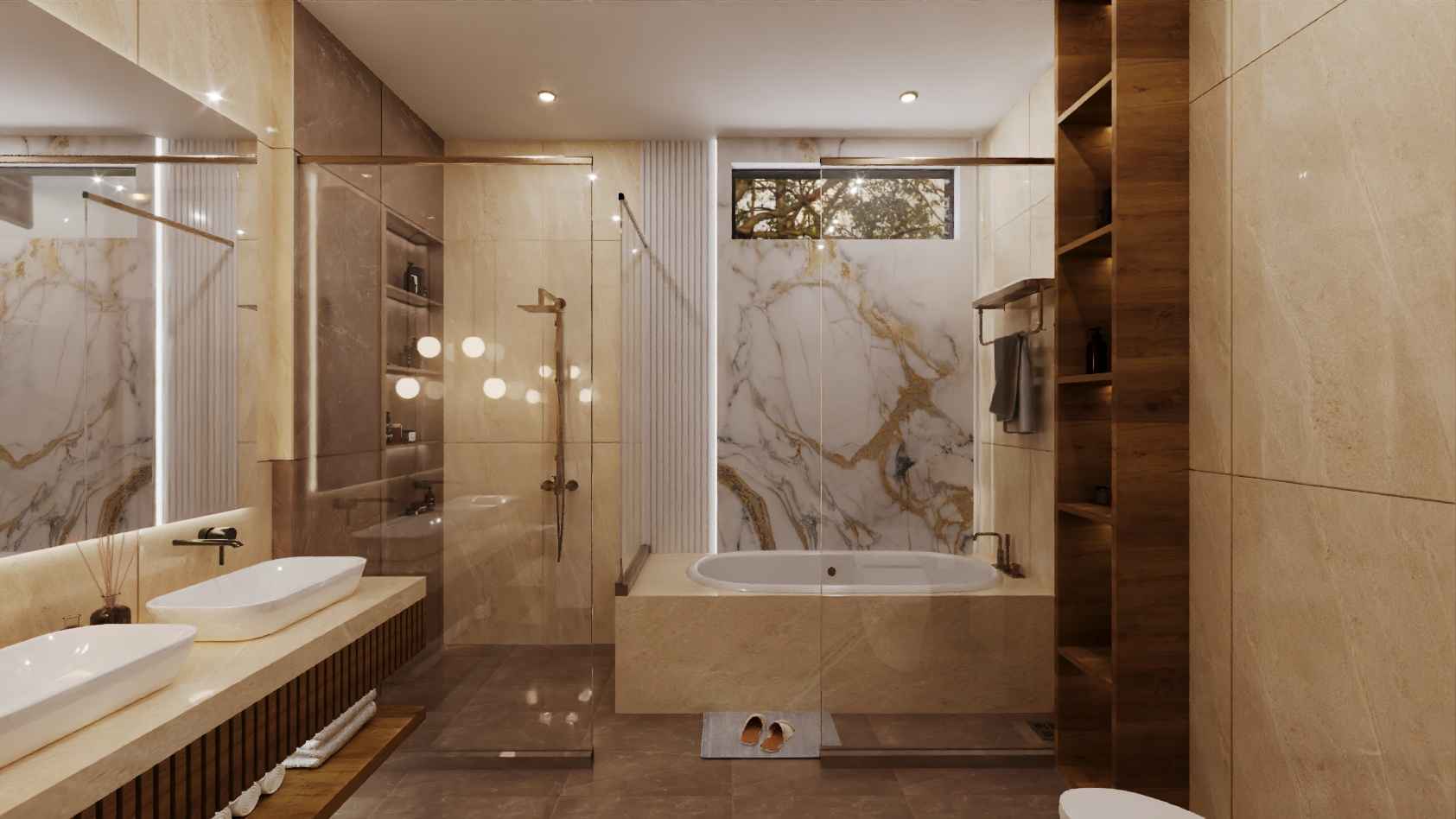
Modern bathrooms operate in a restrained, highly curated aesthetic register. The palette is almost always neutral whites, warm greys, deep charcoals, soft taupes occasionally grounded by a single bold material statement such as honed black marble, brushed concrete, or warm-toned timber. Every surface is chosen for both its visual quality and its tactile character.
The bathtub in a modern bathroom is invariably a freestanding form. It sits directly on the floor with nothing surrounding it no tub deck, no built-in surround, just continuous floor tile flowing beneath it and a slim floor-mounted faucet rising beside it. The silhouette of the tub whether a softly curved oval, a sharp-edged rectangular vessel, or an asymmetric contemporary form is what carries the room.
We work extensively with stone resin freestanding tubs in our modern bathroom projects. Warmer to the touch than acrylic, more refined in appearance than cast iron, stone resin allows for the clean, matte surfaces that modern design demands while delivering exceptional heat retention for a long, comfortable soak.
Material Selections That Define Modern Bathrooms
- Stone resin or matte-finish cast iron freestanding tubs as the primary focal element
- Large-format porcelain or natural stone tiles in muted tones with near-invisible grout joints
- Brushed or matte metal fixtures matte black, brushed nickel, or unlacquered brass
- Floating vanities with integrated or undermount basins to keep the floor plane clear
- Backlit niches and recessed shelving in place of surface-mounted storage
- Timber accents a teak bath caddy, a timber-clad wall panel to introduce natural warmth
Lighting in a Modern Bathroom
Lighting in a modern bathroom is never an afterthought. We design layered lighting schemes for every project: recessed ceiling downlights for general illumination, LED strip lighting beneath floating vanities and around mirror perimeters for warm ambient fill, and where architecture allows a large window or rooflight positioned to bathe the bathtub in natural light. That connection to the outdoors, the quality of natural light falling across the tub while you soak, is one of the most sought-after experiences in contemporary bathroom design.
Design Principles for Modern Bathrooms with Bathtubs
- Centre the design around a freestanding tub with a strong, sculptural silhouette
- Keep the colour palette neutral and restrained maximum three tones
- Use large-format tiles with minimal grout lines for seamless, uninterrupted surfaces
- Invest in quality hardware in a modern bathroom, every detail is visible and consequential
- Introduce one natural material timber, stone, or rattan to prevent the space feeling cold
- Use recessed and floating storage to eliminate all surface clutter
- Design a layered lighting scheme that includes both ambient and natural light sources
A modern bathroom with a beautifully chosen bathtub communicates sophistication through what it chooses to leave out. The restraint is the design.
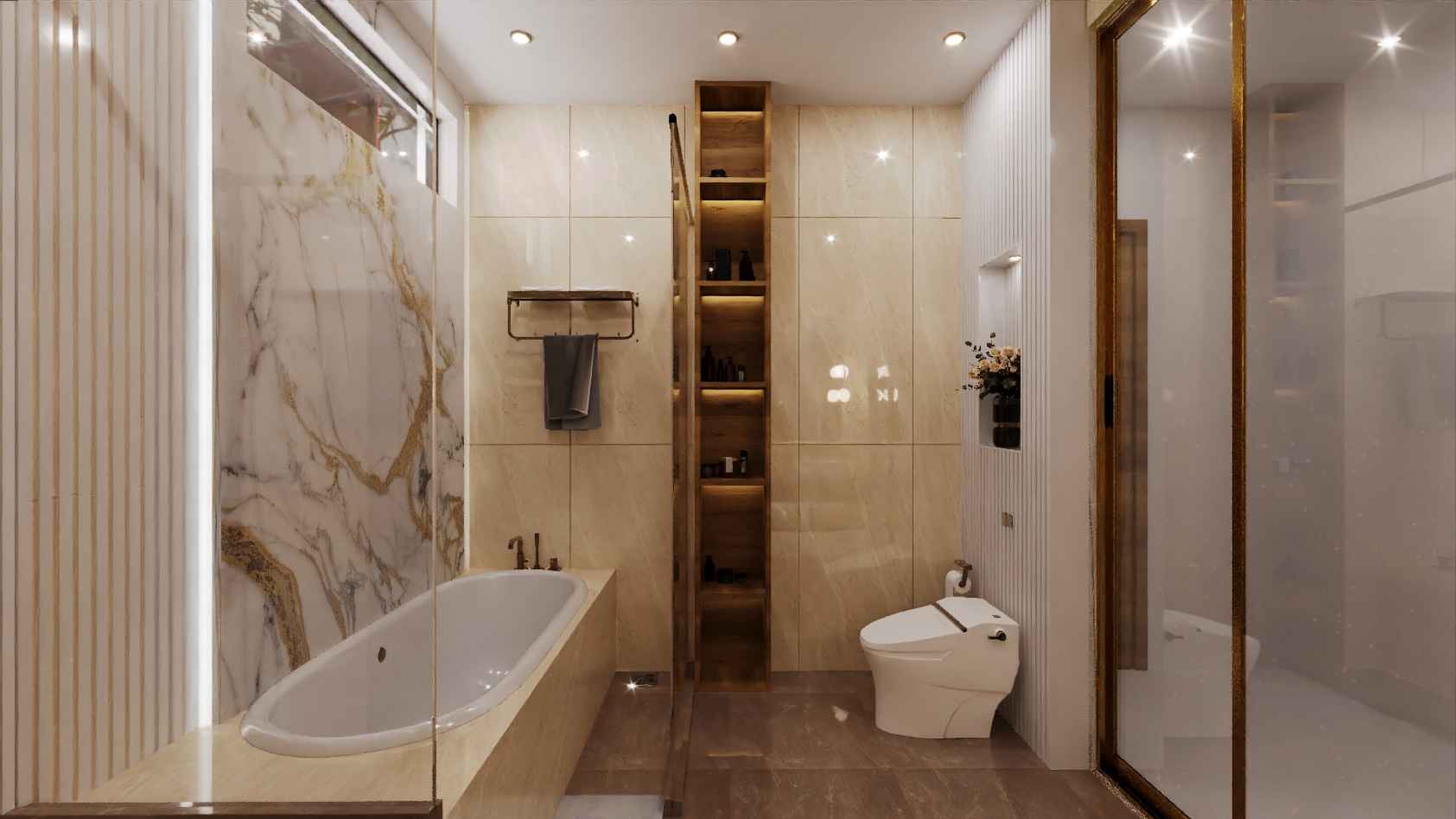
The master bathroom is the most personal room in any home. It is where each day begins and ends, and its design should reflect both the aesthetic sensibilities and the practical daily rhythms of the people who use it. When a bathtub is part of a master bathroom, it elevates the entire room from a functional necessity into something genuinely restorative.
In our master bathroom projects, we approach the design with a level of detail and personalisation that goes beyond any other room in the house. The result is always a space that feels both luxurious and deeply liveable.
Positioning the Bathtub in a Master Bathroom
In a master bathroom with generous square footage, the bathtub earns the room’s most prominent position. We most often place a freestanding tub in front of a large window framing a garden view, a cityscape, or simply the quality of changing natural light through the day. This single positioning decision transforms the bathing experience entirely. There is nothing quite like soaking in a deep tub with natural light pouring in and a view beyond the glass.
Where a window placement is not possible, we position the tub against a feature wall clad in dramatic stone, large-format marble-effect porcelain, or a textured plaster finish that gives the tub a strong visual backdrop and anchors it within the room.
His and Hers Functionality
Many of our master bathroom clients want a space that works equally well for two people with different daily routines. We address this through dual-vanity layouts two separate basins with individual mirror and storage zones paired with a shared bathtub and separate shower. This configuration allows two people to move through their morning routines simultaneously without congestion, while the bathtub and shower serve as shared, generous amenities at the heart of the room.
The Role of Materials and Finishes in Master Bathrooms
Master bathrooms are where we have the greatest creative latitude with materials, and where the investment in quality materials pays off most visibly. Full-height marble or stone tile on feature walls creates an immediate sense of grandeur. Heated floors — a practical luxury we specify in virtually every master bathroom we design — transform the experience of the space on cold mornings in a way that is difficult to overstate.
Hardware selections in a master bathroom deserve particular attention. Brushed gold and warm brass fixtures add warmth and a sense of considered luxury. Matte black delivers a sharper, more contemporary edge. Either finish, applied consistently across every fixture and fitting in the room, creates a cohesion that makes the space feel designed rather than assembled.
Design Principles for Master Bathrooms with Bathtubs
- Position the freestanding tub as the room’s focal point ideally in front of a window
- Design a dual-vanity layout to serve two users comfortably and simultaneously
- Specify heated floors as a baseline comfort feature
- Use full-height tile or stone on at least one feature wall behind or beside the tub
- Select all hardware in a single consistent finish applied throughout the room
- Include both a freestanding tub and a separate walk-in shower for full functionality
- Invest in quality materials in a master bathroom, they are seen and felt every single day
A master bathroom with a beautifully positioned bathtub is one of the most valuable and most personally meaningful design investments a homeowner can make.
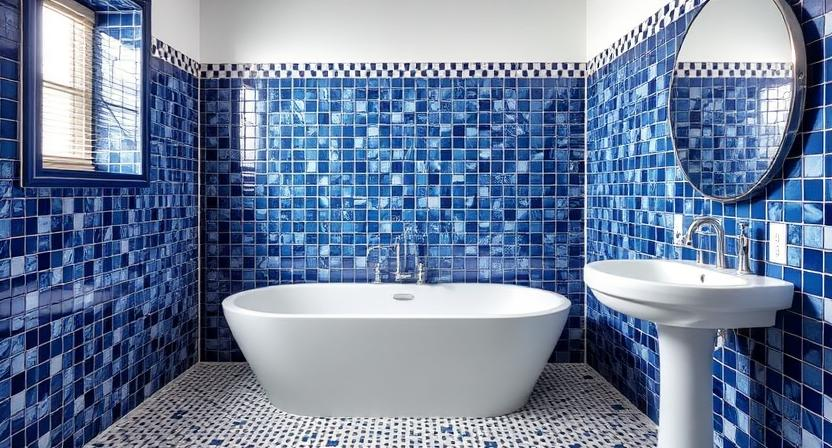
Fitting both a bathtub and a shower into a small bathroom is one of the more technically demanding design challenges we take on and one of the most satisfying to solve well. When it works, a small bathroom with both fixtures feels incredibly complete. Nothing has been sacrificed. Every need has been met. The space just works.
The Combined Tub-Shower as a Space-Saving Solution
The most space-efficient solution for a small bathroom that needs both a tub and a shower is a combined tub-shower wet zone. Rather than treating them as two separate fixtures requiring two separate footprints, we design them as a single integrated space.
A deep soaking tub with a ceiling-mounted or wall-mounted rainfall showerhead above it is our most frequently specified configuration for small combined bathrooms. The tub is enclosed by three tiled walls and a single frameless glass screen on the open side this screen is the key detail that makes the space feel open rather than enclosed. During shower use, the screen contains spray. During bath use, it folds back or slides aside entirely. The result is a dual-function wet zone that occupies the footprint of just one fixture.
Layout Efficiency in Small Combined Bathrooms
The layout of a small bathroom with both a tub and a shower must be approached with precision. We start every project by establishing a clear circulation path the unobstructed route a person takes to reach each fixture and work backwards from that to determine placement. In most small layouts, a linear arrangement works best: tub-shower zone on one end, toilet and vanity on the other, with a clear corridor between.
We pay particular attention to the position of the glass screen or enclosure in a combined tub-shower space. A frameless glass panel that runs from tub edge to ceiling, properly sealed, contains moisture entirely while creating no visual barrier. The bathroom reads as a single open space rather than a collection of partitioned zones.
Material and Colour Strategies for Small Combined Bathrooms
In a small bathroom containing both a tub and a shower, material and colour discipline is essential. We work with a single continuous tile across the floor, tub surround, and shower walls no changes in tile at the transition between zones, no border tiles, no contrasting accents. This unbroken material continuity is one of the most powerful tools available for making a small space feel larger and more coherent.
Grout colour is matched as closely as possible to the tile itself, further reducing the visual pattern that breaks up the surface. Fixtures are kept to a minimum: a single thermostatic valve controlling both the shower and a bath fill, wall-mounted where possible, in a slim, contemporary profile.
Design Principles for Small Bathrooms with Both a Tub and Shower
- Use a combined tub-shower wet zone to serve both needs within a single footprint
- Specify a ceiling-mounted or wall-mounted shower above the tub for dual functionality
- Install a frameless glass screen never a framed enclosure to preserve visual openness
- Apply a single continuous tile across all surfaces in the wet zone without transitions
- Match grout colour closely to tile colour to reduce visual fragmentation
- Use a single thermostatic valve to control both shower and bath fill
- Keep all hardware in one finish and one profile throughout the room
When both a bathtub and a shower are needed in a small bathroom, the answer is never to choose between them. With the right design approach, both can coexist beautifully and the space can still feel open, refined, and genuinely luxurious.