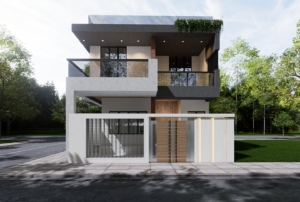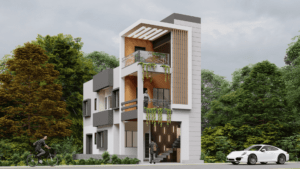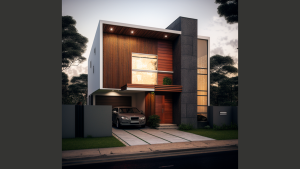
A 30×40 north facing house plot gives you 1,200 sq ft of buildable area. In Indian cities like Bangalore, Pune, Hyderabad, Nagpur, and Chennai, this is the most common BDA and HMDA-approved plot size for residential construction. When the main entrance faces north, Vastu Shastra classifies it as one of the three most auspicious orientations alongside east-facing because the north direction is governed by Lord Kubera, the deity of wealth and prosperity.
But auspiciousness alone doesn’t build a good house. The real advantage of a north-facing 30×40 plot is practical: north-facing homes in India receive diffused, non-harsh sunlight throughout the day since the sun tracks south. This means your living areas stay cooler in summer and naturally lit without direct heat glare a real benefit in Maharashtra, Karnataka, and Telangana climates.
What Is a North Facing House?
A house is considered north facing when the main entrance door opens towards the north direction. Many homeowners confuse plot orientation with house facing these are not the same.
The simple test: stand inside your home and walk out through the main door. If you are now facing north, you have a north facing house. The direction your plot runs along is secondary what matters is where the front door opens.
According to Vastu Shastra, the north direction is associated with Lord Kubera, who governs wealth, financial stability, and career growth. A properly designed north facing house channels this energy inward through the entrance, making placement of the main door and everything around it the most critical decision in the entire layout.
Why Choose a North Facing 30×40 Plot?
A 30×40 plot is flexible enough for a compact 2BHK, a full 3BHK, a duplex with rental income, or a modern bungalow with parking and garden. When it faces north, the benefits increase significantly:
Financial growth: North is the Kubera zone. A correctly placed entrance in the north activates wealth energy and is particularly powerful for business owners, traders, finance professionals, and government employees.
Balanced sunlight all day: Because the sun moves from east to west through the southern arc in India, a north-facing house never receives direct harsh sunlight on its front facade. The living areas get gentle, diffused light reducing heat gain and electricity bills.
Positive magnetic energy flow: Earth’s magnetic field runs from north to south. A north-facing entrance allows this energy to enter the home naturally, which Vastu texts describe as beneficial for health, clarity, and decision-making.
Better resale value: In Indian real estate markets, north and east facing properties consistently command 5–10% premium over south or west facing plots of identical size and location.
Ideal Vastu Layout for a 30×40 North Facing House
Before diving into each room, here is the complete direction-wise placement guide for a 30×40 north facing house:
| Room | Ideal Direction | Reason |
|---|---|---|
| Main Entrance | North – Padas 4 or 5 | Kubera zone, wealth inflow |
| Living Room | North or North-East | Light, energy, openness |
| Kitchen | South-East | Agni (fire) corner |
| Master Bedroom | South-West | Stability, authority |
| Bedroom 2 / Children | West or North-West | Growth, movement energy |
| Puja Room | North-East | Brahma zone, spiritual energy |
| Bathrooms | North-West or South-East | Proper energy discharge |
| Staircase | South, West, or South-West | Structural stability |
| Car Parking | North or North-East | Keeps north open |
| Overhead Water Tank | South-West or West | Heavy weight in stable zone |
| Underground Sump | North-East | Water element, ideal zone |
Understanding Pada Positions – Where Exactly to Place the Main Door
This is the most critical and most misunderstood aspect of north facing Vastu planning. Most homeowners know the door should face north, but they don’t know where on the north wall to place it. That’s where the pada system comes in.
In Vastu Shastra, each wall of a house is divided into 9 equal segments called padas. For a 30-foot north wall, each pada is approximately 3.3 feet wide. Each pada has a governing deity, energy type, and suitability for door placement.
| Pada | Position from NE Corner | Name | Suitability for Main Door |
|---|---|---|---|
| 1 | 0 – 3.3 ft | Shikhi | Avoid — fire energy, causes disputes |
| 2 | 3.3 – 6.6 ft | Parjanya | Avoid — unstable energy |
| 3 | 6.6 – 9.9 ft | Jayanta | Acceptable — moderate benefit |
| 4 | 9.9 – 13.2 ft | Mahendra | Best — wealth and prosperity |
| 5 | 13.2 – 16.5 ft | Sugrīva | Best — positive energy inflow |
| 6 | 16.5 – 19.8 ft | Pushpadanta | Acceptable — neutral |
| 7 | 19.8 – 23.1 ft | Varuna | Avoid — water zone, causes instability |
| 8 | 23.1 – 26.4 ft | Asura | Avoid — negative energy |
| 9 | 26.4 – 30 ft | Roga | Never — illness and misfortune |
For a standard 30×40 plot, place your main door between 9.9 ft and 16.5 ft from the northeast corner of the north wall. This is the Mahendra–Sugrīva zone and is considered the gold standard for north facing entrances in Vastu.
Practical tip: before finalising your door position, measure from the northeast corner of your plot and mark the 9.9 ft and 16.5 ft points. Your door frame should fall entirely within this range.
Ideal Room Sizes for a 30×40 North Facing House
Knowing the direction is not enough you also need practical room sizes that fit within the 30×40 footprint. With standard municipal setbacks of 2 ft on sides, 3 ft front, and 3 ft rear, the net construction footprint is approximately 24×33 ft = 792 sq ft per floor.
Below are recommended room sizes for a single-floor 2BHK layout:
| Room | Recommended Size | Area | Direction |
|---|---|---|---|
| Living + Dining | 14 × 12 ft | 168 sq ft | North – NE |
| Master Bedroom | 12 × 11 ft | 132 sq ft | South-West |
| Bedroom 2 | 10 × 10 ft | 100 sq ft | West or NW |
| Kitchen | 8 × 9 ft | 72 sq ft | South-East |
| Puja Room / Niche | 5 × 5 ft | 25 sq ft | North-East |
| Bathroom 1 (attached) | 5 × 7 ft | 35 sq ft | NW or SE |
| Bathroom 2 (attached) | 5 × 7 ft | 35 sq ft | NW or SE |
| Car Parking | 10 × 18 ft | 180 sq ft | North or NE |
| Passage + Utilities | – | ~45 sq ft | As required |
Total approximate used area per floor: 690–750 sq ft, leaving space for a small north-facing sit-out or balcony and a utility area.
For a 3BHK layout, the third bedroom (10×10 ft) can be accommodated in the south or south-east zone, or the home can be extended to a duplex structure.
Detailed Room Placement Guide
1. Main Entrance
Place the main door in Pada 4 or 5 of the north wall between 9.9 ft and 16.5 ft from the northeast corner. Use a solid wood door with a raised threshold. The entrance should be well-lit, clutter-free, and should not open directly into the kitchen or toilet.
Avoid placing the main door in Pada 1, 2, 8, or 9. Placement in the northwest extreme (Pada 8–9) is the single most common Vastu defect in north facing homes and is associated with financial instability and health issues.
2. Living Room
Place the living room in the north or north-east zone. This keeps the most energy-active area of the house open and well-lit. Furniture should be arranged so that guests and family members face east or north when seated. The TV unit can go on the south-east or west wall. Avoid placing heavy storage or almirahs in the north-east corner of the living room — keep it light and open.
3. Kitchen
The kitchen belongs in the south-east corner the Agni (fire) zone of the house. The cooking platform should be positioned along the east wall so the person cooking faces east. This is one of the strictest Vastu rules and applies regardless of house facing.
If the south-east placement is not structurally possible, the north-west is an acceptable second option. Never place the kitchen in the north-east this is considered a serious Vastu defect that can affect the health of women in the household and disrupt the fire-water balance of the home.
4. Master Bedroom
The master bedroom must be in the south-west corner. Southwest represents the Earth element in Vastu stable, heavy, and grounding. The head of the household sleeping here gains stability, better decision-making capacity, and sound sleep.
Bed placement: head pointing towards south (best) or east. Avoid placing a mirror or TV directly facing the bed. The attached bathroom should be in the south-east or north-west of the bedroom, not in the south-west corner itself.
5. Children’s Bedroom
Place the children’s bedroom in the west or north-west zone. These directions support movement, creativity, and outward energy well suited for growing children and young adults. The bed head should face east or south for concentration and restful sleep.
6. Puja Room
The north-east corner (Ishanya zone) is the most sacred space in any Vastu plan. In a 30×40 house, dedicate a 5×5 ft puja room here, or at minimum a built-in niche within the living room that faces north-east. The person praying should face east or north.
Never place the puja room below a staircase, adjacent to a bathroom wall, or directly above the kitchen. These are irreversible Vastu defects.
7. Bathrooms
Correct bathroom zones are north-west and south-east. Avoid placing bathrooms in the north-east (most harmful Vastu defect), the south-west (disturbs the master bedroom energy), or in the centre of the house (Brahmasthan).
8. Staircase
For a duplex or two-floor structure, the staircase must be in the south, west, or south-west. It should ascend in a clockwise direction. The area below the staircase can be used for storage but never for a puja room, kitchen, or main seating area.
North Facing House Vastu Plans 30×40
1. North Facing 30×40 House with Optimized Vastu Zones

Key Features of this Plan
-
Elevated main entrance facing north
-
Spacious living room in the prime north zone
-
Kitchen arranged in southeast for fire energy
-
Master bedroom in Southwest for stability
-
Central open space or courtyard for natural air circulation
This design ensures:
✨ Maximum positive energy inflow
✨ Balanced natural lighting
✨ Vastu-compliant room placement
2. Elegant North Facing 30×40 Vastu Layout
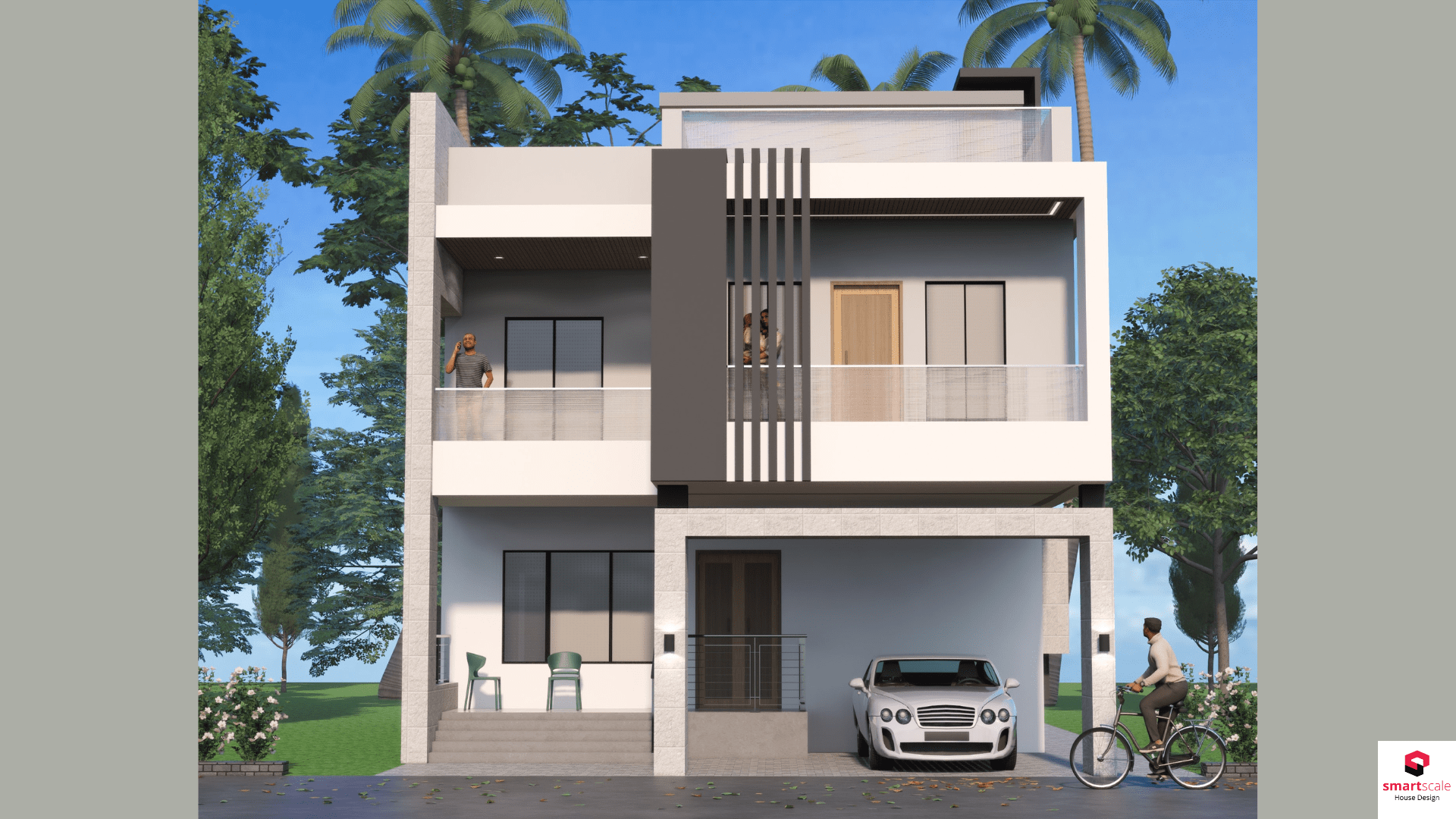
Why This Plan Works
-
A prominent north entrance welcoming positive energy
-
Living room dispersed towards north-east zone
-
Puja space strategically aligned for spiritual balance
-
Bedrooms and bathrooms placed with Vastu priority
This plan beautifully blends modern aesthetics with traditional Vastu principles, making it both functional and auspicious.
North Facing 30×40 Duplex House Plan
A duplex on a 30×40 plot allows construction across two floors for a total built-up area of approximately 1,500–1,600 sq ft, making it ideal for large families or generating rental income from one floor.
Ground Floor Layout
| Space | Size | Direction |
|---|---|---|
| Open Car Parking | 10 × 18 ft | North or NE |
| Living + Dining | 14 × 12 ft | North |
| Kitchen | 8 × 9 ft | South-East |
| Bedroom 1 with bath | 12 × 11 ft | South-West |
| Puja Niche | 5 × 5 ft | North-East |
| Utility / Wash Area | 6 × 5 ft | North-West |
First Floor Layout
| Space | Size | Direction |
|---|---|---|
| Master Bedroom with bath | 12 × 11 ft | South-West |
| Bedroom 3 | 10 × 10 ft | West |
| Bedroom 4 / Study | 10 × 10 ft | North-West |
| Open Terrace / Balcony | 10 × 6 ft | North |
| Overhead Water Tank | — | South-West or West |
Key Vastu Rules for the Duplex
- Staircase must be in south, west, or south-west never north-east
- First-floor construction should be heavier (thicker walls, more storage) on the south and west sides
- No bedroom directly above the puja room
- Overhead water tank always in south-west or west never north or north-east
- The north-facing balcony on the first floor is a Vastu bonus it keeps the north open while adding ventilation and natural light
Common Mistakes in North Facing 30×40 Homes
These are the most frequent Vastu defects found in north facing homes across India and the ones most likely to be flagged during a Vastu consultation:
1. Entrance in Pada 8 or 9 (extreme north-west): The single most common mistake. Placing the door near the Asura or Roga pada brings negative energy and health problems. Always measure from the north-east corner before finalising door position.
2. Kitchen in the north-east: Combines fire and water energy in the wrong zone. Causes health issues and financial instability according to Vastu. Move it to south-east or north-west.
3. Toilet in the Brahmasthan (centre of house): The central zone of any house is energetically neutral and must remain open or lightly used. A toilet here is considered one of the most serious Vastu defects.
4. Heavy storage or staircase in the north: The north must stay light and open to allow energy inflow. Placing a heavy almirah, water tank, or staircase in the north blocks this flow.
5. Overhead water tank in the north-east: Water in the north-east is acceptable as an underground sump, but an elevated overhead tank here adds unnecessary weight and disturbs the Ishanya zone. Place overhead tanks in the south-west or west.
6. Puja room below staircase: Very common in compact 30×40 homes where space is tight. This is a direct Vastu defect find a dedicated north-east corner niche instead.
7. Bedroom in south-east for the head of household: The south-east (Agni zone) is energetically unstable for sleeping. This placement causes restlessness, health issues, and relationship conflict. Master bedroom must always be south-west.
Vastu Colors for a North Facing 30×40 House
Color selection in Vastu is zone-based, not purely aesthetic. Here are the recommended colors for each area of a north facing home:
| Zone / Room | Recommended Colors | Avoid |
|---|---|---|
| North wall / Living Room | Light blue, white, cream, aqua | Red, black, dark brown |
| North-East (Puja, Entrance) | White, light yellow, pale green | Dark or heavy tones |
| South-East (Kitchen) | Soft orange, light yellow, coral | Blue, black |
| South-West (Master Bedroom) | Beige, light brown, peach, earth tones | White, blue, grey |
| West (Children’s Bedroom) | Light blue, green, white | Red, orange |
| Exterior / Elevation | Off-white, cream, warm grey, sandstone | Jet black, bright red |
Water, Slope, and Tank Placement
These three factors are frequently overlooked but are among the most impactful Vastu decisions for a 30×40 plot:
Underground water sump: North-east is ideal. Water in the north-east zone energises the Kubera direction and supports financial flow.
Overhead water tank: South-west or west. The elevated weight in the south-west adds to the structural “heaviness” of the stable zone, which Vastu considers beneficial.
Plot slope: The plot should slope down from south-west to north-east. Higher elevation in the south and west, lower in the north and east. This supports natural water drainage towards the north-east and aligns with Vastu’s principle that the light zones (north, east) stay lower and open.
Borewell or water source: North, north-east, or east never south or south-west.
Is a North Facing House Good for Everyone?
North facing houses are universally considered auspicious in Vastu Shastra, but they are especially beneficial for:
- Business owners and entrepreneurs
- People in banking, finance, and trading
- Government employees and administrators
- Those working in media, communication, or technology
The benefits are strongest when the entire layout is Vastu-compliant not just the facing. A north-facing entrance in the correct pada, combined with south-west master bedroom, south-east kitchen, and north-east puja room, creates a home where all Vastu zones work together.
For individuals whose birth star (Janma Nakshatra) does not traditionally align with the north direction, a Vastu expert can suggest simple remedies placement of a Kuber yantra, specific colors, or a water feature near the entrance without changing the structural layout.
Construction Cost for a North Facing 30×40 House (2025–26)
One of the most searched aspects of this topic and one no other Vastu page answers clearly. Here are current construction cost benchmarks for a 30×40 plot in Indian Tier-2 cities:
| Construction Grade | Cost per Sq Ft | Total Estimated Cost |
|---|---|---|
| Basic (brick, plaster, standard finishes) | ₹1,400 – ₹1,700 | ₹17 – ₹21 lakhs |
| Standard (RCC frame, modular kitchen, vitrified tiles) | ₹1,800 – ₹2,200 | ₹22 – ₹27 lakhs |
| Premium (designer elevation, marble, false ceiling) | ₹2,400 – ₹3,000 | ₹29 – ₹36 lakhs |
Estimates are for single-floor construction on a 30×40 plot (1,200 sq ft gross area) in cities like Nagpur, Pune, Nashik, Aurangabad, Hubli, and Mysore. Costs vary with city, contractor, and material rates at the time of construction.
Duplex construction cost: Add approximately 70–80% of the ground-floor cost for the first floor, since foundation and structural costs are already covered. A standard duplex on a 30×40 plot typically costs ₹32–₹55 lakhs depending on grade.
North-facing elevation premium: A well-designed north-facing front elevation with stone cladding, a double-height entrance, or a feature wall typically adds ₹1.5–₹3 lakhs to base construction cost. Since the north wall is your home’s visual face, this investment has the highest return in terms of curb appeal and resale value.
Construction Tips for 30×40 Plots
- Maintain proper municipal setbacks typically 2 ft sides, 3 ft front, 3 ft rear before planning internal layout
- Use large windows on the north and east walls for maximum diffused light
- Keep the central zone of the house (Brahmasthan) open an internal courtyard, skylight, or simply an open passage works well on a 30×40 footprint
- Use vertical storage (floor-to-ceiling cabinets) to maximise usable space without expanding the footprint
- In compact 2BHK layouts, a combined living-dining space in the north zone performs better spatially and energetically than separating them into two small rooms
- If budget is tight, prioritise getting the entrance position (pada 4–5) and kitchen placement (south-east) correct above everything else these two factors have the highest Vastu impact
Conclusion
A north facing house Vastu plan for a 30×40 plot combines one of India’s most popular plot sizes with one of Vastu Shastra’s most auspicious orientations. When designed correctly with the main door in Pada 4 or 5, kitchen in the south-east, master bedroom in the south-west, and puja room in the north-east this layout creates a home that is energetically balanced, practically efficient, and financially positive.
The key is specificity. It is not enough to know that the door should face north. You need to know where on the north wall it should be placed. It is not enough to know the kitchen should be in the south-east. You need to know the exact cooking direction and what to avoid. This level of detail is what separates a genuinely Vastu-compliant home from one that simply faces north.
Whether you are planning a compact 2BHK, a full 3BHK, or a duplex with rental potential, the 30×40 north facing plot gives you enough flexibility to do it right with proper Vastu alignment, smart space planning, and a modern elevation that makes the most of the north-facing frontage.
Build Your North Facing 30×40 Home with SmartScale House Design
Planning a north facing house goes beyond knowing the rules it requires translating Vastu principles into an actual working floor plan, structural drawing, and 3D elevation that your contractor can build from.
At SmartScale House Design, we specialise in:
Customised 30×40 Vastu-compliant house plans with accurate pada-based door placement
Modern 3D front elevation designs for north facing homes
Structural and working drawings for municipal approval
Online architect consultation across India Nagpur, Pune, Bangalore, Hyderabad, and beyond
Budget-friendly layouts across basic, standard, and premium construction grades
Get your personalised north facing 30×40 house plan today. Contact SmartScale House Design and turn your plot into a Vastu-perfect, architect-designed home.
Frequently Asked Questions
- Is a north facing house good as per Vastu? Yes. North-facing houses are considered highly auspicious in Vastu Shastra because the north direction is governed by Lord Kubera, the deity of wealth and prosperity. They are particularly beneficial for business owners, finance professionals, and entrepreneurs. When the entire layout is Vastu-compliant correct pada entrance, south-east kitchen, south-west master bedroom, and north-east puja room a north facing house supports financial growth, health, and household harmony.
- Where should the main door be in a north facing 30×40 house? The main door should be placed in the 4th or 5th pada of the north wall, measured from the northeast corner. On a 30-foot north wall, this corresponds to a position between 9.9 feet and 16.5 feet from the northeast corner. These padas Mahendra and Sugrīva are associated with wealth inflow and positive energy. Avoid placing the door in the 8th or 9th pada (the north-west extreme), which corresponds to the Asura and Roga zones.
- Which direction should the kitchen face in a north facing house? The kitchen should be in the south-east corner of the house, which is the Agni (fire) zone in Vastu. The person cooking should face east. If south-east placement is not possible due to layout constraints, north-west is an acceptable alternative. Never place the kitchen in the north-east this is considered one of the most serious Vastu defects and can affect the health of household members.
- Where should the master bedroom be in a north facing 30×40 house? The master bedroom must be in the south-west corner. This is the Earth zone in Vastu, associated with stability, authority, and grounded energy. The head of the household sleeping here with the head of the bed pointing south or east experiences better sleep quality, sound decision-making, and overall stability. Avoid placing the master bedroom in the south-east (Agni zone), which causes restlessness and health issues.
- How many floors can be built on a 30×40 plot? Most municipal corporations in India permit Ground + 2 floors (G+2) on a 30×40 plot, subject to local FSI (Floor Space Index) rules. In cities like Bangalore under BBMP, the permissible FSI is typically 1.75–2.0, allowing a total built-up area of 2,100–2,400 sq ft across all floors. In Maharashtra cities under local municipal rules, FSI ranges between 1.0 and 1.5 for residential plots. Always verify your city’s current FSI and setback rules with your local planning authority before designing.
- Can we have car parking in a north facing 30×40 house? Yes. Open car parking is ideal in the north or north-east zone of a 30×40 plot as per Vastu. This keeps the north open and unobstructed, which aligns with Vastu’s principle that the north and east sides should have fewer heavy structures. A standard car parking space requires a minimum of 10×18 ft. Covered parking with a shed is acceptable in the north or north-west but should not have a heavy slab or full room above it in the north-east zone.
- What is the cost of constructing a north facing house on a 30×40 plot? The construction cost for a north facing house on a 30×40 plot ranges from ₹17 lakhs to ₹36 lakhs for single-floor construction, depending on the quality of finishes. Basic construction costs ₹1,400–₹1,700 per sq ft, standard construction costs ₹1,800–₹2,200 per sq ft, and premium construction costs ₹2,400–₹3,000 per sq ft in Tier-2 Indian cities as of 2025–26. Duplex construction on the same plot typically costs ₹32–₹55 lakhs depending on grade.
- Is a north facing house good for all zodiac signs and professions? North-facing houses are broadly auspicious and suit most individuals, but they are especially powerful for people in business, finance, banking, government service, and trading professions. According to Vastu, this orientation is universally positive when the layout is correctly designed. For individuals whose birth star does not traditionally align with the north direction, a Vastu expert can suggest simple remedies such as placement of a Kuber yantra, water feature near the entrance, or specific colors without requiring any structural changes.
- What is the difference between plot facing and house facing? Plot facing refers to which direction the longer boundary of the plot aligns with. House facing refers to the direction the main entrance door opens towards. These are not always the same. A plot that runs north-south can have a house with an east-facing door if the entrance is placed on the east side. In Vastu, what matters is always the house facing determined by the main door not the plot orientation.