Building a home is one of the biggest financial decisions most Indians will ever make. Yet thousands of homeowners begin construction without a clear understanding of what RCC work actually costs and end up overspending by lakhs, or worse, compromising on structural quality to cut corners.
This guide exists to change that. Whether you’re planning a ground-floor house in a Tier 2 city or a G+2 structure in Bangalore, this complete 2026 guide breaks down every aspect of RCC construction cost in India rate per sq ft with and without material, roof slab cost, city-wise variation, a real calculation example, and practical tips to save 10–15% without sacrificing strength.
Table of Contents
ToggleWhat is RCC Construction?
RCC Meaning
RCC stands for Reinforced Cement Concrete. It is a composite building material made by combining cement, sand, coarse aggregates (crushed stone or gravel), water, and steel reinforcement bars (rebars) cast together into a unified structural element.
Plain concrete is strong in compression — it can handle heavy loads pressing down on it. But it is weak in tension — it cracks under bending or pulling forces. Steel, on the other hand, handles tension exceptionally well. When the two are combined, RCC becomes a material that handles both compression and tension simultaneously, making it the most reliable structural material for modern Indian homes.
Without steel reinforcement, a concrete slab would crack under its own weight within years. The steel cage embedded inside is what gives RCC its long-term structural integrity.
Where RCC is Used in House Construction
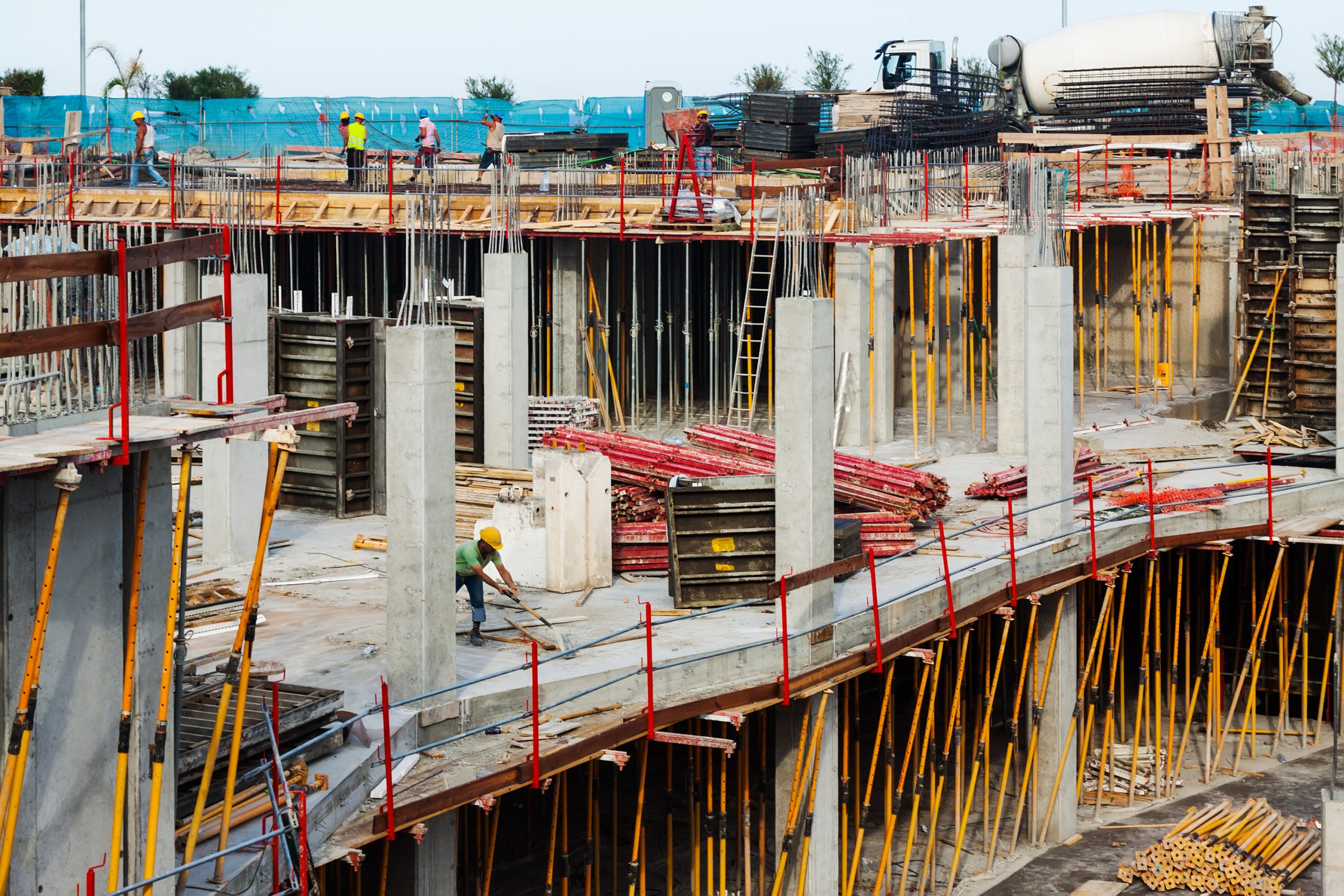
RCC is not just used for roofs. It forms the entire skeletal system of a building. Here’s where it appears in a typical Indian home:
Foundation — The base that transfers the entire load of the building to the ground. RCC footings are essential for stable soil bearing.
Columns — Vertical members that carry the load from beams and slabs down to the foundation. The columns are literally the legs of your house.
Beams — Horizontal members that span between columns and support the slab above. They distribute load and prevent the slab from sagging.
Slabs (Roof/Floor) — The horizontal RCC plates that form your roof or intermediate floors. This is the most visible and most discussed RCC element in residential construction.
Staircase — Staircases in multi-storey homes are almost always built in RCC for strength and fire resistance.
Lintels — Small RCC beams placed above door and window openings to carry the wall load above them.
RCC Construction Cost Per Square Foot in India (2026)
RCC Rate Per Sq Ft With Material
When you hire a contractor on a “with material” basis, they supply everything — cement, steel, sand, aggregates, shuttering, and labour. You pay a single rate per sq ft and they handle procurement and execution.
Here’s the current 2026 rate breakdown for residential RCC construction:
| Quality Level | Rate Per Sq Ft (With Material) |
|---|---|
| Basic Residential | ₹1,500 – ₹2,500 |
| Standard Quality | ₹2,500 – ₹3,500 |
| Premium Finish | ₹3,500 and above |
What is included in “with material” rates:
The rate covers cement (typically OPC 43 or 53 grade), TMT steel bars (Fe500 grade), river sand or M-sand, coarse aggregates, all labour charges, shuttering material and its labour, concrete mixing (machine or RMC), and basic finishing of the slab surface. Some contractors also include waterproofing treatment in the premium bracket.
Important note: “With material” rates vary significantly based on the steel quantity specified in the structural drawing, the concrete grade (M20 vs M25), and the contractor’s margin. Always ask for a line-item breakup even when signing a lump-sum contract.
RCC Construction Cost Per Square Foot Without Material
In a “without material” or labour-only contract, you procure all materials yourself and the contractor provides only the workforce and supervision.
Labour-only rate: ₹300 – ₹600 per sq ft
What is included:
- Mason labour for concrete work
- Shuttering carpenter labour (formwork erection and removal)
- Bar bender labour (steel cutting, bending, and binding)
- General helper charges
What is NOT included:
- Cement
- Steel (TMT bars)
- Sand (river sand or M-sand)
- Coarse aggregates
- Shuttering material (plywood, props, beams)
- Any equipment hire
Choosing the labour-only model gives you complete control over material quality and sourcing, but requires active site supervision and strong vendor relationships. It works best when you have an experienced civil engineer or site supervisor managing purchases on your behalf.
RCC Roof Cost Per Square Foot in India
The roof slab is the single most expensive and structurally critical RCC element in any home. Getting it right — and budgeting correctly for it — is non-negotiable.
RCC Slab (Roof) Cost Per Sq Ft
| Scope | Rate Per Sq Ft |
|---|---|
| Slab casting only (labour + shuttering + concrete) | ₹180 – ₹350 |
| Complete roof slab including steel & all material | ₹450 – ₹700 |
The lower range (₹180–₹350) typically applies to labour and concrete work only, without accounting for steel. Once you add TMT steel bars — which are the single largest cost component — the total cost per sq ft climbs to ₹450–₹700 for a standard residential roof.
For RMC (Ready Mix Concrete) with M25 grade and higher steel density, costs can touch ₹750–₹900 per sq ft in metro cities.
Factors Affecting RCC Roof Cost
Slab thickness is the primary driver. A standard residential slab is 4–5 inches (100–125 mm) thick. Increasing thickness to 6 inches for heavier loads adds 15–20% to material costs directly.
Steel quantity varies based on structural design. A conservatively designed slab might use 3 kg of steel per sq ft, while a heavily loaded slab might use 5 kg or more. Since steel costs ₹65–₹80 per kg in 2026, this difference alone can be ₹130–₹160 per sq ft.
Concrete grade matters significantly. M20 (1:1.5:3 mix) is standard for most residential slabs. M25 offers higher strength and is preferred for G+2 or above structures, but costs 10–12% more per cubic metre.
Labour rates vary by city and season. Post-monsoon (October–February) tends to have better labour availability and slightly lower rates.
Location affects transportation of materials, access to RMC plants, and overall contractor margins.
Detailed RCC Cost Breakdown (Material-Wise)
Understanding the cost of each material component helps you verify contractor quotes and identify where savings are possible.
Cement Cost
For a 1,000 sq ft RCC slab of standard 5-inch thickness using M20 grade concrete, you’ll need approximately 400–450 bags of cement (50 kg each). At the current 2026 average retail price of ₹380–₹420 per bag, the cement cost alone works out to ₹1.52 lakh – ₹1.89 lakh for the slab portion.
Top cement brands used in Indian residential construction include UltraTech, ACC, Ambuja, Shree, and Dalmia. Premium brands cost ₹10–₹30 more per bag but offer consistent quality and better workability.
Steel Cost
Steel is typically the largest single material cost in RCC construction. For residential slabs, the standard requirement is 3–5 kg of TMT steel per sq ft, depending on structural design and loading.
For a 1,000 sq ft slab at 4 kg/sq ft, you need approximately 4,000 kg (4 MT) of TMT bars. At the current 2026 average rate of ₹65–₹78 per kg for Fe500 TMT bars, this comes to ₹2.6 lakh – ₹3.12 lakh for steel alone.
Steel prices fluctuate based on global iron ore prices and domestic demand. Always lock in steel rates before finalising your contractor quote.
Sand & Aggregate Cost
River sand costs ₹1,800–₹3,500 per cubic metre depending on location. It offers excellent workability but is increasingly regulated due to environmental concerns.
M-sand (Manufactured Sand) costs ₹1,200–₹2,200 per cubic metre and is now widely accepted as a quality alternative. It has consistent gradation and is environmentally preferable. For most residential projects, M-sand performs equally well as river sand when properly graded.
Coarse aggregates (crushed stone, 20mm grade) cost ₹1,400–₹2,200 per cubic metre. Quality aggregate should be clean, hard, and well-graded — reject any aggregate with excessive dust or flat particles.
Shuttering Cost
Shuttering (formwork) is the temporary structure that holds liquid concrete in shape until it gains sufficient strength. It is typically made of plywood panels, wooden/steel props, and cross-beams.
Shuttering cost: ₹15–₹30 per sq ft for material and erection. Steel formwork or reusable systems cost more upfront but save money on multi-storey projects.
Labour Cost
Labour rates in 2026 vary by city but here are the approximate daily wage rates across India:
| Worker Type | Daily Rate (₹) |
|---|---|
| Mason (Mistri) | ₹700 – ₹1,200 |
| Helper (Mazdoor) | ₹450 – ₹700 |
| Bar Bender | ₹650 – ₹1,100 |
| Shuttering Carpenter | ₹700 – ₹1,100 |
Metro cities like Mumbai and Delhi are at the higher end of this range. Labour rates in Tier 2 and Tier 3 cities are typically 20–30% lower.
RCC Construction Cost Calculation Example (1,000 Sq Ft House)
Let’s work through a realistic sample calculation for a 1,000 sq ft single-floor house with RCC structure in a Tier 1 city.
Assumptions:
- 1,000 sq ft built-up area
- Standard 5-inch slab
- M20 concrete grade
- Steel @ 4 kg per sq ft
- Standard labour rates (Bangalore/Hyderabad level)
| Component | Quantity | Rate | Estimated Cost |
|---|---|---|---|
| Steel (TMT Fe500) | 4,000 kg | ₹70/kg | ₹2,80,000 |
| Cement | 420 bags | ₹400/bag | ₹1,68,000 |
| Sand (M-sand) | 18 cu m | ₹1,800/cu m | ₹32,400 |
| Aggregates (20mm) | 25 cu m | ₹1,800/cu m | ₹45,000 |
| Shuttering (material) | 1,000 sq ft | ₹22/sq ft | ₹22,000 |
| Labour (all types) | 1,000 sq ft | ₹400/sq ft | ₹4,00,000 |
| Miscellaneous (binding wire, curing, etc.) | Lumpsum | — | ₹25,000 |
| Total Estimated RCC Structure Cost | ₹9,72,400 |
This works out to approximately ₹970 per sq ft for the structural RCC work alone — not including masonry, plastering, flooring, doors, windows, or finishing. Total construction cost including all finishes would be ₹1,800–₹2,800 per sq ft depending on specification.
Note: This is an indicative calculation. Actual costs depend on site conditions, design complexity, and current local material prices. Always get a detailed estimate from a structural engineer.
Factors That Affect RCC Construction Cost in India
City: Metro vs Tier 2/3
Labour, material transport, and contractor margins all vary dramatically by location. A construction project that costs ₹2,200 per sq ft in Lucknow might cost ₹3,000–₹3,500 per sq ft in Mumbai or Bangalore for the same quality level.
Steel Price Fluctuation
Steel accounts for 30–40% of the total RCC cost. Since steel is a globally traded commodity, its prices fluctuate based on international iron ore prices, energy costs, and domestic demand cycles. A ₹5/kg change in steel price can shift your 1,000 sq ft project cost by ₹20,000 or more.
Cement Brand and Grade
The difference between a budget cement brand and a premium one is ₹20–₹50 per bag. For 400 bags, that’s a ₹8,000–₹20,000 difference. This is not where you want to optimise — cement quality directly affects concrete strength and durability.
Labour Availability
Skilled bar benders and shuttering carpenters are in high demand, especially in peak construction seasons (October to February). Labour shortages can delay your project and push up daily wages by 10–20%.
Structural Design Complexity
A simple rectangular floor plan with uniform column spacing is the most cost-efficient RCC design. Cantilevers, irregular shapes, curved elements, and double-height spaces all require more steel, more complex shuttering, and more skilled labour — all of which add cost.
Soil Condition
Poor or soft soil requires deeper foundations or raft foundations, which significantly increase the volume of RCC work and cost. Always conduct a soil test (SBC test) before finalising your structural design.
Building Height (G+1, G+2)
Taller buildings require heavier columns, deeper footings, and more robust slab designs. A G+2 structure typically costs 8–15% more per sq ft than a ground-floor structure due to higher structural loads and increased steel requirements.
RCC Cost in Different Indian Cities (Approximate – 2026)
| City | RCC Cost With Material (per sq ft) | Labour-Only (per sq ft) |
|---|---|---|
| Mumbai | ₹2,800 – ₹4,000 | ₹500 – ₹700 |
| Delhi NCR | ₹2,500 – ₹3,800 | ₹450 – ₹650 |
| Bangalore | ₹2,400 – ₹3,600 | ₹420 – ₹620 |
| Chennai | ₹2,200 – ₹3,400 | ₹400 – ₹600 |
| Hyderabad | ₹2,000 – ₹3,200 | ₹380 – ₹580 |
| Pune | ₹2,200 – ₹3,300 | ₹400 – ₹600 |
| Tier 2 Cities (Nagpur, Jaipur, Indore, etc.) | ₹1,600 – ₹2,600 | ₹300 – ₹500 |
| Tier 3 / Small Towns | ₹1,400 – ₹2,200 | ₹250 – ₹420 |
These are approximate ranges based on 2026 market data. Actual rates depend on specific site conditions, contractor terms, and current material prices in your location.
RCC Construction Cost With Material vs Without Material – Which is Better?
This is one of the most common questions homeowners ask, and the answer depends entirely on your situation.
| Parameter | With Material (Turnkey) | Without Material (Labour Only) |
|---|---|---|
| Control over material quality | Low – contractor decides | High – you choose brands |
| Quality assurance | Depends on contractor | Depends on your supervision |
| Risk | Contractor bears material risk | You bear procurement risk |
| Cost transparency | Less – bundled pricing | High – every item is priced |
| Convenience | Very high | Low – demands time & knowledge |
| Potential for savings | Limited | 8–15% savings possible |
Choose “With Material” (Turnkey) if you live away from the site, lack time for daily supervision, or don’t have experience managing material vendors. Ensure you specify brands and grades clearly in the contract.
Choose “Without Material” (Labour Only) if you have a reliable civil engineer or PMC (Project Management Consultant) on site, understand construction materials, and want to control quality directly. You can save significantly by purchasing steel and cement directly from authorised dealers.
RCC Roof Casting Process (Step-by-Step)
Understanding the casting process helps you supervise quality at your site and ensures nothing is missed.
Step 1 — Steel Placement: TMT bars are cut, bent, and bound as per the structural drawing. Two layers of steel mesh (top and bottom reinforcement) are placed with the correct cover blocks to maintain the required concrete cover (typically 25mm for slabs).
Step 2 — Shuttering Setup: Plywood panels are placed below the slab area, supported by vertical props and horizontal beams. The shuttering must be level and strong enough to hold the full weight of wet concrete without deflecting.
Step 3 — Inspection Before Pouring: This step is critical. Your structural engineer must inspect the steel placement, spacing, cover, and shuttering rigidity before any concrete is poured. Never skip this inspection.
Step 4 — Concrete Mixing and Pouring: Concrete is either mixed on-site using a mixer machine or ordered as Ready Mix Concrete (RMC). RMC is strongly recommended for slabs above 800 sq ft as it ensures consistent mix ratios and reduces segregation risk. Concrete is poured evenly across the slab area.
Step 5 — Compaction and Levelling: A needle vibrator is used to compact the concrete and remove air pockets. After vibration, the surface is screeded (levelled) using a screed board to achieve a flat, even surface.
Step 6 — Curing: Curing is arguably the most important and most neglected step in Indian construction. The slab must be kept wet for a minimum of 14 days (ideally 21 days) after casting. Water curing ensures the concrete achieves its designed strength. A slab that is not cured properly loses 20–30% of its potential strength.
How to Reduce RCC Construction Cost
You don’t need to compromise on quality to reduce cost. Smart planning is all it takes.
Get a proper structural design done. Many homeowners skip hiring a structural engineer and rely on contractor thumb rules. This often results in steel overuse — contractors tend to add 15–20% more steel than necessary as a safety buffer. A proper structural design optimises steel usage for the actual load, which can save ₹50,000–₹1,50,000 on a typical home.
Avoid over-specification of steel. Using Fe550 steel when Fe500 is sufficient, or increasing bar diameters beyond what is structurally required, adds cost without proportionate benefit. Follow your structural engineer’s specifications precisely.
Choose M-sand over river sand where appropriate. M-sand is now widely available, environmentally compliant, and 20–35% cheaper than river sand in most cities. Ensure proper gradation testing before use.
Plan slab thickness correctly. Increasing slab thickness from 5 inches to 6 inches “just to be safe” adds significant concrete and steel cost. The right thickness is determined by span, load, and concrete grade — not intuition.
Avoid redesigns during construction. Every design change after construction begins costs 2–3x more than if it had been planned upfront. Breaking already-cast concrete, adding new columns, or changing slab depths mid-project wastes both material and labour. Invest time in finalising your design before breaking ground.
Buy steel and cement directly. Purchasing TMT bars from an authorised distributor and cement from a company depot or authorised dealer (rather than through a contractor) saves 5–10% on material costs alone.
Conclusion
RCC construction is not just a building method it is the structural backbone that determines whether your home stands safely for 50 years or develops cracks within a decade. Understanding the real costs involved, from steel and cement to shuttering and labour, is the single best thing you can do before starting your project.
Key takeaways: RCC costs in India in 2026 range from ₹1,500–₹3,500 per sq ft with material, depending on quality and location. The biggest variables are steel usage and city. Choosing between turnkey and labour-only contracts depends on your available time and supervision capability. And smart structural design — not cheap materials — is where meaningful savings come from.
Proper planning before construction begins can realistically save 10–15% on your total RCC cost without sacrificing an inch of structural quality. That’s ₹1–₹3 lakh saved on a typical Indian home money that can go toward better finishes, better fittings, or simply a more comfortable budget cushion.
Always consult a licensed structural engineer before finalising your design. No online guide, however detailed, replaces site-specific engineering advice.
Plan Your Home Smarter with SmartScale House Design
Before your contractor quotes you a rate, know exactly what your home should cost.
SmartScale House Design helps Indian homeowners get accurate, engineer-verified construction cost estimates, optimised structural designs, and expert guidance so you never overpay and never compromise on quality.
- Accurate cost estimates for your plot size and location
- Structurally optimised designs that reduce steel wastage
- Expert consultation before you break ground