Designing a simple Indian kitchen design for middle class family doesn’t have to break the bank. With rising construction costs across India and the need for functional, durable spaces that can handle daily heavy cooking, middle-class families are increasingly looking for practical solutions that balance affordability with quality. Whether you’re building a new home or renovating your existing kitchen, the key lies in smart planning, choosing the right materials, and maximizing every square foot of space.
Indian kitchens have unique requirements from storing large quantities of grains and masalas to accommodating pressure cookers, mixers, and traditional utensils. Unlike Western kitchens, ours witness daily heavy-duty cooking with multiple spices, oils, and cooking styles that demand excellent ventilation and easy-to-clean surfaces. This comprehensive guide will walk you through practical layouts, budget-friendly materials, smart storage solutions, and realistic cost breakdowns to help you create a low budget Indian kitchen design that serves your family for years to come. Whether you’re working with a small kitchen design for middle class apartments or planning a modular kitchen under budget, you’ll find actionable ideas that work within Indian conditions and constraints.
Table of Contents
ToggleWhat Makes a Kitchen Design Ideal for a Middle Class Indian Family?
Before diving into layouts and materials, it’s essential to understand what makes a kitchen truly functional for Indian households:
Daily Heavy Cooking Requirements: Indian cooking involves multiple dishes, extensive use of spices, and cooking techniques like tempering, frying, and pressure cooking that generate significant heat and smoke. Your kitchen must withstand this daily intensity.
Ample Storage Needs: From 25 kg rice bags to dozens of masala containers, dal varieties, pickles, and an extensive collection of utensils including tawas, pressure cookers, and kadais—Indian kitchens need far more storage than their Western counterparts.
Budget Consciousness: Most middle-class families allocate ₹1.5–3 lakhs for their entire kitchen, making every rupee count. The focus should be on durability and functionality rather than luxury finishes that don’t add practical value.
Durability Over Aesthetics: While a beautiful kitchen is desirable, materials must withstand daily wear, moisture from washing, heat from cooking, and the humid Indian climate. A kitchen that looks good but requires repairs within two years is a poor investment.
Low Maintenance: With busy lifestyles, your kitchen should be easy to clean and maintain. This means choosing materials that don’t stain easily, hardware that doesn’t rust, and finishes that can be wiped clean quickly.
If you’re planning your complete home layout, consider how your kitchen integrates with your overall space planning this becomes especially important for small homes where every room needs to flow efficiently.
Best Kitchen Layouts for Simple Indian Kitchen Design
1. Straight Kitchen Layout (Best for Small Homes)
The straight or single-wall kitchen is the most economical option, perfect for studio apartments, 1BHK flats, or compact homes where space is at a premium. All appliances, cabinets, and the sink are arranged along one wall, creating a simple, linear workflow.
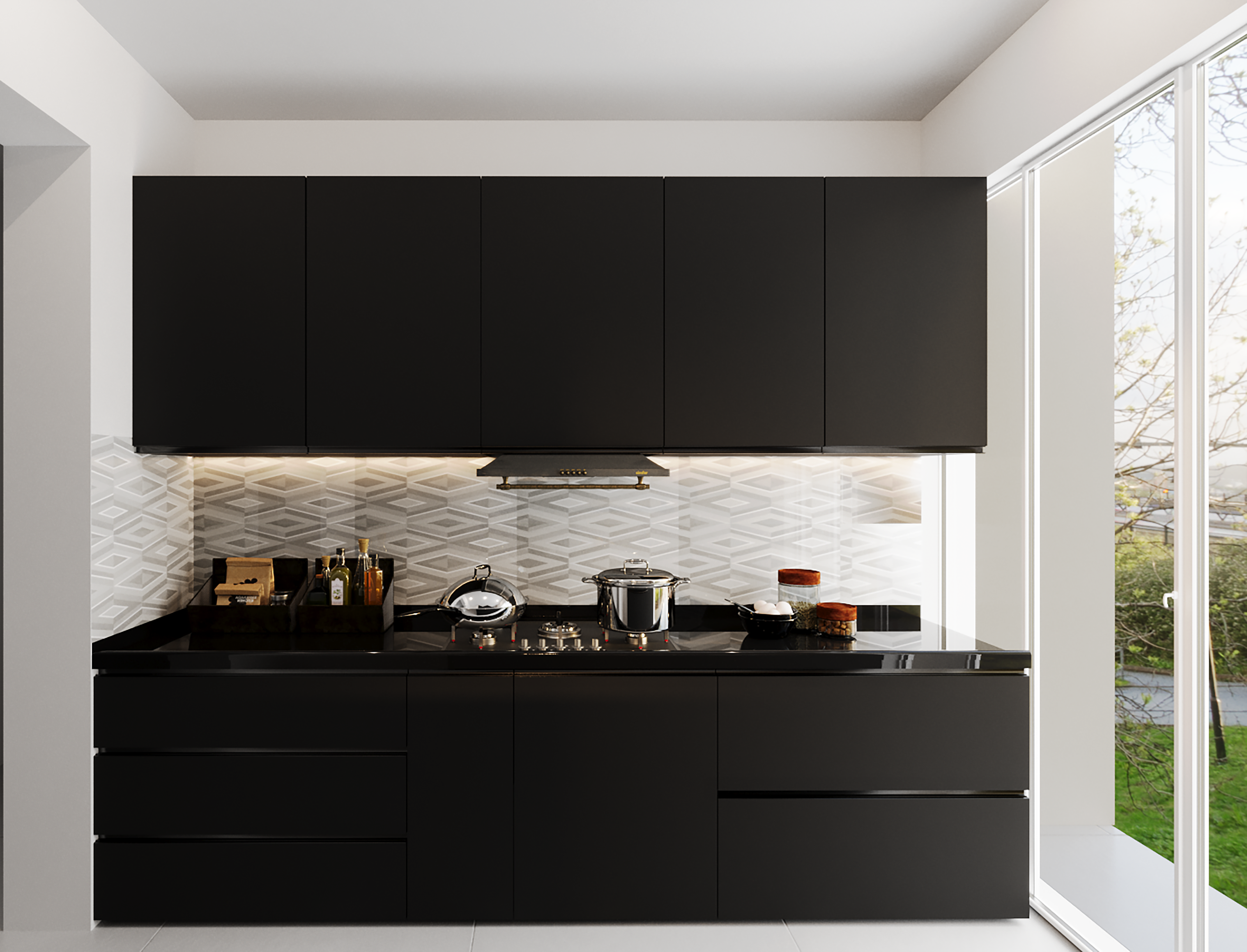
Advantages: This layout requires minimal plumbing work, less cabinetry, and reduced electrical wiring, making it the cheapest option. It’s ideal for single people or small families who don’t cook elaborate meals simultaneously.
Estimated Cost: ₹60,000 – ₹1.2 lakh for an 8-foot kitchen including basic cabinets, granite countertop, and essential fittings.
Best For: Bachelors, young couples, or as a secondary kitchen in joint family homes.
2. Parallel Kitchen Layout (Efficient for Narrow Spaces)
Also called a galley kitchen, the parallel layout features two parallel counters with a walkway in between. This design is extremely popular in Indian apartments with rectangular kitchen spaces.
Advantages: Offers excellent work triangle efficiency with the sink on one side and stove on the other. Provides double the counter space and storage compared to straight kitchens. The layout naturally separates wet and dry areas perfect for Indian cooking.
Considerations: Requires at least 4 feet of walkway space between the two counters for comfortable movement. Can feel cramped if too narrow.
Estimated Cost: ₹1.2 – ₹2 lakhs for a 100 sq ft parallel kitchen.
Best For: 2BHK apartments, medium-sized families, and homes with narrow but adequately long kitchen areas.
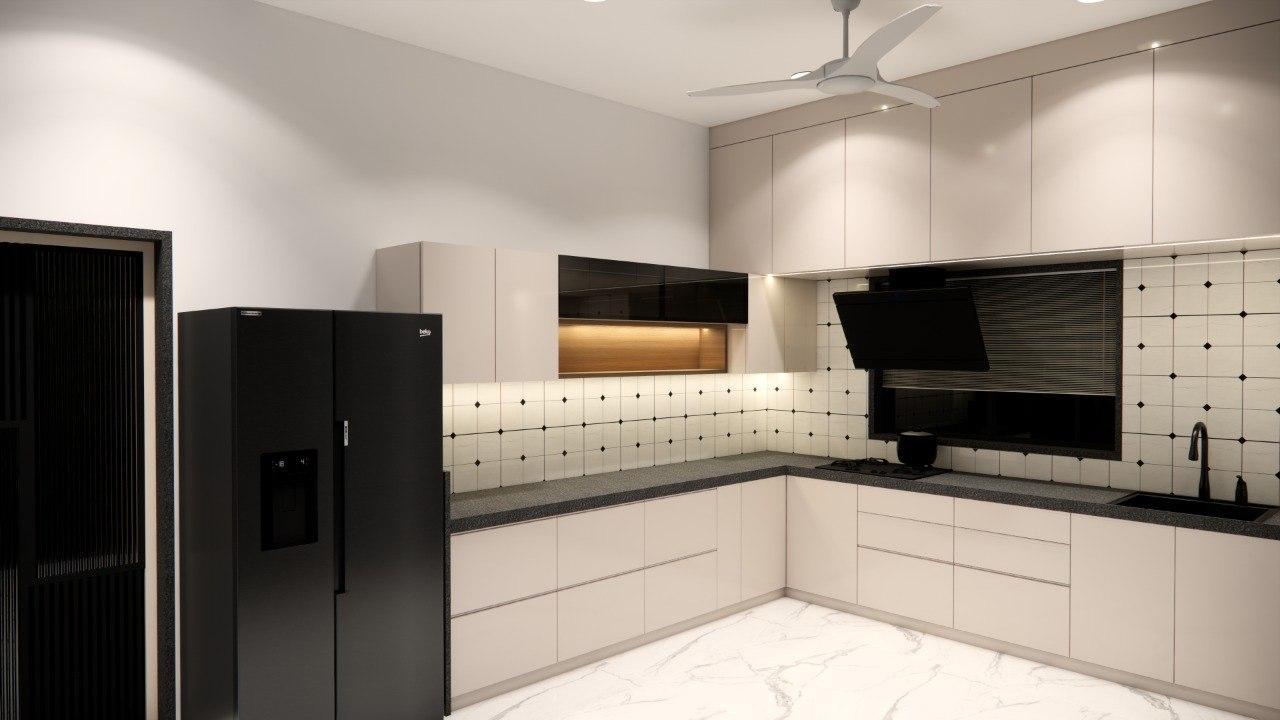
3. L-Shaped Kitchen Design (Most Popular Choice)
The L-shaped layout is arguably the most popular simple Indian kitchen design for middle class family as it strikes the perfect balance between cost, functionality, and space optimization.
Advantages: Creates a natural work triangle between stove, sink, and refrigerator. Offers more counter space than straight kitchens while using corner space efficiently. Can accommodate a small dining table or breakfast counter in larger spaces. Works well for both small and medium-sized kitchens.
Estimated Cost: ₹1.5 – ₹2.5 lakhs for a 120 sq ft L-shaped kitchen with modular cabinets.
Best For: Most 2BHK and 3BHK apartments, small to medium families, and those seeking optimal space utilization.
4. U-Shaped Kitchen Design
The U-shaped kitchen provides maximum storage and counter space by utilizing three walls, creating a highly efficient workspace.
Advantages: Offers abundant storage—ideal for joint families with extensive utensil collections and food storage needs. Creates an excellent work triangle with everything within easy reach. Keeps the cooking area separate from traffic flow.
Considerations: Requires adequate space (minimum 10×10 feet) to avoid feeling cramped. Corner cabinets may need special hardware for accessibility.
Estimated Cost: ₹2 – ₹3.5 lakhs depending on size and finishes.
Best For: Joint families, larger homes, and serious home cooks who need maximum storage and prep space.
5. Island Kitchen Design (If Space Allows)
The island kitchen features a freestanding counter in the center, offering additional prep space and storage.
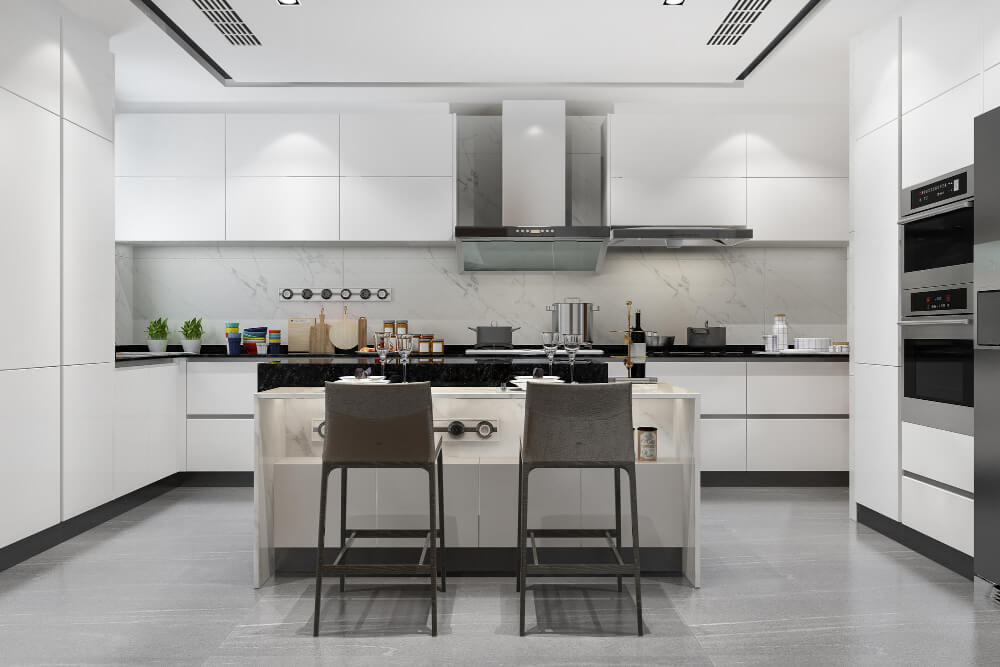
Reality Check: While trendy, island kitchens are often impractical for typical Indian middle-class homes due to space constraints and higher costs. They require at least 150-200 sq ft of kitchen area.
Best For: Large independent houses or villas where space isn’t a constraint. Works better as a secondary feature rather than the primary cooking area for heavy Indian cooking.
6. Peninsula Kitchen Layout
A peninsula kitchen is essentially an L-shaped or U-shaped kitchen with an added connected counter that juts out, creating a partial separation from adjoining rooms.
Advantages: More practical than an island for Indian homes. Creates additional seating for quick meals. Offers extra storage and counter space without requiring as much floor area as an island.
Estimated Cost: ₹1.8 – ₹3 lakhs depending on size.
Best For: Semi-open plan homes, those wanting a breakfast counter, and medium to large kitchens.
7. G-Shaped Kitchen Layout
The G-shaped layout is an extension of the U-shaped kitchen with an additional partial fourth wall or peninsula.
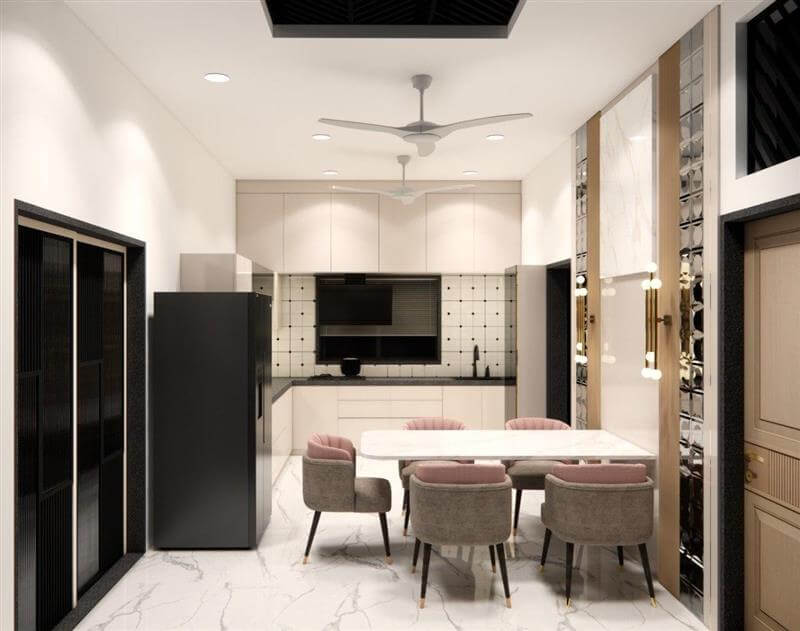
Advantages: Maximum storage and counter space. Creates a very enclosed, efficient workspace. Ideal for multiple cooks working simultaneously.
Considerations: Requires significant space (minimum 12×10 feet). Can feel closed in if not properly ventilated. Most expensive layout option.
Best For: Large joint families, luxury apartments, or those who frequently cook elaborate meals.
8. Open Kitchen Design for Small Homes
Open kitchens connect directly with living or dining areas without full walls, popular in modern apartments.
Indian Context Considerations: While aesthetically appealing, open kitchens face challenges with Indian cooking strong smells, smoke, and grease can spread to living areas. Requires powerful chimney (minimum 1200 m³/hr suction) and excellent ventilation.
Best For: Light cooking households, young couples, or as a secondary prep kitchen with a closed main cooking area.
Budget-Friendly Materials for Simple Indian Kitchen Design
Material selection directly impacts both your budget and kitchen longevity. Here’s what works best for middle-class Indian kitchens:
Cabinet Materials
Marine Plywood: The gold standard for Indian kitchens. Offers excellent moisture resistance (crucial for our humid climate), durability, and good termite resistance when properly treated. Use BWP (Boiling Water Proof) grade marine plywood for maximum longevity.
Cost: ₹120-₹180 per sq ft depending on thickness and brand.
MDF (Medium Density Fiberboard): More affordable than plywood and offers smooth finishes. However, less moisture-resistant and can swell if exposed to water repeatedly.
Cost: ₹60-₹90 per sq ft. Best used for overhead cabinets away from moisture.
Laminate vs Acrylic Finishes: Laminate finishes are practical, affordable (₹30-₹60 per sq ft), scratch-resistant, and available in numerous designs. Acrylic finishes offer a glossy, modern look but cost significantly more (₹150-₹250 per sq ft) and can show fingerprints easily—a real concern in Indian kitchens with heavy cooking.
Recommendation for Middle Class Families: Marine plywood cabinets with laminate finishes offer the best value, durability, and maintenance ease.
Countertop Options
Granite: The most popular choice in India and for good reason. Heat-resistant, scratch-resistant, affordable, and available in numerous patterns. Perfect for Indian cooking where hot vessels are frequently placed directly on counters.
Cost: ₹100-₹250 per sq ft depending on variety. Black Galaxy and Tan Brown are popular mid-range options.
Kadappa Stone: A traditional, budget-friendly option. Naturally heat-resistant and gives a rustic look. Requires sealing to prevent staining.
Cost: ₹60-₹100 per sq ft.
Quartz: Engineered stone that’s non-porous and requires minimal maintenance. More expensive but increasingly popular among those with slightly higher budgets.
Cost: ₹300-₹600 per sq ft.
Recommendation: Granite offers the best balance of durability, heat resistance, and cost for low budget Indian kitchen design needs.
Flooring Options
Anti-Skid Tiles: Essential for Indian kitchens where water spillage is common. Choose tiles with R10 or R11 anti-slip rating.
Cost: ₹30-₹80 per sq ft for good quality options.
Vitrified Tiles: More durable and less porous than ceramic tiles. Available in anti-skid finishes specifically designed for kitchens. Easier to maintain and clean—important for busy households.
Cost: ₹50-₹120 per sq ft.
Avoid: Marble (too slippery and porous), wooden flooring (moisture damage), or very glossy tiles (safety hazard when wet).
Smart Storage Ideas for Middle Class Kitchen
Indian kitchens need creative small Indian modular kitchen storage ideas to accommodate our extensive cooking requirements:
Loft Storage: Utilize the space above wall cabinets (up to ceiling height) for storing rarely used items like party vessels, seasonal storage, or extra appliances. Can reduce costs by using simple shelves instead of closed cabinets.
Pull-Out Baskets: Invest in pull-out wire baskets for base cabinets they dramatically improve accessibility and prevent items from getting lost in deep cabinets. Particularly useful for storing vegetables, onions, and potatoes.
Tall Units: A floor-to-ceiling tall unit (typically 7 feet) near the fridge can store groceries, breakfast items, and snacks. More storage-efficient than traditional separate cabinets.
Masala Drawer: A dedicated spice drawer with small compartments keeps your extensive Indian spice collection organized and easily accessible. Far superior to traditional masala boxes.
Thali Stand: Pull-out plate/thali racks in base cabinets keep plates organized and easily accessible. Prevents plate stacking issues and utilizes vertical space efficiently.
Corner Solutions: Use carousel units, magic corners, or simple L-shaped shelves to make corner cabinets fully accessible don’t waste this valuable space.
Hanging Rails: Install rods under wall cabinets to hang frequently used ladles, spatulas, and strainers keeps them within reach while freeing up drawer space.
Best Colour Combinations for Simple Indian Kitchen Design
Color choices impact both aesthetics and practicality. For a modern simple kitchen design India, consider:
White + Wood Tone: Timeless combination. White reflects light (making small kitchens appear larger) while wood adds warmth. Practical as stains are visible and can be cleaned immediately.
Cream + Brown: Softer than white but equally classic. Brown adds depth and hides minor stains better. Very popular in Indian homes.
Grey + White: Contemporary and sophisticated. Grey tones hide grease splatter better than pure white while maintaining a clean appearance.
Two-Tone Combinations: Upper cabinets in lighter shades (white, cream, light grey) and lower cabinets in darker tones (brown, navy, charcoal). This practical approach hides lower cabinet wear while keeping the kitchen bright.
Avoid: Very dark colors in small kitchens (makes space feel cramped), very light colors on lower cabinets (shows every stain), or trendy bold colors you might tire of quickly.
Ventilation & Lighting Tips for Indian Cooking
Proper ventilation is non-negotiable in Indian kitchens:
Chimney Importance: Invest in a good quality chimney with minimum 1200 m³/hr suction capacity for regular cooking. For heavy cooking or open kitchens, consider 1500 m³/hr. This is one area where spending more pays off—poor ventilation affects your entire home.
Exhaust Fan: Even with a chimney, install an exhaust fan (12-18 inches) with external duct for cross-ventilation. Crucial during summers and when cooking multiple dishes.
Window Placement: Ensure at least one window for natural ventilation. Ideally positioned to create cross-ventilation with the exhaust fan. If constructing new, place the window away from the stove to prevent external winds blowing out the flame.
Under-Cabinet Lighting: LED strips under wall cabinets illuminate the counter workspace perfectly. Essential for comfortable cooking, especially during evening hours. Cost-effective (₹100-₹300 per meter) and energy-efficient.
Overhead Lighting: Bright, white LED lights (20-40 watts) provide overall illumination. Position centrally or install two fixtures in larger kitchens.
Cost of Simple Indian Kitchen Design for Middle Class Family
Here’s a realistic low budget kitchen design cost in India breakdown:
Basic Kitchen (80–100 sq ft): ₹60,000 – ₹1.2 lakh
- Includes: Simple straight or L-shaped layout, laminate finish cabinets, basic granite counter, standard sink and fittings, basic chimney
- Best for: Rental properties, starter homes, very tight budgets
Standard Modular Kitchen (100–120 sq ft): ₹1.2 – ₹2 lakhs
- Includes: L-shaped or parallel layout, marine plywood cabinets with laminate finish, good quality granite, stainless steel sink, mid-range chimney, basic pull-outs
- Best for: Most middle-class families seeking good quality
Premium Modular Kitchen (120–150 sq ft): ₹2 – ₹3 lakhs
- Includes: U-shaped or L-shaped with peninsula, marine plywood cabinets with better finish options, quartz countertop options, premium hardware, soft-close mechanisms, better storage solutions
- Best for: Those with slightly higher budgets wanting enhanced features
Luxury Kitchen: ₹3+ lakhs
- Includes: Premium finishes, imported hardware, sophisticated storage systems, high-end appliances, designer tiles
- Best for: Higher budget homeowners prioritizing kitchen as focal point
Cost-Saving Tips: Choose local granite over imported varieties, use MDF for overhead cabinets and marine plywood only for base units, DIY handles instead of premium hardware, or opt for semi-modular (carpenter-made with modular fittings) instead of fully branded modular kitchens.
Mistakes to Avoid in Simple Middle Class Kitchen Design
Learn from others’ errors:
Ignoring Ventilation: Saving ₹8,000 by skipping a chimney leads to oil-coated walls, persistent cooking smells, and expensive repainting within a year. Never compromise on ventilation.
Overdesigning: Adding unnecessary features like glass-front cabinets (require constant cleaning), too many open shelves (dust collection), or excessively decorative backsplashes (cleaning nightmare).
Cheap Hardware: Hinges, drawer channels, and handles face daily use. Poor quality hardware fails within months, requiring replacements and cabinet damage. Spend on good quality Hafele, Hettich, or Indian brands like Ebco.
Poor Electrical Planning: Insufficient power points, poorly placed switches, or inadequate wiring for appliances. Install at least 6-8 power points at counter height, dedicated point for fridge, and proper grounding.
No Future Planning: Failing to leave space for future appliances like dishwasher or microwave, or not planning for potential family expansion needs.
Inadequate Storage: Underestimating storage needs leads to cluttered counters and overflowing cabinets. When in doubt, add more storage.
Vastu Tips for Indian Kitchen
For those following Vastu Shastra:
- Direction: South-East is considered ideal for kitchen placement (Agni corner). East is second preference
- Stove Placement: Face East while cooking for positive energy
- Sink Guidelines: Place sink in North-East corner, away from the stove
- Color Preferences: Lighter shades recommended—white, yellow, orange, light green
- No-No’s: Kitchen directly under or above toilets, kitchen door facing main entrance, or stove directly opposite the sink
- Note: Modern apartment layouts often make strict Vastu compliance difficult. Focus on functionality first a well-ventilated, organized kitchen contributes more to household harmony than directional placement.
Conclusion
Creating a simple Indian kitchen design for middle class family is entirely achievable with smart planning and realistic budgeting. The key lies in prioritizing functionality over luxury invest in durable materials like marine plywood and granite, ensure excellent ventilation with a quality chimney, and maximize storage with pull-outs and smart organizers.
Remember, the best kitchen isn’t necessarily the most expensive one it’s the one that makes your daily cooking easier, stores everything you need efficiently, and lasts for years without requiring major repairs. Whether you’re working with ₹1 lakh or ₹3 lakhs, focus on getting the basics right: solid structure, proper ventilation, adequate lighting, and sufficient storage.
Ready to Design Your Dream Kitchen Within Budget?
At SmartScale House Design, we specialize in creating practical, beautiful kitchens tailored for Indian families. Our expert designers understand middle-class budget constraints and deliver functional spaces that maximize every square foot. Get a free consultation and customized kitchen design estimate today. Contact us to transform your kitchen into a space you’ll love cooking in for years to come!
📞 Contact us today for a free design consultation and detailed quote!