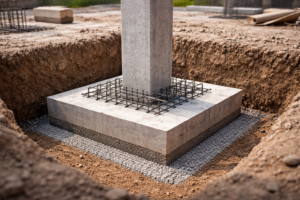
Kerala Vernacular Architecture Homes

Traditional Kerala House Design: Features, Floor Plans, Cost & Modern Ideas

Traditional Kerala house design is a perfect blend of cultural heritage, climate-responsive architecture, and timeless aesthetics. Rooted deeply in Kerala’s traditions, these homes are known for their sloping roofs, wooden detailing, courtyards, and seamless connection with nature.


Even in 2026, traditional Kerala homes continue to inspire modern house designs due to their natural cooling, vastu compliance, and sustainable construction principles. In this blog, we explore everything you need to know from features and floor plans to construction cost and modern adaptations.

A traditional Kerala house is designed to suit the region’s humid tropical climate and heavy monsoon rainfall. These houses are built using local materials and follow ancient architectural principles influenced by Vastu Shastra and Kerala Vasthu Vidya.


Unlike modern box-type houses, traditional Kerala homes focus on:

  • Open spaces

  • Natural ventilation

  • Shaded verandahs

  • Courtyards for light and airflow

This design philosophy makes them comfortable, energy-efficient, and long-lasting.

Key Features of Traditional Kerala House Design

1. Sloping Tiled Roof (Charupadi)

Steep, sloping roofs covered with clay tiles protect the house from heavy rains and reduce heat buildup.

2. Nadumuttam (Central Courtyard)

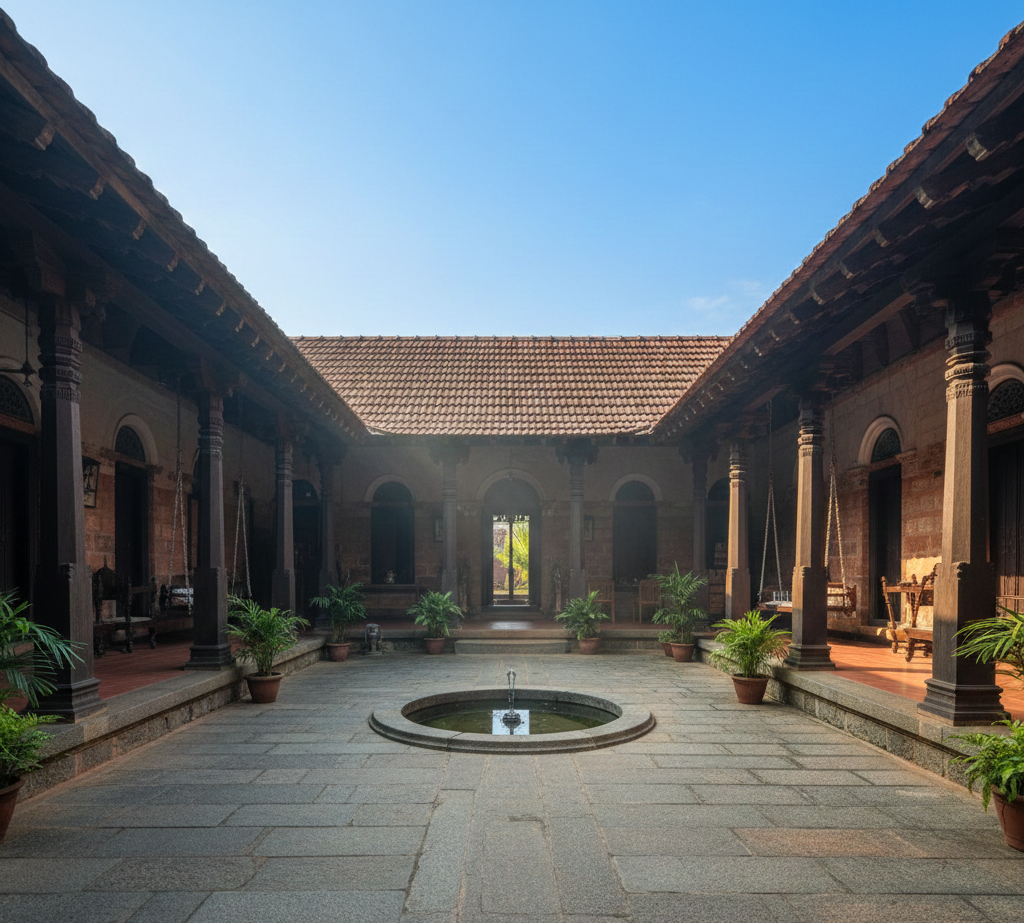
A defining feature of traditional Kerala houses, the courtyard allows natural light, ventilation, and rainwater harvesting while keeping interiors cool.

3. Poomukham (Front Verandah)

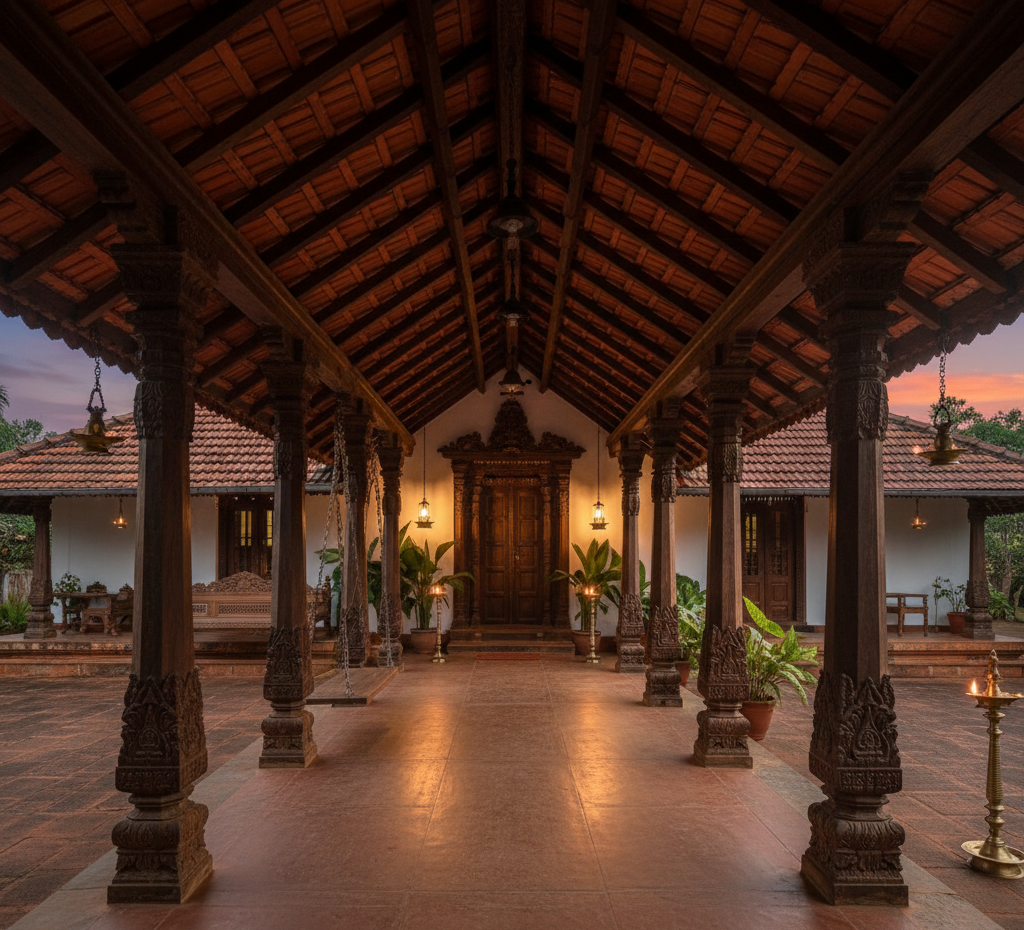
The extended verandah acts as a welcoming space and protects inner rooms from direct sunlight and rain.

4. Wooden Columns & Ceilings

Rich wooden pillars, beams, and ceilings enhance durability and add a warm, elegant character.

5. Natural Ventilation

High ceilings, open layouts, and courtyard planning ensure excellent airflow throughout the house.

Types of Traditional Kerala House Designs

Nalukettu House Design

The Nalukettu is the most common traditional Kerala house, particularly for medium to large families. Its name literally means “four blocks” the house is built with four wings surrounding a central open courtyard (Nadumuttam).
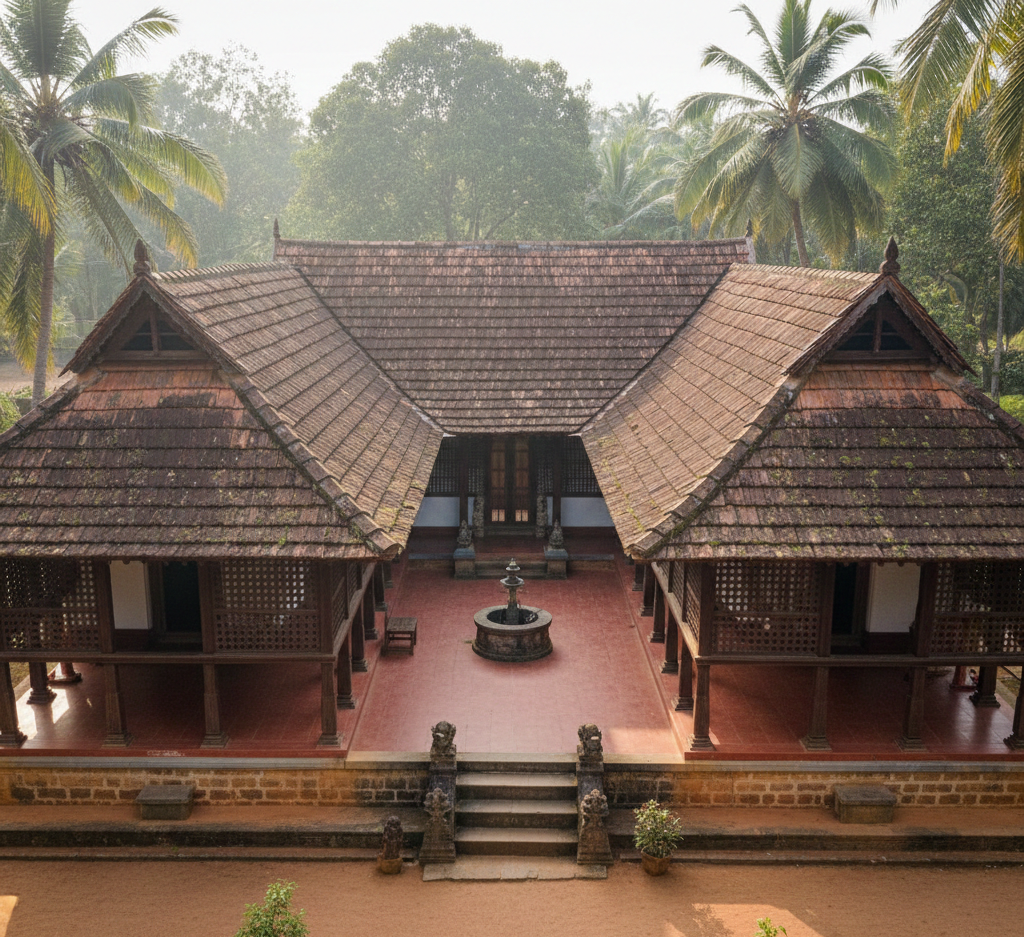
 

Nalukettu house design with central courtyard in traditional Kerala style


Key Features:

  • Central Courtyard (Nadumuttam): Acts as the heart of the house for ventilation, natural light, and family gatherings.

  • Poomukham (Front Verandah): A welcoming space shaded by an extended roof, perfect for sitting or receiving guests.

  • Sloping Clay Tile Roofs: Protect the home from monsoon rains and keep interiors cool.

  • Wooden Pillars & Beams: Structural and decorative, usually teak or rosewood, adding warmth and elegance.

  • Private Wings: Bedrooms and living areas are arranged around the courtyard, ensuring privacy and functionality.

Ettukettu House Design

The Ettukettu house is a more elaborate form, meaning “eight blocks,” with two central courtyards. Traditionally built for large joint families or royal households, Ettukettu houses are grand and allow multiple functions within the same structure.
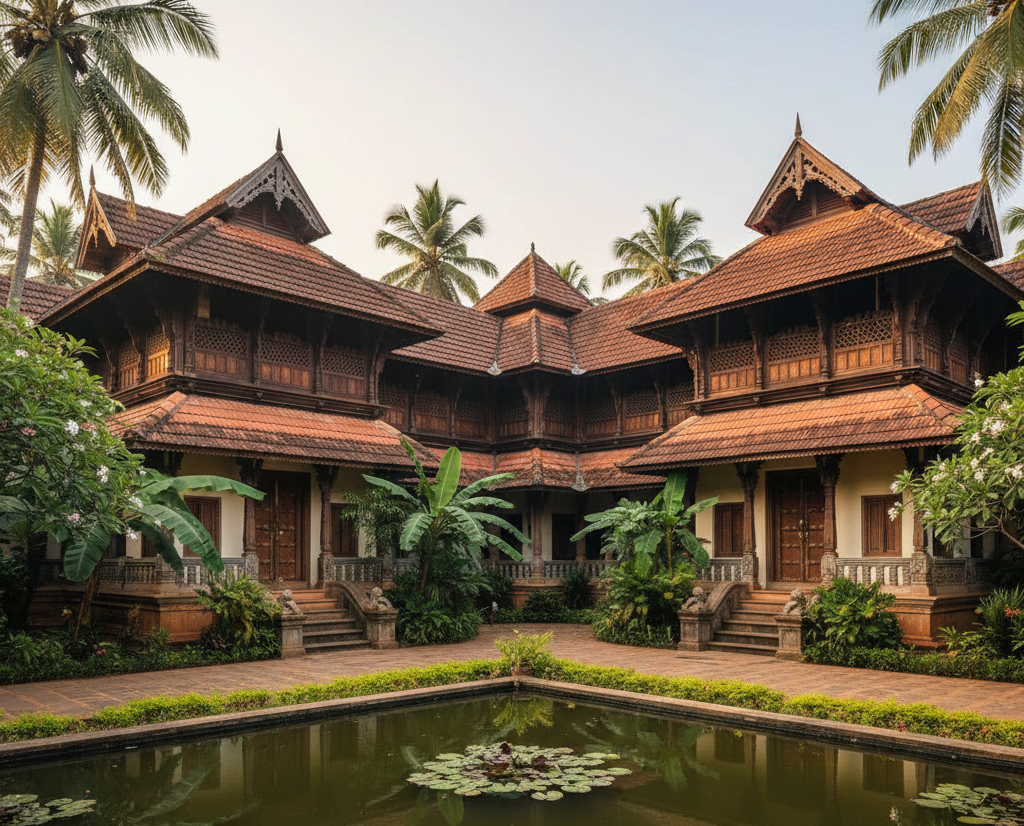
 

Ettukettu traditional Kerala house design


Key Features:

  • Two Courtyards: Enhances airflow, lighting, and natural cooling. Each courtyard may serve a distinct purpose (family gatherings, prayer space, or utility).

  • Eight Blocks: Provide separate zones for bedrooms, kitchen, living areas, and storage, ideal for large households.

  • Intricate Woodwork: Doors, windows, and ceilings often feature carvings and traditional Kerala motifs.

  • Extended Verandahs & Balconies: Allow connection with outdoors while maintaining privacy.

  • Symmetry & Vastu Compliance: The layout follows vastu principles for balance and harmony.

Pathinarukettu House Design

The Pathinarukettu is the grandest traditional Kerala house, historically reserved for royal families and heritage mansions. It consists of four courtyards and sixteen blocks, making it extremely spacious and architecturally complex.
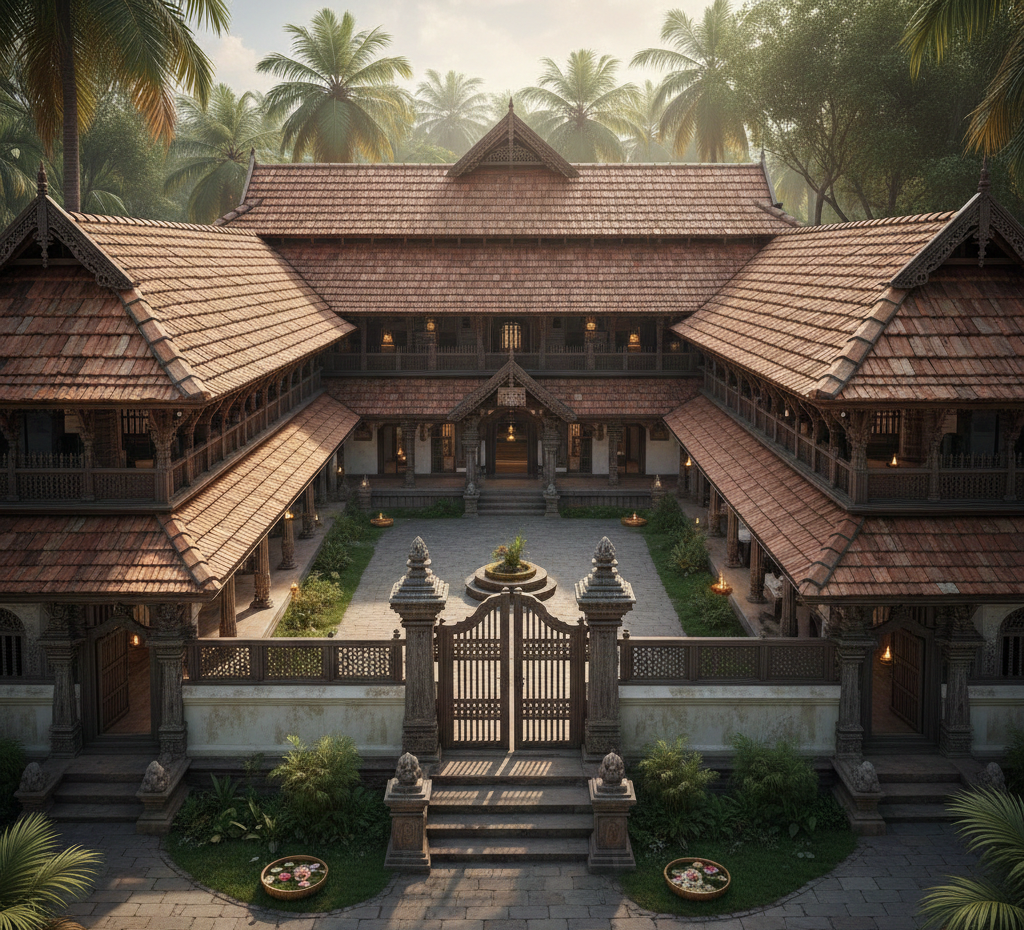
 

Pathinarukettu traditional Kerala heritage house design


Key Features:

  • Four Courtyards: Each serving a functional or ceremonial purpose

  • Sixteen Blocks: Multiple wings allow segregation of family members, guest areas, kitchen zones, and worship spaces

  • High Sloped Roofs & Eaves: Designed to handle heavy monsoons and provide a majestic appearance

  • Elaborate Wood Carving: Pillars, doors, ceilings, and windows are highly decorative

  • Heritage Interiors: Traditional furniture, brass lamps, and wooden ceilings preserve cultural aesthetics


Traditional Kerala House Floor Plan Ideas

Traditional Kerala house floor plans are symmetrical, vastu-compliant, and functionally zoned.

Common Floor Plan Layout
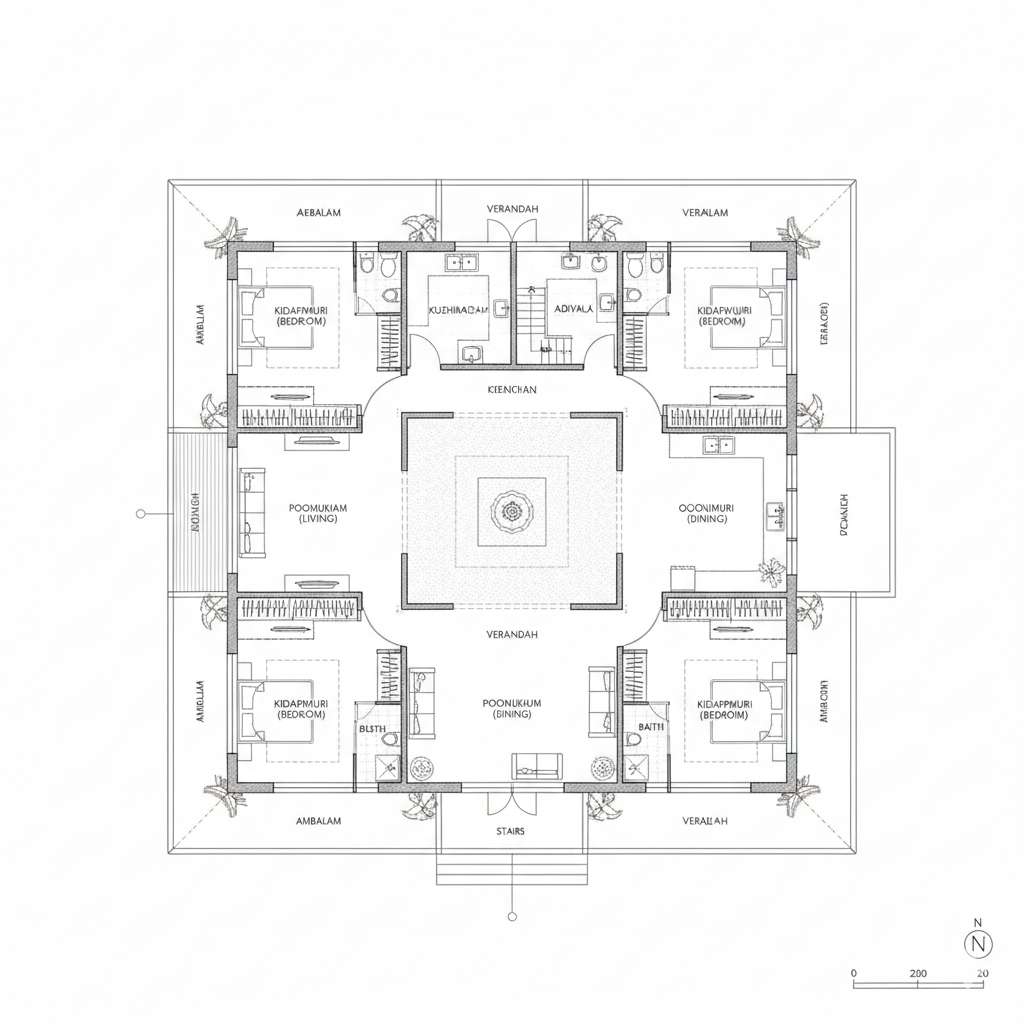
Traditional Kerala house floor plan with courtyard layout

  • Front verandah (Poomukham)

  • Living area

  • Central courtyard (Nadumuttam)

  • Bedrooms placed around the courtyard

  • Kitchen at the rear

  • Store room and prayer room


Traditional Kerala house courtyard Nadumuttam design


Popular Floor Plan Options

  • 2 BHK traditional Kerala house plan – Ideal for small families

  • 3 BHK Nalukettu house plan – Balanced mix of tradition and space

  • Large courtyard homes – Best for joint families and ancestral houses

Traditional Kerala House Design with Modern Touch

Modern homeowners are now combining traditional aesthetics with contemporary comforts.

Popular Modern Adaptations
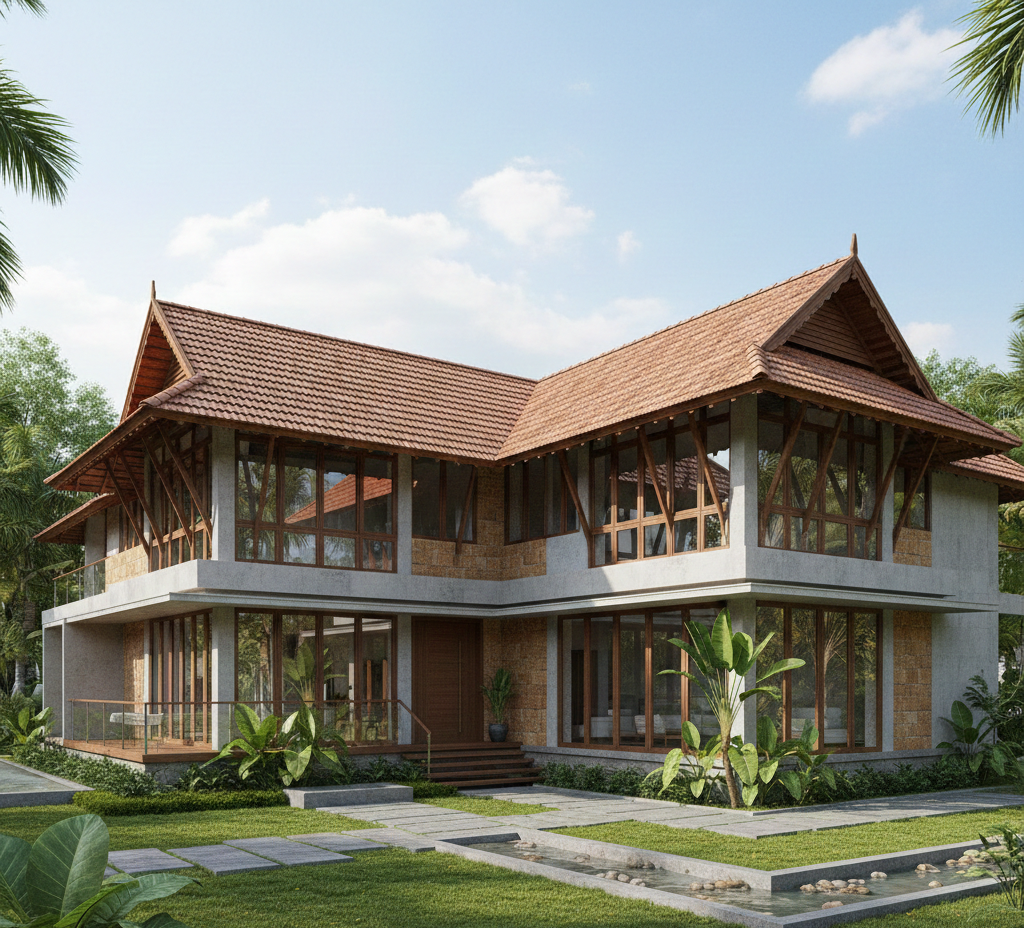
Modern traditional Kerala house design with contemporary elements


  • RCC structure with traditional elevation

  • Sloping tiled roof with concrete support

  • Modern kitchen and bathrooms

  • Glass windows combined with wooden frames

  • Open-plan interiors while retaining courtyards

This approach preserves cultural identity while meeting modern lifestyle needs.

Traditional Kerala House Construction Cost

The cost of traditional Kerala house design varies based on size, materials, and craftsmanship.

Average Construction Cost (2026)

House TypeApprox Cost
Small traditional house (800–1000 sq ft)₹22 – ₹30 lakhs
Nalukettu house₹35 – ₹60 lakhs
Premium traditional house with wood₹3,500 – ₹5,500 per sq ft

Cost Influencing Factors

  • Type of wood used (teak, rosewood)

  • Roofing material

  • Handcrafted detailing

  • Courtyard size

  • Location and labour cost

Tip: Using RCC with traditional finishes can reduce cost while maintaining the traditional look.

Materials Used in Traditional Kerala Homes

  • Clay roof tiles

  • Teak or rosewood

  • Laterite stone

  • Lime plaster

  • Natural stone flooring


Traditional Kerala house verandah poomukham with wooden pillars


These materials improve durability, thermal comfort, and sustainability.
 

Is Traditional Kerala House Design Suitable Today?

Yes even in 2026, traditional Kerala house designs are highly relevant because they:

  • Stay naturally cool

  • Are climate-responsive

  • Follow vastu principles

  • Offer timeless beauty

  • Support sustainable living

With modern construction techniques, maintenance is also easier than before.

Looking to Build a Traditional Kerala House?

Bring your dream home to life with expert planning, authentic architectural details, and modern construction support. From traditional Kerala house designs to customized floor plans and cost-efficient solutions, SmartScale House Design helps you build with confidence.


👉 Contact Us Now To Get a Custom Kerala House Design from SmartScale House Design

FAQs

What are the traditional houses in Kerala?

Traditional Kerala houses are designed to suit the region’s tropical climate and cultural heritage. The most popular types include: Nalukettu: Four blocks around a central courtyard Ettukettu: Eight blocks with two courtyards Pathinarukettu: Sixteen blocks with four courtyards, usually seen in heritage homes These houses feature sloping clay tile roofs, wooden pillars, open verandahs (Poomukham), and central courtyards (Nadumuttam).

Is traditional Kerala house suitable for small plots?

Yes. While traditional Kerala homes like Nalukettu or Ettukettu are typically large, compact versions can be adapted for smaller plots. Designers often reduce courtyard size, simplify layouts, and optimize room placement to maintain traditional aesthetics while fitting limited land.

What are the popular Kerala home design styles?

Popular Kerala home styles include: Nalukettu: Four-block house with central courtyard Ettukettu: Eight-block house with two courtyards Pathinarukettu: Grand sixteen-block heritage house with four courtyards Modern-Traditional Fusion: RCC or concrete structure with traditional roof, wooden detailing, and open courtyards

Are traditional Kerala houses vastu compliant?

Yes. Traditional Kerala house designs follow Vastu Shastra principles, including room orientation, courtyard placement, and roof slope. Central courtyards, entrance verandahs, and room arrangements are planned to ensure balance, airflow, and positive energy.

What are traditional Kerala house plans like?

Traditional Kerala house plans are: Courtyard-centric: Nadumuttam at the center Symmetrical layouts: Rooms arranged around the courtyard Functional zoning: Separate wings for living, kitchen, bedrooms, and worship Verandahs & balconies: Open spaces for ventilation and social interaction Materials-focused: Wood, laterite, clay tiles, and stone flooring

Can Nalukettu houses be built using concrete?

Yes. Modern adaptations often use RCC (Reinforced Cement Concrete) for structural durability while retaining traditional aesthetics. The courtyard layout, sloping clay roof, and wooden elements can be preserved in a concrete structure, reducing maintenance and improving lifespan.

What is a traditional Kerala house name?

Traditional Kerala houses are often named based on their layout or purpose: Nalukettu: Four blocks Ettukettu: Eight blocks Pathinarukettu: Sixteen blocks Other traditional names may relate to family or ancestral homes, such as “Illam” (used in Namboothiri Brahmin homes) or “Mana” (for royal households).

What is the traditional well design in Kerala?

Traditional Kerala houses often included a rectangular or circular well in the courtyard or near the kitchen. Features include: Stone or laterite lining Shaded with a tiled roof or overhang Steps leading down to the water Sometimes a pulley system for water extraction This well design ensured easy access to water while maintaining hygiene.

Is traditional Kerala house design expensive?

Traditional Kerala houses can be more expensive than standard modern homes due to: High-quality wood (teak, rosewood) Skilled craftsmanship for pillars, carvings, and beams Sloping tiled roofs and multiple courtyards However, modern adaptations with RCC structures and simplified layouts can significantly reduce costs while maintaining the traditional appearance.

Shopping cart

0
image/svg+xml

No products in the cart.

Continue Shopping

Solverwp- WordPress Theme and Plugin