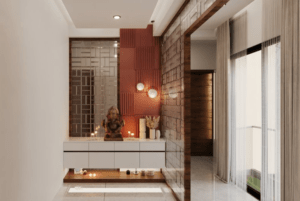
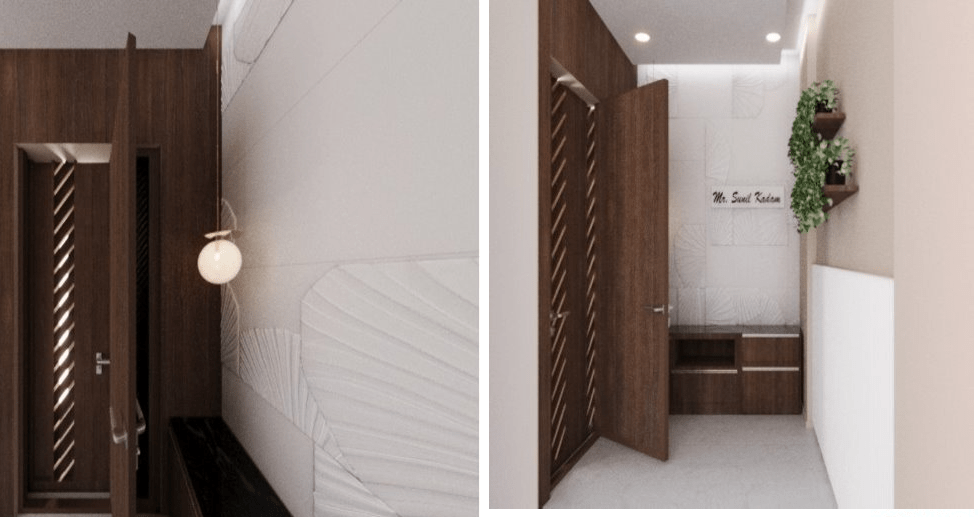
The best entrance direction as per Vastu Shastra is North, East, or North-East. These directions attract positive energy, financial prosperity, and good health into your home. South and South-West entrances can work when corrected with proper Vastu remedies. Direction alone does not determine a home’s energy the full layout, placement, and design all play equal roles.
Table of Contents
ToggleWhy House Entrance Direction Matters
The main entrance of your home is more than a doorway. In Vastu Shastra, it is the primary point where energy enters your living space. Every element that flows into your home — light, air, opportunity, and cosmic energy — passes through this single entry point first.
Getting this direction right influences how energy circulates throughout the entire structure. A well-placed entrance channels natural sunlight into the home during key hours. It also allows proper airflow, which directly affects the health and mood of residents.
Beyond the physical, Vastu connects entrance direction to life outcomes. Different directions are governed by different natural forces and deities. Each direction carries its own energy signature — some promoting wealth and career growth, others supporting health and relationships, and a few creating friction if left uncorrected.
The reason entrance direction matters so much comes down to three core ideas:
Energy entry point. Vastu treats the home as a living system. The entrance feeds that system. A misaligned entrance disrupts energy flow before it even begins moving through the rooms.
Connection to natural elements. East-facing entrances catch morning sunlight. North-facing homes benefit from cooler, stable airflow. These are not just spiritual ideas — they are practical design choices backed by centuries of observation.
Impact on daily life. Vastu practitioners consistently link entrance direction to wealth accumulation, family health, professional opportunities, and mental clarity. Correct placement amplifies positive outcomes. Poor placement creates ongoing friction that residents often cannot explain.
Best Entrance Directions as per Vastu
North-Facing Entrance
The North direction is ruled by Kubera, the Hindu deity of wealth and prosperity. This makes a North-facing entrance one of the most financially favorable placements in Vastu Shastra.
Key benefits:
- Supports financial growth and stable income
- Attracts career advancement and new opportunities
- Encourages abundance and material success
For best results, do not place the door in the exact center of the North wall. Instead, position it slightly toward the North-East side of the North wall. This subtle shift blends the wealth energy of the North with the auspicious energy of the North-East zone.
The North direction also benefits from magnetic energy flow. Earth’s magnetic field runs from North to South. A North-facing entrance works with this natural current rather than against it, which Vastu considers highly favorable for human wellbeing.
East-Facing Entrance
East is the direction of the rising sun. In Vastu, sunlight represents life force, health, and positive beginnings. An East-facing entrance invites this energy into your home every single morning.
Key benefits:
- Promotes physical health and vitality
- Brings social recognition and a strong community presence
- Supports growth, both personal and financial
- Ideal for families with children, as it supports education and development
The East direction is associated with Indra, the king of the gods in Hindu mythology. An East-facing entrance is considered excellent for families focused on long-term growth, social standing, and household harmony.
For placement, position the main door slightly toward the North-East side of the East wall. Avoid placing it in the South-East corner of the East wall, as that zone carries fire energy, which can create tension when used as an entrance.
North-East Facing Entrance (Most Auspicious)
The North-East is widely regarded as the most powerful and auspicious direction in Vastu Shastra. It combines the wealth energy of the North with the solar vitality of the East, creating a concentrated zone of positive cosmic force.
Key benefits:
- Strongest direction for overall prosperity and peace
- Supports spiritual growth, clarity of mind, and inner calm
- Enhances decision-making and reduces conflict within the family
- Brings blessings associated with divine grace
The North-East corner of any plot is called the “Ishanya” corner in Sanskrit, and it is considered the zone of the divine. Placing an entrance here allows spiritual and material energy to flow into the home simultaneously.
This direction is particularly beneficial for people in professions that require sharp thinking, leadership, or creative problem-solving. It is also recommended for homes where elder family members or young children are present.
Entrance Directions That Need Caution
South-Facing Entrance
South-facing entrances carry a reputation for being inauspicious in Vastu. This reputation is partially deserved but widely misunderstood. A South-facing entrance is not automatically bad. It simply requires more intentional placement and correction.
The South is ruled by Yama, the deity of death and justice. This association gives the direction a heavy, intense energy quality that can translate into challenges if not properly managed.
When South-facing works:
- Place the entrance in the South-East zone of the South wall (not center South or South-West)
- Use strong Vastu remedies such as lead strips, specific yantras, or protective symbols at the threshold
- Ensure the entrance is well-lit and kept completely clutter-free
Many successful homes and businesses have South-facing entrances. The key is deliberate placement within the South wall, combined with proper corrections.
West-Facing Entrance
West is a neutral direction in Vastu. It does not carry the same natural advantages as North or East, but it does not automatically create negative outcomes either.
The West is associated with Varuna, the deity of water and cosmic order. A West-facing entrance can bring steady success, particularly in business and trade, when placed correctly.
Recommended placement: Position the entrance toward the West-North-West side of the West wall. This subtle shift borrows some of the beneficial energy from the North direction and creates a more favorable entry point.
Avoid placing the entrance in the South-West portion of the West wall. That zone carries the same challenging energy as a full South-West entrance.
South-West Entrance (Least Recommended)
The South-West direction is the least recommended placement for a main entrance in Vastu Shastra. This direction is governed by Nirrti, associated with instability and decay. In practical terms, South-West entrances are linked to financial instability, frequent conflict within households, and health challenges.
Why it is problematic:
- It allows heavy, dense energy to enter the home unchecked
- The South-West is ideally suited to be the heaviest, most grounded zone of the house — an entrance here disrupts that stability
- It can reverse the natural energy flow that Vastu is designed to maintain
If your current entrance faces South-West, Vastu corrections are possible but require significant attention. Options include placing a Vastu pyramid or yantra at the entrance, using specific colors and materials at the threshold, or consulting a Vastu expert for a customized correction plan.
Vastu Tips for Main Door Placement
Beyond direction, the physical attributes of your main door matter just as much. Here are the most important practical tips:
Door swing direction. The main door should open inward and swing clockwise. This direction is considered inviting and energy-positive. A door that opens outward pushes energy away rather than drawing it in.
Avoid door-to-door alignment. Never place the main entrance directly in line with a back door or another main entrance of a neighboring home. This creates a direct energy channel that pulls positive energy straight through the house without allowing it to circulate.
Keep it well-lit. The entrance should always be brighter than the interior spaces. Dark entrances suppress incoming energy. Install warm, adequate lighting above the doorframe and along the approach path.
Use a nameplate. A clear, clean nameplate at the entrance is a Vastu recommendation that also serves a practical purpose. It establishes identity and invites positive energy connected to the family’s name.
Auspicious symbols. Placing Om symbols, Swastika signs, or Toran (door hangings) at the entrance is standard Vastu practice. These symbols are believed to purify and amplify incoming energy.
Maintain the door itself. A creaking, broken, or loose door is one of the most common Vastu defects. It signals neglect and disrupts the smooth flow of energy. Oil hinges, fix loose handles, and repair any damage promptly.
Clear the threshold. Shoes, clutter, or dead plants near the entrance block incoming energy. Keep the entrance zone completely clear, clean, and open.
Entrance Direction Based on Plot Facing
The best entrance location shifts depending on which direction your plot faces. Here is a clear guide for each plot type:
North Facing Plot
The ideal entrance placement is either in the North-East zone or the center-North of the North wall. Avoid placing the entrance in the North-West corner of a North-facing plot, as that zone carries a wind energy that can create restlessness in residents.
East Facing Plot
Position the main door in the East-North-East zone of the East wall. This placement captures maximum morning sunlight while staying within the auspicious energy band of the East. Center-East placement also works well. Avoid South-East on an East-facing plot.
West Facing Plot
The best placement is West-North-West on the West wall. This borrows from the stable North energy while keeping the entrance on the correct wall. Center-West works as a second option.
South Facing Plot
Place the entrance in the South-East zone of the South wall. This is the only reliably positive placement for a South-facing plot. Add Vastu corrections such as lead strips or protective symbols to reinforce the placement. Avoid center-South and South-West placements entirely.
Common Myths About House Entrance Direction
Several widely repeated beliefs about entrance direction are either exaggerated or simply incorrect. Here is a clear breakdown:
Myth: South-facing houses are always bad. This is one of the most persistent and damaging myths in Vastu. Many thriving homes and prosperous businesses have South-facing entrances. The direction requires more care and specific placement, but it is not a curse. Poor layout and clutter cause far more problems than a South-facing door placed correctly.
Myth: Only East-facing homes are lucky. East-facing homes do carry strong natural advantages, particularly the benefit of morning sunlight. But North-facing and North-East-facing homes are equally auspicious, and in many cases superior for financial outcomes. Limiting “luck” to one direction ignores the full scope of Vastu wisdom.
Myth: Direction alone determines Vastu quality. This is perhaps the most important myth to debunk. A home with a perfect North-East entrance but poor room placement, blocked ventilation, and cluttered interiors will still have energy problems. Direction sets the foundation. The full layout — bedroom placement, kitchen positioning, bathroom location, and interior flow — determines the actual energy quality of the home.
Myth: Vastu corrections never work. Well-executed Vastu corrections consistently produce measurable improvements. Placement of specific elements, use of materials, color adjustments, and directional fixes have a documented track record when applied correctly by experienced practitioners.
Modern Architecture vs Vastu: Finding Balance
Contemporary architecture does not always align with traditional Vastu principles. Odd-shaped plots, apartment buildings, urban constraints, and aesthetic priorities can make strict Vastu compliance difficult. Here is how to approach the balance:
Small plots require flexibility. On a compact urban plot, you may not have the luxury of choosing the ideal entrance direction. In these cases, focus on getting as close to the recommended zones as possible and use Vastu corrections for the rest. Even partial alignment with Vastu principles produces better outcomes than complete disregard.
Ventilation and light are Vastu fundamentals. Modern architecture that prioritizes natural light, cross-ventilation, and open floor plans is already aligned with core Vastu principles even if the compass directions are not perfect. Good airflow and sunlight access are foundational to both healthy design and Vastu energy flow.
Layout matters more than aesthetics. A visually stunning home with poor room placement will feel uncomfortable over time. Functional layouts that position heavy zones (master bedroom, storage) in the South-West and light zones (living areas, kitchen) in the South-East and North-West naturally align with Vastu without compromising design quality.
Work with architects who understand both. The best outcomes come from integrating Vastu awareness into the design process from the start, not retrofitting corrections after construction is complete. Vastu-aware architectural firms can achieve high aesthetic standards while honoring directional and spatial principles
Mistakes to Avoid While Designing Entrance
These are the most common and costly entrance design mistakes from a Vastu perspective:
Wrong door alignment. Placing the entrance in the wrong zone of the correct wall is one of the most frequent mistakes. Even on a favorable North or East wall, the South-West portion of that wall carries problematic energy. Precise placement within the wall matters.
Dark or cluttered entry. An entrance that feels heavy, dark, or cramped signals blocked energy. This is one of the easiest corrections to make and one of the highest-impact changes you can implement immediately.
Improper door size. The main entrance should be the largest door in the home. A main door that is smaller than interior doors reverses the natural energy hierarchy and is considered a Vastu defect.
Trees, poles, or drains directly facing the entrance. A large tree, utility pole, or open drain directly in front of your main entrance creates what Vastu calls a “vedha” — an obstruction or defect. These features block and distort incoming energy. Redesigning the entrance path to avoid direct alignment with these elements is strongly recommended.
No threshold or step. A slight elevation at the threshold (a small step up into the home) is traditionally recommended in Vastu. It symbolically separates the outer world’s energy from the home’s internal environment.
Entrance facing a wall or staircase. Walking through the main door and immediately facing a wall or staircase compresses energy and creates a feeling of obstruction. Allow at least a few feet of open space inside the entrance before any obstructions.
How to Choose the Right Entrance for Your Home
Here is a practical decision framework for selecting the best entrance direction for your specific situation:
Start with your plot direction. The facing direction of your plot is fixed. Use the plot-facing guide above as your starting point. This immediately tells you which zone on which wall works best.
Consider your family’s priorities. A family focused on financial growth benefits most from a North or North-East entrance. A family prioritizing health and social connection may find East equally beneficial. Young families with children do particularly well with East-facing entrances because of the association with growth and learning.
Assess practical constraints. Road access, neighboring structures, utility lines, and local zoning all affect where an entrance can realistically be placed. Work within these constraints while maximizing alignment with favorable Vastu zones.
Get a professional evaluation. For a significant construction project or renovation, investing in a consultation with a qualified Vastu consultant is genuinely valuable. They can assess your specific plot, evaluate the full layout, and provide precise placement recommendations that account for multiple variables simultaneously.
Prioritize corrections over perfection. If your current entrance is already built in a less favorable direction, do not assume the home is permanently compromised. Vastu corrections are effective, practical, and widely used. Focus on getting the most important corrections in place and maintaining a clean, positive entrance environment.
Why Choose SmartScale House Design
Getting the entrance direction right is just one part of creating a truly Vastu-compliant home. SmartScale House Design brings both Vastu expertise and professional architectural skill together into a single, streamlined service.
Custom house plans based on Vastu principles. Every plan is designed with directional alignment, room placement, and energy flow built in from the first draft. No retrofitting, no compromises.
Perfect entrance placement for any plot direction. Whether your plot faces North, South, East, or West, SmartScale creates entrance placements that maximize positive energy flow for your specific orientation and layout.
Full design package. SmartScale delivers both 2D floor plans and 3D elevation designs, giving you a complete visual picture of your home before a single brick is laid.
Budget-friendly planning support. Quality Vastu-compliant design does not have to be expensive. SmartScale provides practical, affordable planning support that works for a wide range of budgets and plot sizes.
Get your custom Vastu-compliant house plan with the perfect entrance direction from SmartScale House Design today.
Conclusion
The best entrance directions as per Vastu Shastra are North, East, and North-East. Each of these directions carries distinct energetic advantages North for financial prosperity, East for health and social recognition, and North-East for overall spiritual and material wellbeing.
South, West, and South-West entrances are not automatically disqualifying. With correct placement within the wall and appropriate Vastu corrections, these directions can function effectively. South-West requires the most attention and should be addressed with professional guidance.
The most important takeaway is this: direction creates the foundation, but planning determines the outcome. A well-designed home with a clean, properly placed entrance, good ventilation, and a balanced room layout will always outperform a home that relies on compass direction alone.
Do not make major decisions based on myths or generalizations. Work with the specifics of your plot, your family’s needs, and professional Vastu guidance. The investment in getting these fundamentals right pays dividends for as long as you live in the space.