A plus minus POP design for bedroom can turn a plain ceiling into a clean architectural feature without making the room feel overly decorative. By combining raised and recessed POP sections, you can create depth, add concealed lighting and visually organize the ceiling around a fan, bed or other bedroom elements.
Unlike heavily layered false ceilings, plus-minus designs can also be kept simple and localized, making them suitable for compact bedrooms and homes where you do not want to lose too much ceiling height. Current bedroom ceiling trends commonly combine geometric POP forms with cove lighting, recessed lights and fan-centred layouts.
If you are planning a bedroom ceiling, the best design is not necessarily the most elaborate one. It should match your room size, ceiling height, fan position, lighting requirements and overall interior style.
Plus Minus POP Design for Bedroom Ideas
Here are some practical plus-minus POP concepts to consider before finalizing your bedroom ceiling.
1. Simple Plus Minus POP Design for Bedroom
A simple plus-minus design is a good choice when you want the ceiling to look modern without becoming the main source of decoration.
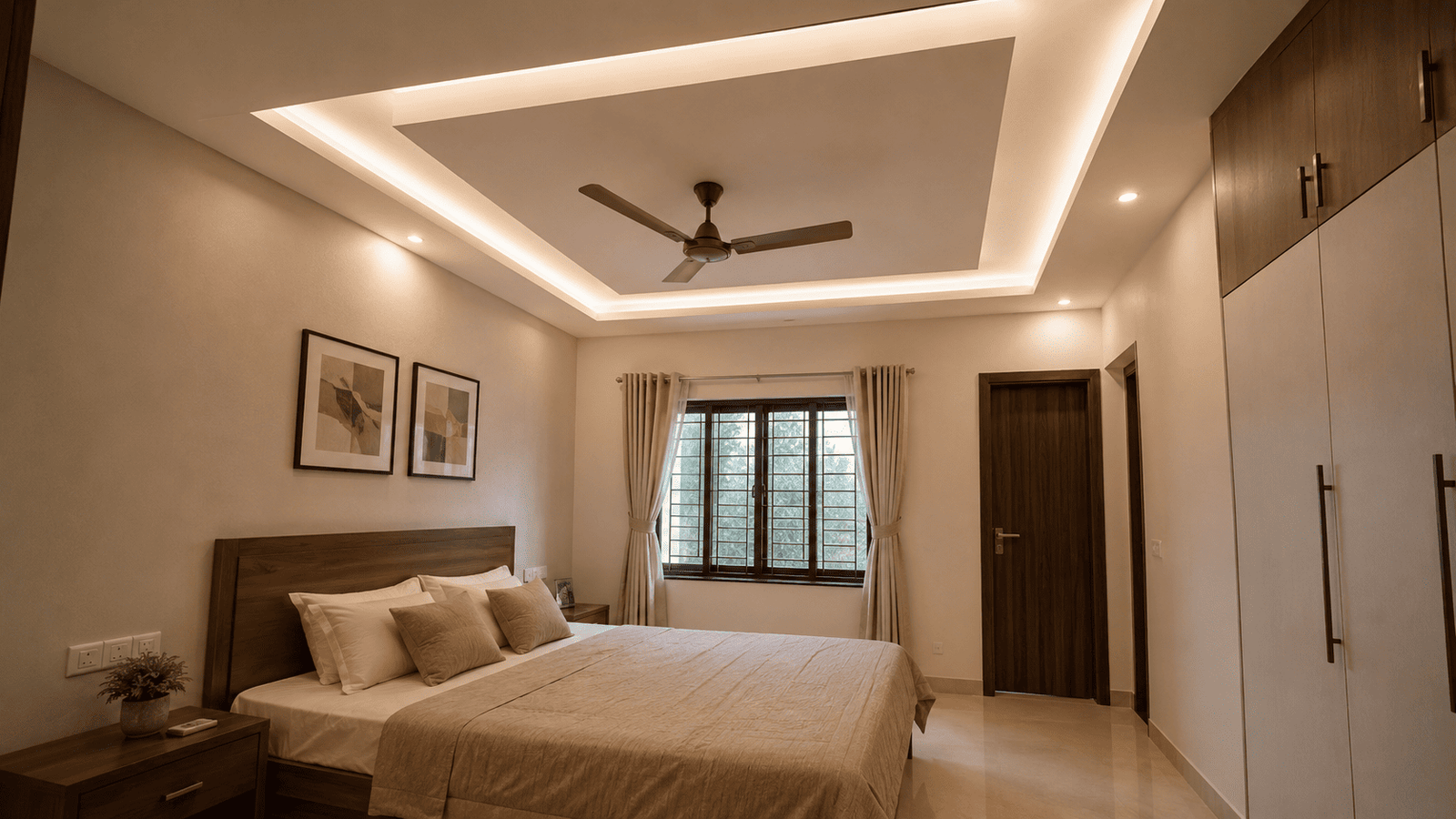
A rectangular recessed section surrounded by a thin raised POP border can create enough depth while leaving most of the ceiling visually open. Add a warm LED strip inside the recessed edge and a few strategically placed spotlights for a soft bedroom ambience.
Best for: Small and medium bedrooms
Style: Minimal and contemporary
Lighting: Cove LED + recessed spotlights
Fan: Can be placed centrally
2. Modern Plus Minus POP Design for Bedroom
For a contemporary bedroom, use geometric layers instead of traditional decorative POP patterns.
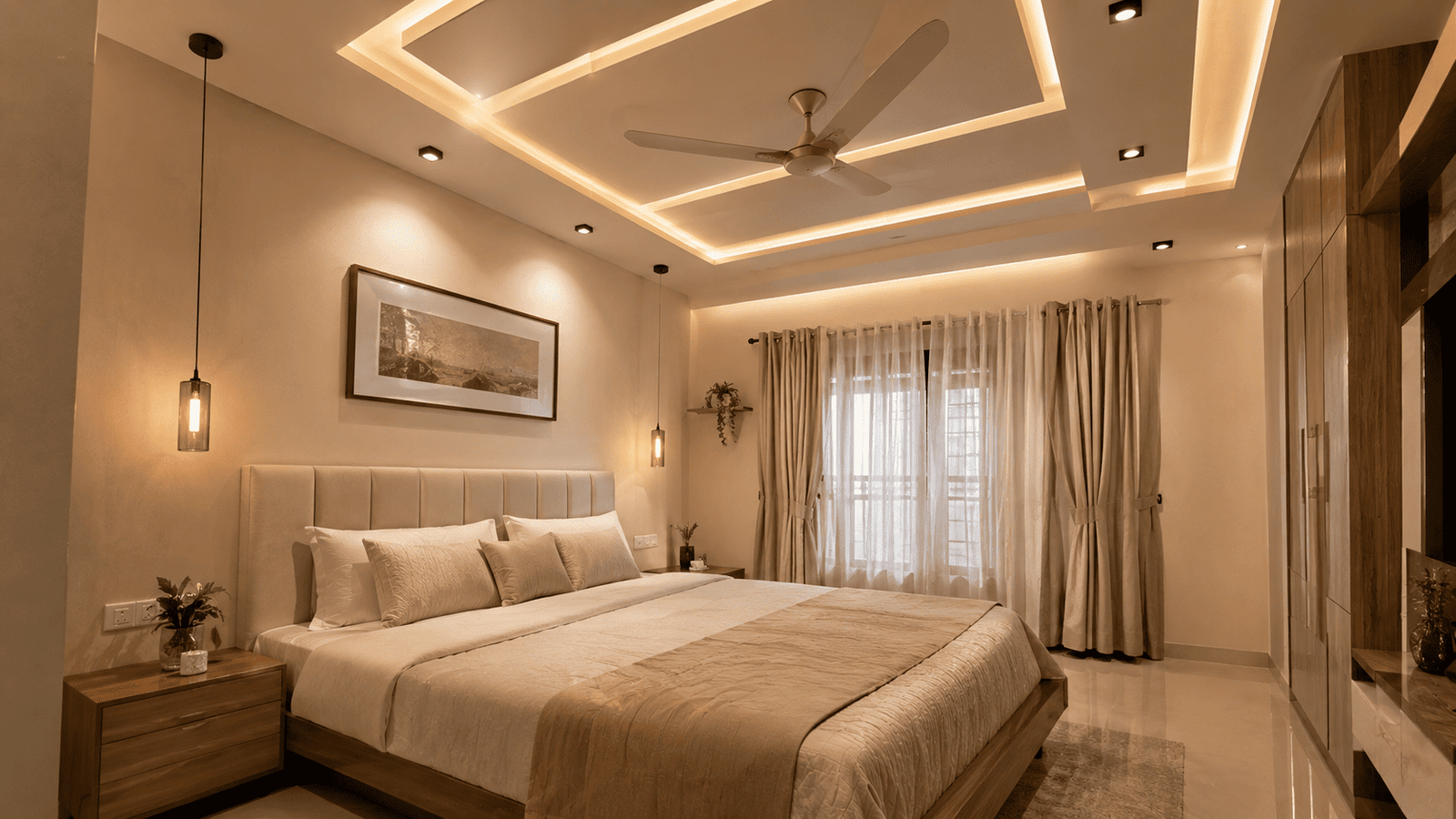
A combination of rectangular raised and recessed sections gives the ceiling a structured appearance. You can use asymmetry, offset panels or a combination of horizontal and vertical lines to create a more contemporary look.
Modern plus-minus POP designs are increasingly used to give bedroom ceilings visual depth while maintaining a relatively clean appearance.
Best for: Modern master bedrooms
Style: Geometric and contemporary
Lighting: Concealed LED + spotlights
Colours: White, beige, grey or subtle wood accent.
3. Plus Minus POP Design for Bedroom With Fan
A ceiling fan does not have to look like an element added after the POP work. The ceiling design can be planned around it.
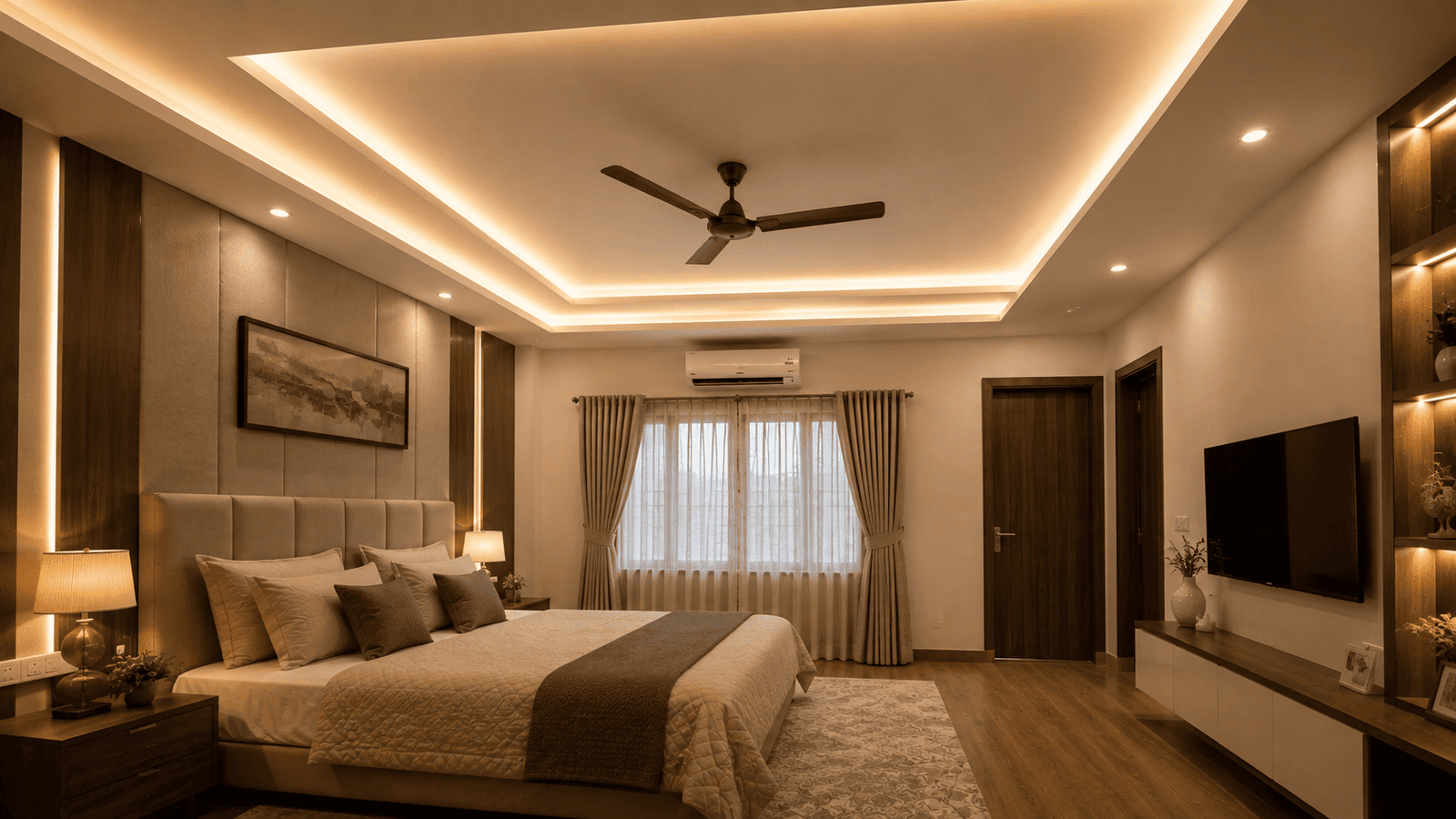
One practical approach is to keep a visually open central section for the fan and use the plus-minus POP detailing around it. A rectangular, circular or tray-like layout can frame the fan without crowding it.
For fan installations, the structural mounting and electrical work should be planned separately from the decorative POP layer. False-ceiling designs can accommodate fans when proper reinforcement and mounting arrangements are provided.
Best for: Indian bedrooms where a ceiling fan is essential
Design tip: Keep the fan visually clear from bulky POP projections
Lighting: Perimeter spotlights + concealed LED
4. Simple Plus Minus POP Design With Fan and Lights
If your priority is functionality, you do not need multiple ceiling levels.
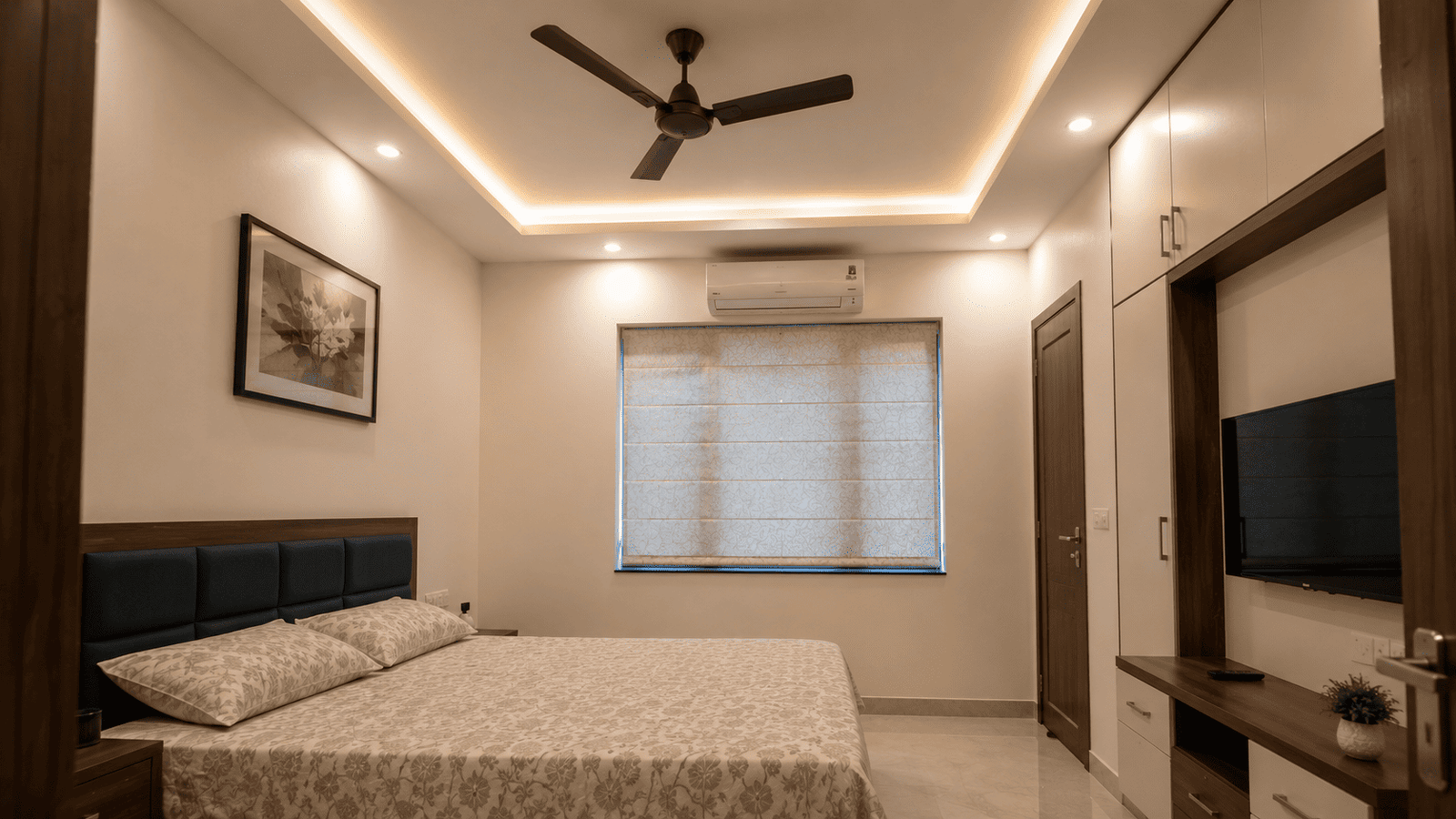
A simple raised border with a recessed central area can accommodate a fan and a few recessed lights. This approach is especially useful for homeowners who want a neat bedroom ceiling without spending heavily on complicated detailing.
Keep the number of lights proportional to the bedroom size. Too many bright spotlights can make a bedroom feel more like a showroom than a relaxing space.
5. Modern Plus Minus POP Design With Cove Lighting
Cove lighting works particularly well with plus-minus ceilings because light can highlight the difference between raised and recessed surfaces.
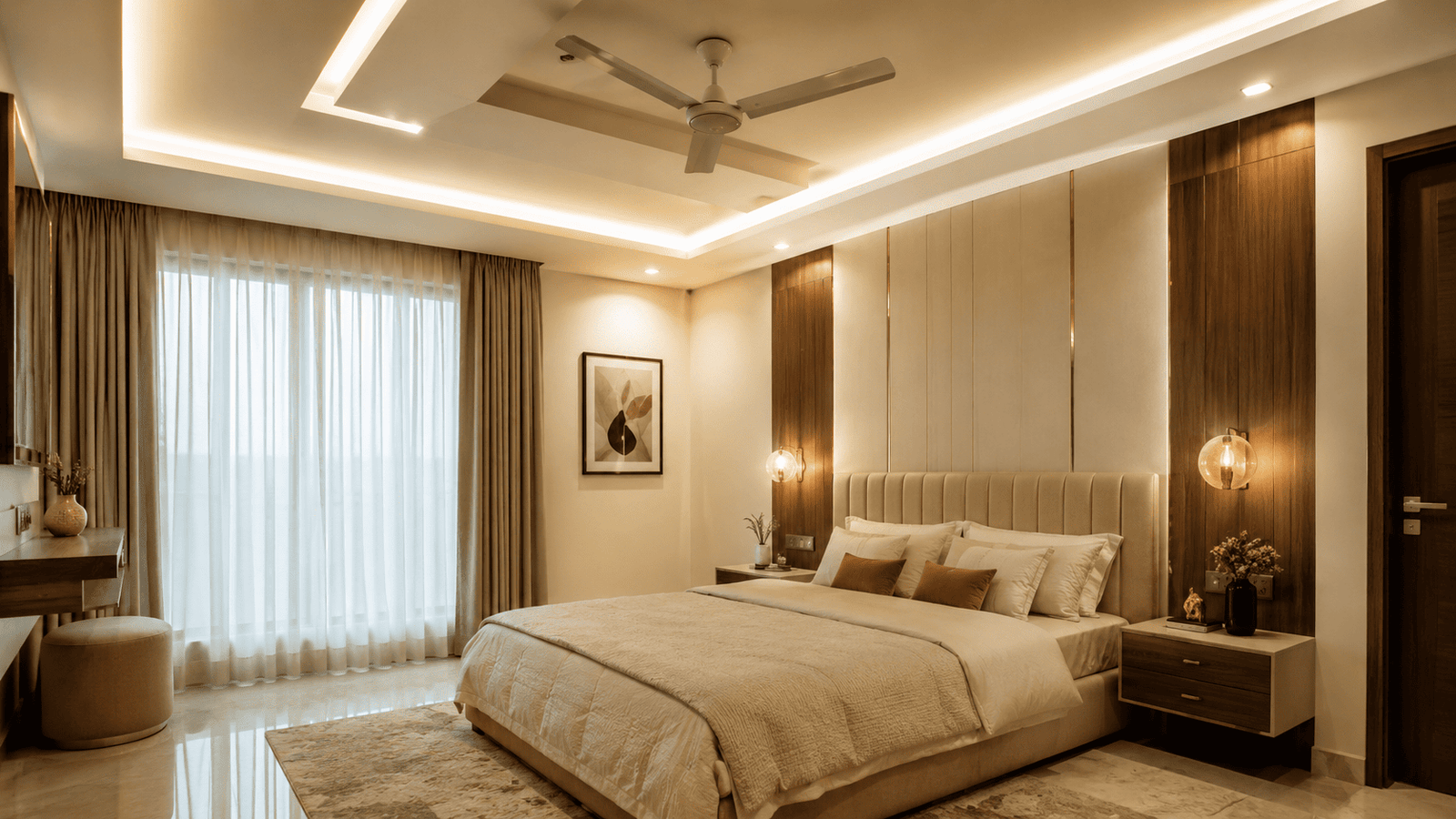
Instead of making the LED strip the centre of attention, hide it inside the recessed section so that the light softly washes the ceiling.
For bedrooms, warm white lighting generally creates a softer atmosphere than very bright cool-white illumination.
Best for: Master bedrooms and contemporary interiors
Lighting: Concealed warm LED
Design: Layered rectangular POP
6. Plus Minus POP Design Without Full Ceiling
You do not necessarily need to cover the entire bedroom ceiling with a false ceiling to create a plus-minus effect.
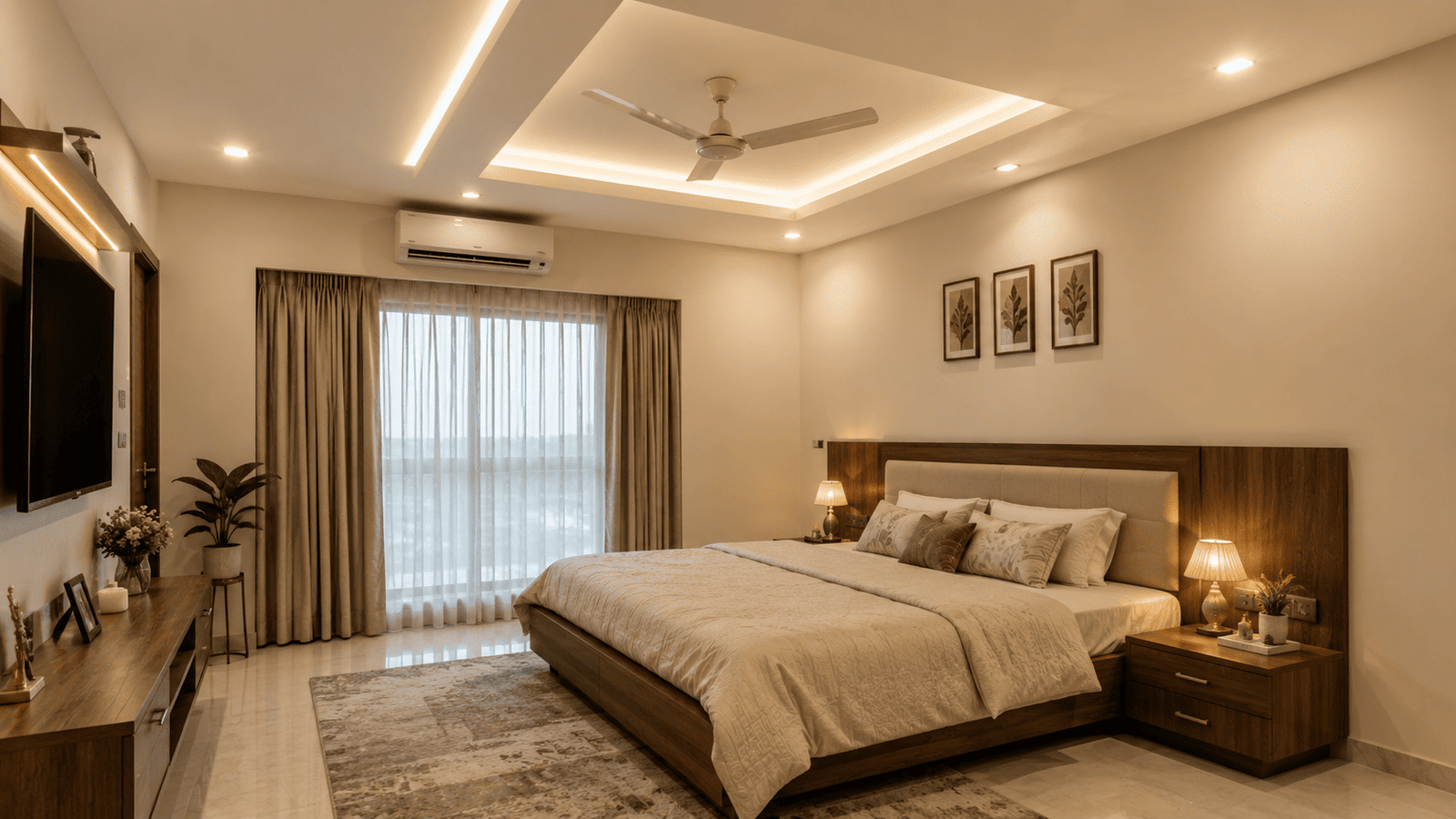
A partial plus-minus POP design can be installed in selected areas, such as around the bed, along the ceiling perimeter or around a central fan.
This is particularly useful when the existing ceiling is already low. A shallow, localized feature can provide visual interest while preserving more of the room’s original height.
For low ceilings, shallow designs and peripheral drops are generally more practical than deep multi-level constructions.
7. Small Bedroom Plus Minus POP Design
A small bedroom does not need a complicated ceiling.
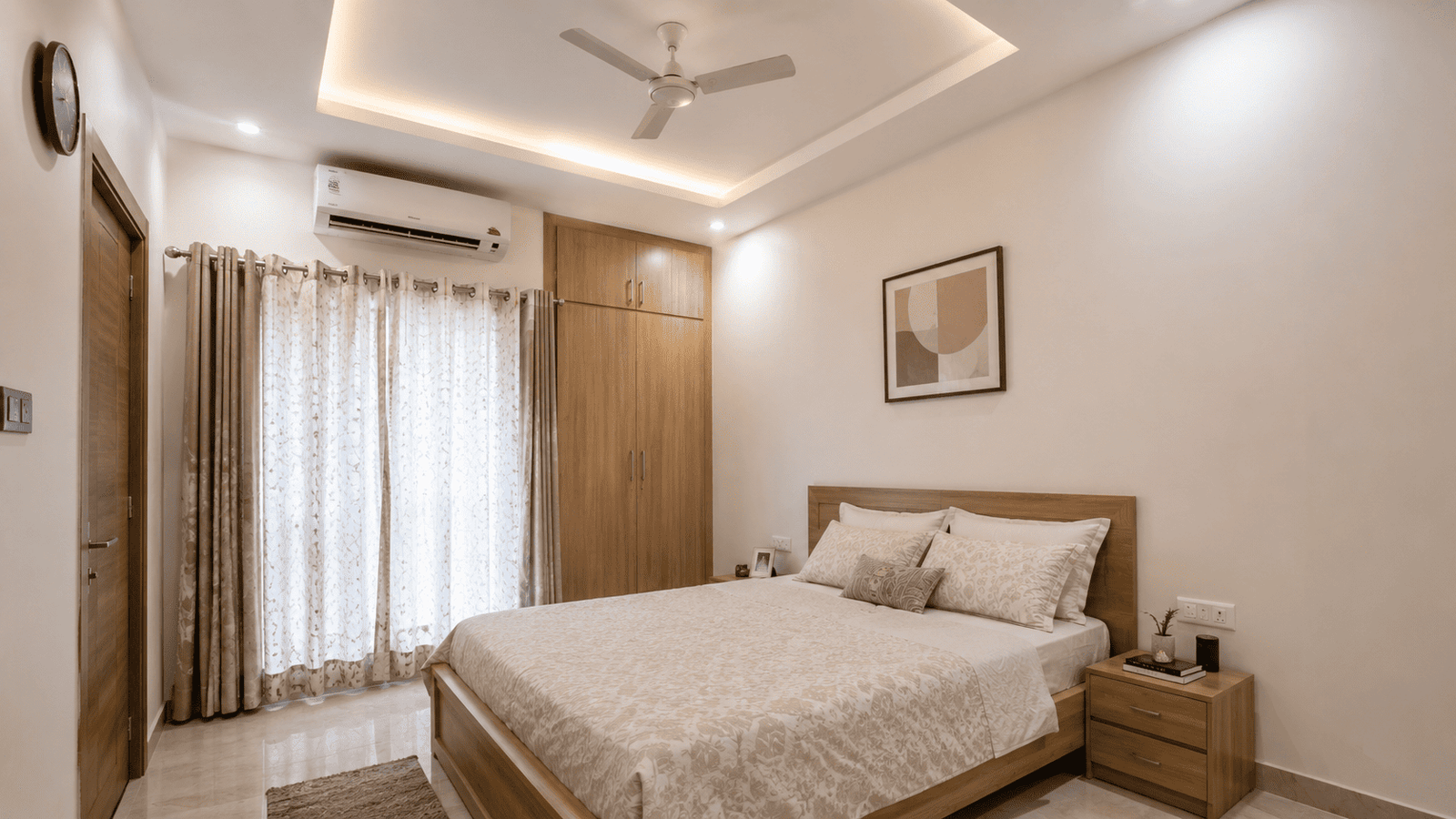
Use a shallow rectangular design, narrow border or single recessed panel. Keeping the ceiling predominantly white can also help maintain a visually open appearance.
Avoid filling a compact ceiling with multiple geometric patterns, thick borders and too many lights. The ceiling should complement the bedroom rather than compete with the furniture.
Best for: 10×10, 10×12 and similar compact bedrooms
Recommended approach: One or two ceiling levels
Avoid: Heavy multi-layered designs
8. Luxury Plus Minus POP Design for Large Bedroom
A larger master bedroom gives you more freedom to experiment with layered POP patterns.
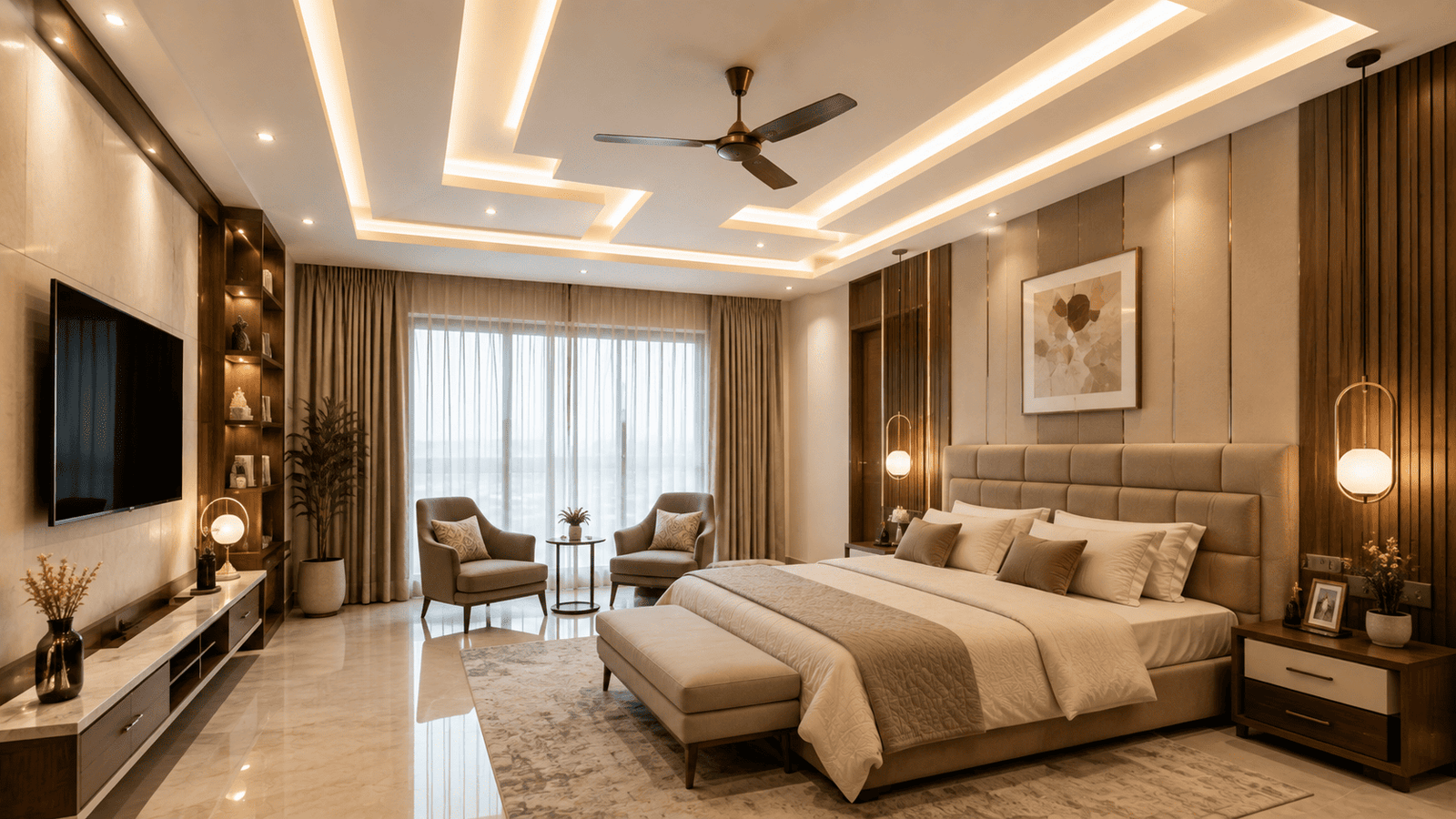
You can combine multiple rectangular sections, concealed lighting, decorative panels and subtle accent materials. However, even in a large bedroom, the design should follow the room’s furniture arrangement.
For example, a large central POP composition can visually connect the fan, bed and lighting rather than creating several unrelated patterns.
What Is a Plus Minus POP Design?
A plus-minus POP design is a ceiling treatment that combines raised and recessed sections to create differences in depth and dimension. The raised portions are the “plus” elements, while the recessed or lowered portions create the “minus” effect.
The contrast between these levels becomes more noticeable when combined with concealed LED strips or recessed lights. Geometric shapes such as rectangles, squares and layered panels are commonly used for this style.
The design can be used as:
- A full false ceiling
- A partial ceiling feature
- A border around the room
- A central fan-focused design
- A bed-area ceiling feature
- A geometric lighting feature
Why Choose a Plus Minus POP Design for a Bedroom?
Creates Visual Depth
A plain ceiling can sometimes look unfinished, especially in a modern bedroom. Raised and recessed POP elements introduce depth without requiring decorative furniture or wall treatments.
Works Well With LED Lighting
The different ceiling levels provide natural locations for concealed LED strips and recessed lights. This can create layered illumination instead of relying on a single central light.
Can Accommodate a Ceiling Fan
A fan can be incorporated into the design by leaving a central area visually open or creating a circular or rectangular frame around it. Fan-centred POP arrangements are a common bedroom ceiling approach.
Suitable for Small and Large Bedrooms
The same design concept can be scaled according to the room. A small bedroom may need only one recessed panel, while a large master bedroom can accommodate several levels.
Creates a Modern Look
Straight lines, rectangular panels and concealed lighting can give the bedroom a contemporary appearance without excessive ornamentation.
Can Be Combined With a Partial False Ceiling
A plus-minus feature does not always need to extend across the complete ceiling. Partial designs can be useful when you want to preserve ceiling height.
Plus Minus POP Design for Bedroom With Fan: What to Consider
If you want a plus minus POP design for bedroom with fan, plan the fan before finalizing the ceiling pattern.
Keep the Fan at the Correct Center Point
The fan should be positioned according to the functional layout of the bedroom rather than simply at the geometric centre of the POP design.
Maintain Clearance Around Fan Blades
Avoid creating bulky POP projections too close to the rotating blades. The fan should have sufficient clearance and should not appear visually trapped inside the ceiling pattern.
Don’t Make the POP Pattern Too Busy
A fan already creates a strong visual element. A complicated ceiling directly around it can make the room look cluttered.
Plan Electrical Points Before POP Installation
Decide the positions of:
- Fan
- LED strips
- Spotlights
- Pendant lights
- AC-related points
- Other ceiling fixtures
before the POP work begins.
Position Downlights Away From the Fan
Instead of putting multiple spotlights immediately around the fan, distribute them around the room’s functional zones.
Consider Fan Height and Ceiling Height
The amount of ceiling drop matters. If your room already has a relatively low ceiling, a deep multi-level design may not be appropriate.
Plus Minus POP Design Without Full Ceiling: Is It Possible?
Yes. A plus-minus POP feature can be designed without creating a full-room false ceiling.
For example, you could create:
- A POP border around the ceiling
- A recessed rectangle above the bed
- A central fan frame
- A small geometric ceiling feature
- A perimeter cove
- A combination of raised and recessed panels in one section
This approach can be particularly useful in apartments or bedrooms where preserving ceiling height is important.
Full Ceiling vs Partial Plus-Minus Design
| Design approach | Best for |
|---|---|
| Full POP false ceiling | Large bedrooms and elaborate lighting |
| Partial plus-minus POP | Small and medium bedrooms |
| POP border | Minimal interiors |
| POP feature above bed | Decorative focal point |
| Central recessed panel | Fan + lighting combination |
How to Choose the Right Plus Minus POP Design for Your Bedroom
Instead of selecting a ceiling design solely because it looks good in a reference image, match it to your room.
For a Small Bedroom
Choose a shallow rectangular or perimeter design with minimal detailing.
For a Low Ceiling
Avoid deep, multi-level POP structures. A partial or shallow design is usually more appropriate.
For a Large Master Bedroom
You can experiment with multiple geometric levels, cove lighting and larger ceiling compositions.
For a Bedroom With a Fan
Keep the fan position clear and design the POP pattern around its location.
For a Minimal Interior
Choose straight lines, white POP and subtle LED lighting.
For a Luxury Interior
Consider layered geometric sections, cove lighting and restrained accent materials.
Best Plus Minus POP Designs Based on Bedroom Size
10×10 Bedroom
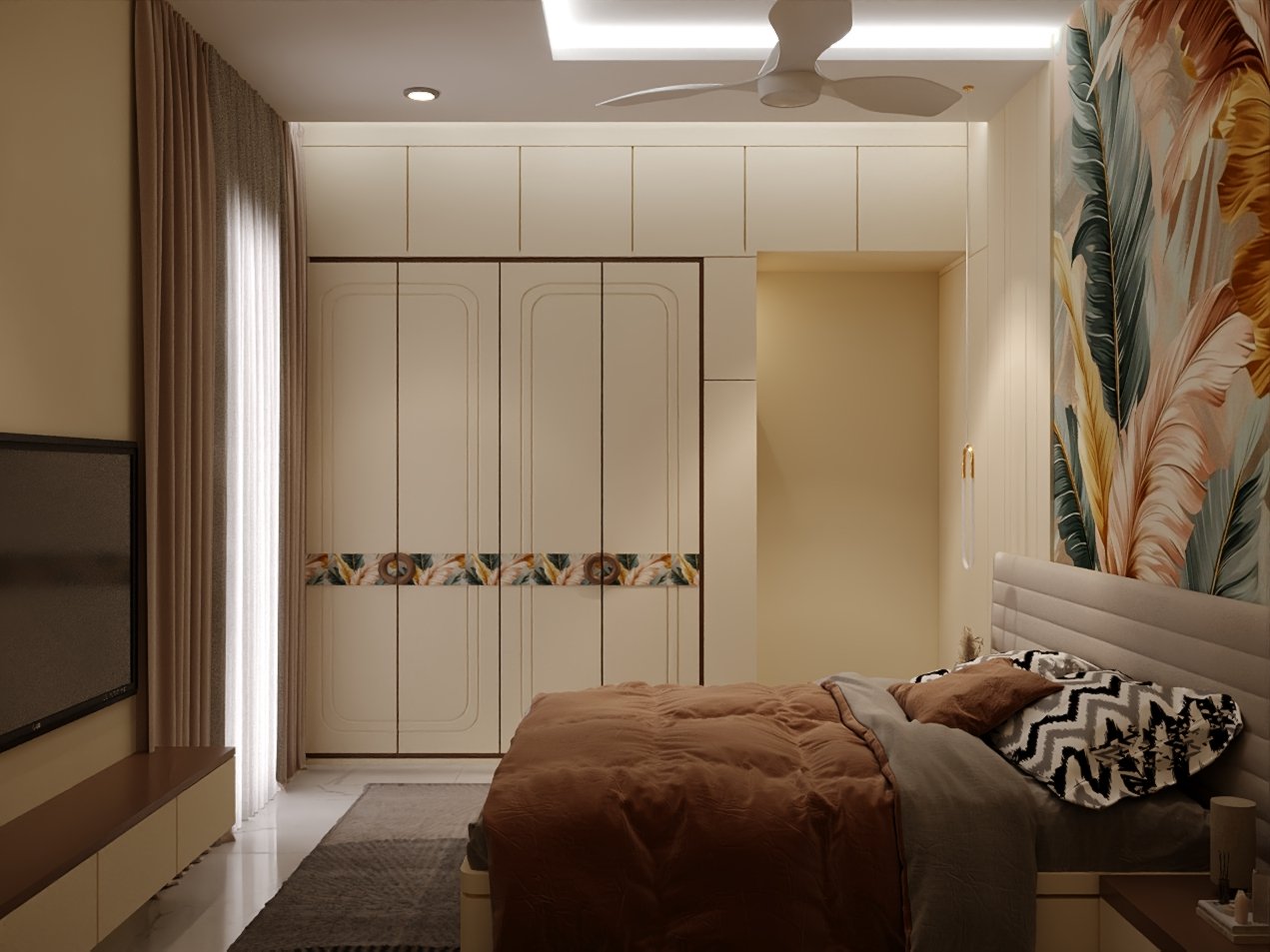
Keep the ceiling simple. A narrow border or one shallow recessed panel is usually enough.
10×12 Bedroom
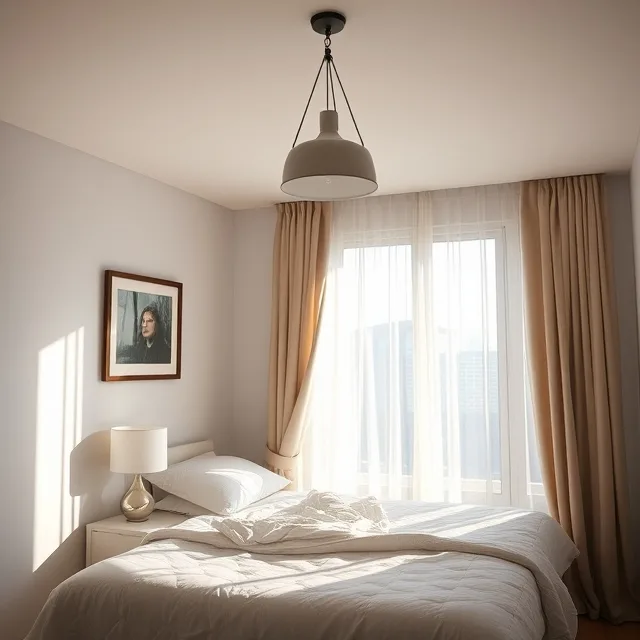
A rectangular plus-minus design can work well, particularly when the longer side of the ceiling is used to establish the main geometry.
12×12 Bedroom
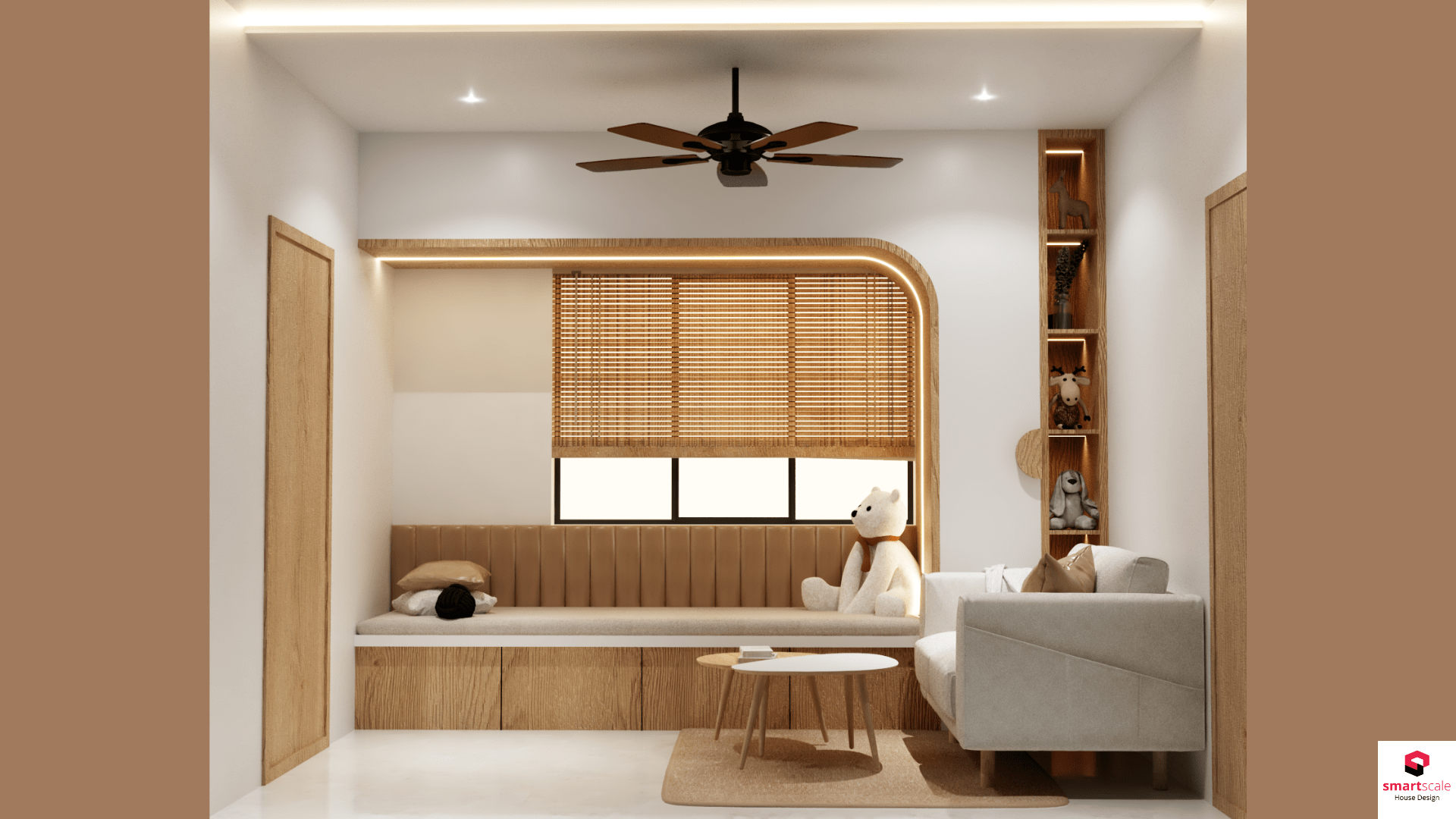
A central panel or symmetrical plus-minus pattern can create a balanced appearance.
12×15 Bedroom
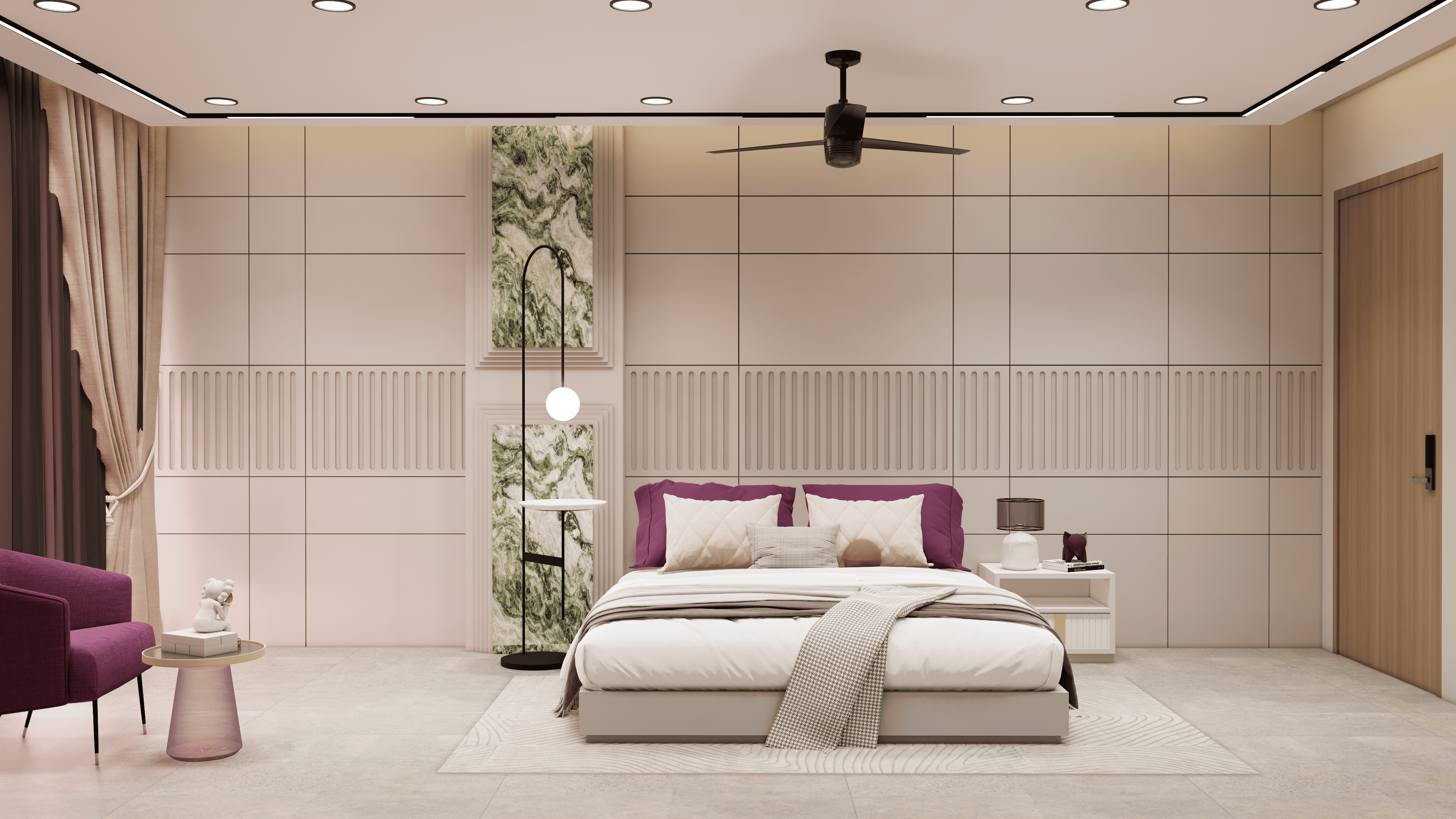
You have more room to introduce layered rectangles, cove lighting and a fan-centred design.
Large Master Bedroom
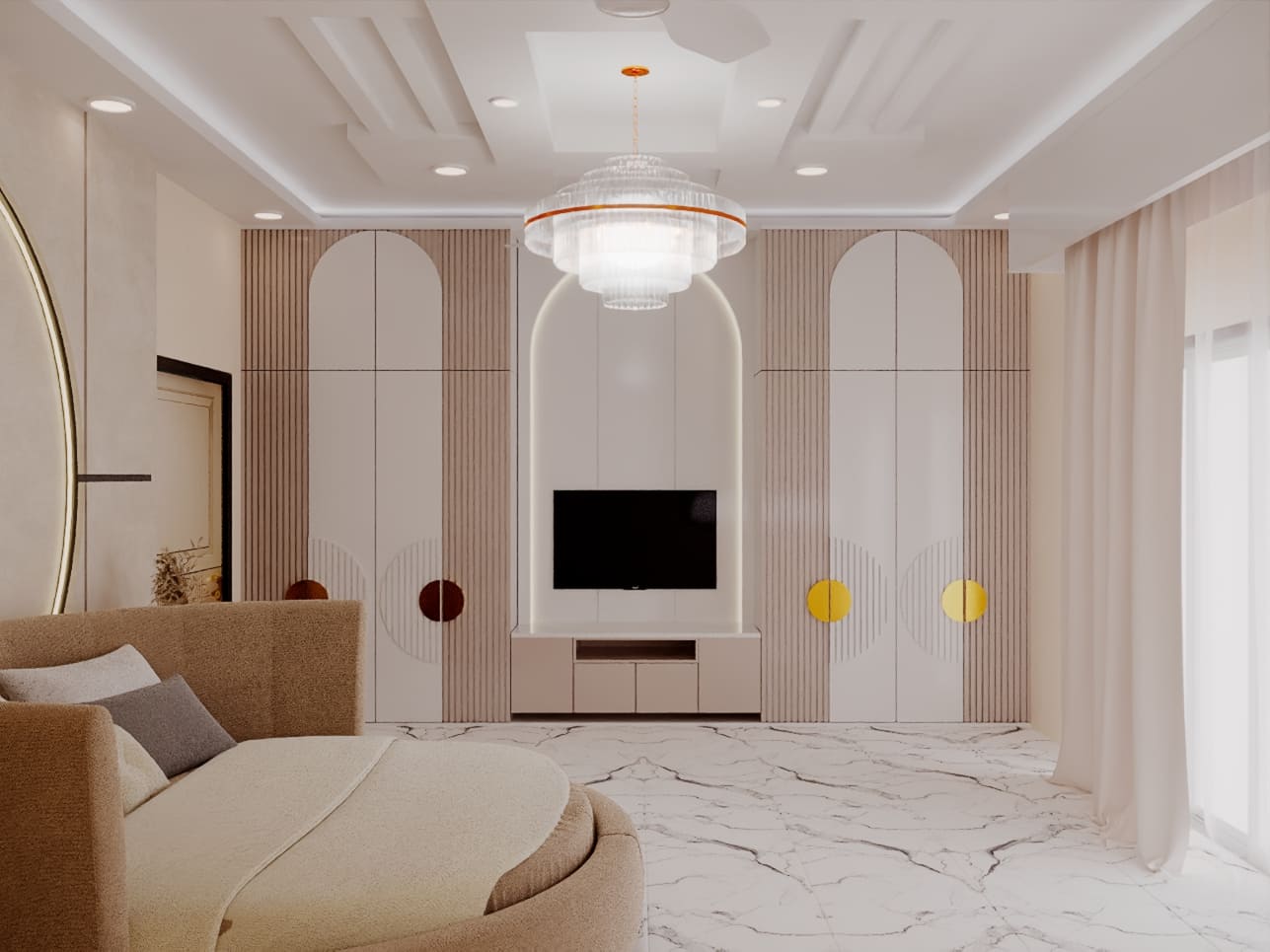
Consider a larger composition that coordinates with the bed, side tables, fan and lighting rather than covering the entire ceiling with unrelated patterns.
The key principle is proportion. A ceiling design should grow with the room rather than simply being copied at the same scale.
Plus Minus POP Design With Different Lighting Options
Warm White LED Strip
Best for creating a relaxed bedroom atmosphere.
Cool White LED
Useful when you want a brighter, cleaner appearance, although excessive cool lighting may feel less relaxing at night.
Recessed Spotlights
Use these for general illumination and to highlight specific areas.
Cove Lighting
Cove lighting is particularly effective for emphasizing recessed POP levels because the light source can remain hidden while the ceiling surface glows.
Fan + Spotlights
A practical combination for homeowners who want a simple ceiling with adequate illumination.
Fan + Cove Lighting + Downlights
This creates a more layered lighting scheme and works particularly well in larger bedrooms.
Modern bedroom ceiling designs commonly combine cove lighting with recessed lights to create softer, layered illumination.
POP vs Gypsum for Plus Minus Bedroom Ceiling
Both POP and gypsum can be used for decorative and false-ceiling applications, but they offer different practical characteristics.
| Factor | POP | Gypsum |
| Custom shapes | Excellent | Good |
| Smooth finish | Excellent | Excellent |
| Complex detailing | Excellent | Good |
| Installation | More on-site work | Generally faster |
| Design flexibility | High | High |
| Finish options | Extensive | Extensive |
POP is particularly useful when you want customized shapes and intricate detailing. Gypsum can be attractive when you want a relatively quick, structured false-ceiling installation.
The right material should ultimately be selected based on the design, site conditions, ceiling structure, contractor expertise and project budget.
How Much Does a Plus Minus POP Design Cost?
There is no single price for a plus-minus POP ceiling because the final cost depends on the project.
Major cost factors include:
- Bedroom size
- POP or gypsum material
- Number of ceiling levels
- Design complexity
- Labour charges
- Lighting points
- LED strips
- Electrical work
- Painting and finishing
- Location and local labour rates
Published 2026 guides show a wide range for bedroom POP ceiling work because simple flat designs and highly detailed multi-level ceilings have very different requirements. For example, NoBroker reports bedroom POP ceiling pricing broadly around ₹70–₹400 per sq ft depending on design and detailing, while its simpler POP examples fall in narrower ranges.
Therefore, use a site-specific quotation rather than assuming that every plus-minus design will cost the same.
Common Mistakes to Avoid
1. Making the Design Too Heavy
A bedroom ceiling should create a calm environment. Excessive layers can make it visually overwhelming.
2. Ignoring Ceiling Height
A design that looks excellent in a tall room may make a low-ceiling bedroom feel cramped.
3. Poor Fan Placement
The fan should be planned together with the ceiling design rather than added after the POP layout is finalized.
4. Using Too Many Lights
More lights do not automatically mean better lighting. Use a combination of ambient and focused lighting according to the room.
5. Choosing the Wrong Light Colour
Bedrooms generally benefit from comfortable, warm lighting for evening use.
6. Copying a Design Without Considering Room Size
A ceiling reference from a 15×20 master bedroom may not translate well to a 10×10 bedroom.
7. Not Planning Electrical Wiring Before POP Work
Finalize the lighting and fan points before closing the ceiling.
How to Plan a Plus Minus POP Design: Step-by-Step
Step 1: Measure the Bedroom
Record the room’s length, width and ceiling height.
Step 2: Check the Existing Ceiling
Identify beams, slab conditions, existing wiring and other services that may affect the design.
Step 3: Mark the Fan Position
Decide where the fan will sit before drawing the POP pattern.
Step 4: Decide the Lighting
Choose between cove lighting, spotlights, LED strips or a combination.
Step 5: Select the POP Pattern
Choose a design appropriate to the room’s dimensions and interior style.
Step 6: Create the Ceiling Layout
Prepare the actual ceiling plan rather than relying only on a reference image.
Step 7: Finalize Electrical Points
Mark all fan, light and other service points before installation.
Step 8: Execute POP Work
The contractor can then construct the framework and POP levels according to the approved design.
Step 9: Install Lighting and Fan
Complete the electrical fixtures after the POP surface and paint finish are ready.
Step 10: Check the Final Finish
Inspect the ceiling for alignment, joints, paint consistency, lighting distribution and fixture clearance.
Choose a Plus Minus POP Design That Fits Your Bedroom
The best plus minus POP design for bedroom is not necessarily the most elaborate design you find online. It is the one that works with your actual room dimensions, ceiling height, fan position, lighting requirements and furniture layout.
For a small bedroom, keep the design shallow and simple. For a larger master bedroom, you can introduce more geometric layers and lighting. If you have a ceiling fan, plan its position before finalizing the POP pattern. And if you want to preserve ceiling height, consider a partial plus-minus feature instead of a full false ceiling.
At SmartScale House Design, bedroom interiors can be planned around your actual space rather than simply copying a reference image. A customized design can coordinate the ceiling, lighting, furniture layout and overall bedroom style.
Looking for a bedroom design tailored to your room? Contact SmartScale House Design to discuss your interior design requirements.
Frequently Asked Questions About Plus Minus POP Design for Bedroom
What is a plus-minus POP design for a bedroom?
It is a POP ceiling design that combines raised and recessed sections to create different levels and visual depth. The design is often enhanced with concealed LED lighting or recessed spotlights.
Is plus-minus POP design suitable for a bedroom with a ceiling fan?
Yes. The POP layout can be designed around the fan by keeping sufficient clearance and creating a central or surrounding geometric feature. The fan should have a proper structural mounting point independent of the decorative POP layer.
Can I make a plus-minus POP design without a full false ceiling?
Yes. A partial POP border, recessed panel or localized ceiling feature can create the plus-minus appearance without covering the entire ceiling.
Which is better for a bedroom: simple or modern plus-minus POP?
It depends on your interior. A simple design is usually better for compact or minimalist bedrooms, while a more geometric modern design can work well in larger contemporary bedrooms.
Is POP good for a low-height bedroom?
It can be, provided the design is shallow and does not unnecessarily reduce the usable ceiling height. Deep multi-level designs are generally less suitable for low ceilings.
What lights work best with plus-minus POP?
Concealed LED strips, cove lighting and recessed spotlights are commonly used. The ideal combination depends on how much general and ambient lighting the bedroom requires.
How much does a plus-minus POP ceiling cost?
The cost varies according to bedroom size, material, design complexity, lighting and labour. Get a project-specific quotation instead of relying on a universal per-square-foot price.
Can plus-minus POP be used in a small bedroom?
Yes. Use a simple, shallow design with limited layers. A narrow border or single recessed panel can provide enough visual detail without making the room feel crowded.
Is POP or gypsum better for a plus-minus ceiling?
Both can work. POP offers considerable flexibility for customized shapes and detailing, while gypsum is often preferred for structured false-ceiling installations. The choice should be based on the design and project requirements.