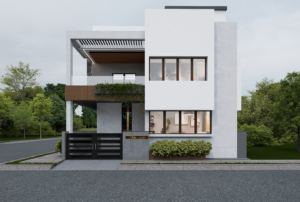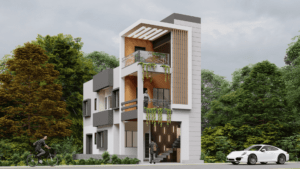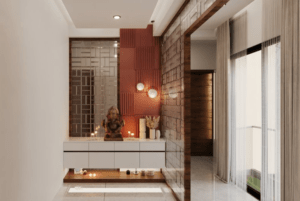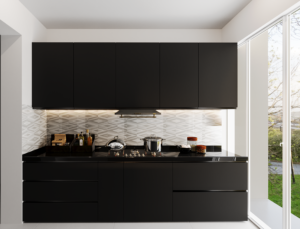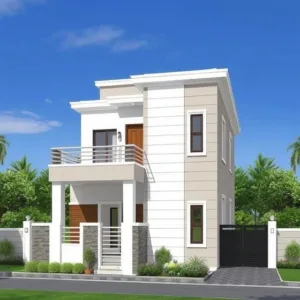
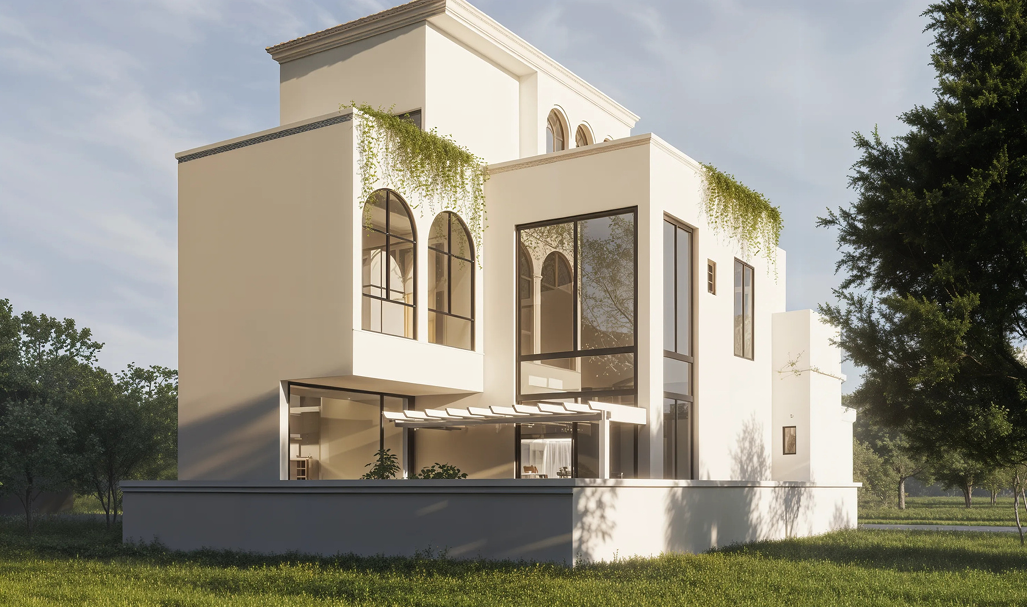
The best residential architect in India is one who understands your lifestyle, plot conditions, local building regulations, budget, and future requirements. A good architect delivers functional floor plans, attractive elevations, structural coordination, Vastu-friendly layouts if required, and complete construction drawings. Companies like SmartScale House Design provide online architectural services across India, making professional house design accessible regardless of location. Choosing the right architect is one of the most consequential decisions in a home building journey, since design choices made in the first few weeks of planning shape everything from daily comfort to long-term resale value.
Table of Contents
ToggleWhat Is a Residential Architect?
A residential architect is a trained design professional who plans and details homes from the ground up. This covers home planning, space planning, exterior elevations, interior layout, structural coordination, building permission support, and full construction drawings. An architect’s role starts long before the first brick is laid. It begins with understanding how a family lives, how many people will use the home, what their daily routines look like, and how those routines should shape the layout of rooms, corridors, and outdoor spaces.
Unlike a draftsman who simply prepares drawings based on instructions, an architect actively solves problems. This includes deciding how a family moves through a home, where natural light enters at different times of day, how air flows through the structure, and how the building holds together structurally over decades of use. A draftsman typically works from a template or a client’s rough sketch, while an architect designs from first principles based on the specific plot, climate, and family.
Working drawings, a term that comes up often in this field, refer to the detailed technical drawings given to contractors and site engineers during construction. These include precise measurements, material specifications, structural details, and installation instructions for electrical and plumbing systems. Without accurate working drawings, even a beautifully designed home can run into serious execution problems on site.
| Residential Architect | Draftsman |
|---|---|
| Creates functional design | Only prepares drawings |
| Optimizes space | Copies layout |
| Plans ventilation | Limited planning |
| Coordinates structure | No engineering coordination |
| Better long-term value | Basic drafting |
Why You Should Hire a Residential Architect
Better space utilization. An architect studies your plot dimensions and family needs before drawing a single wall, which means rooms are sized for actual use instead of guesswork. This reduces dead corners, awkward passages, and unusable leftover space. A well-planned 30×40 plot can feel more spacious than a poorly planned 40×60 plot simply because every square foot is doing something useful.
Better natural lighting. Window placement is planned around the sun’s path, not just the facade’s appearance. This lowers daytime dependence on artificial lighting and keeps interiors brighter throughout the year. In Indian climates, this also means balancing light with heat gain, since a poorly oriented window can flood a room with harsh afternoon sun rather than soft, usable daylight.
Improved ventilation. Cross ventilation is designed intentionally, with openings positioned to let air move through the house rather than stagnate in closed rooms. This becomes especially important in tropical and coastal regions where mechanical cooling alone can lead to high electricity bills and stuffy interiors during power outages.
Higher property value. A professionally designed home tends to resell better because buyers can see the difference between a planned layout and a generic one. Features like well-proportioned rooms, efficient circulation, and a coherent facade design tend to stand out during resale, even to buyers who cannot articulate exactly why one home feels better than another.
Lower construction errors. Detailed technical drawings mean contractors are working from precise instructions, not assumptions, which cuts down on on-site corrections. Every wall, beam, column, and opening is documented, which reduces the back-and-forth confusion that often happens when contractors are left to interpret an incomplete plan.
Saves construction cost. Good planning upfront avoids costly redesigns midway through construction, which is one of the most common ways homeowners overspend. Structural changes made after a foundation is poured or walls are built are far more expensive than adjustments made on paper during the design phase.
Better long-term flexibility. An experienced architect also considers how a home might need to change over time, whether that means adding a floor later, converting a room’s use, or accommodating aging family members. Planning for this early avoids expensive retrofits down the line.
Qualities of the Best Residential Architects in India
- Strong planning skills that balance function, aesthetics, and budget from the earliest sketches
- Experience across different plot sizes, including common Indian dimensions like 20×30, 20×40, 30×40, 30×50, and 40×60
- Solid understanding of local building bye-laws, setback rules, and floor space index regulations that vary by city and state
- Ability to coordinate structural design with engineers so architectural intent and structural safety work together, not against each other
- Working knowledge of Vastu principles, for clients who want it, without forcing a layout that compromises daily functionality
- Transparent, responsive communication throughout the project, including clear timelines and honest cost expectations
- A modern design approach that still respects practical construction realities like material availability and local labor practices
- Familiarity with Indian construction practices, materials, and site conditions, including monsoon drainage, soil variation, and regional climate patterns
- A portfolio that demonstrates range across different home types rather than a single repeated template
- Willingness to explain design decisions clearly, so homeowners understand the reasoning behind layout and material choices
Services Offered by Top Residential Architects
| Service | Why It Matters |
|---|---|
| Floor Plan | Functional layout |
| 3D Elevation | Visualize final house |
| Structural Drawings | Safe construction |
| Electrical Layout | Proper wiring |
| Plumbing Layout | Efficient water flow |
| Working Drawings | Accurate execution |
| Interior Layout | Better functionality |
| Site Planning | Proper utilization |
| Landscape Planning | Outdoor aesthetics |
A comprehensive architectural service does not stop at a pretty elevation. It includes every layer of documentation a contractor needs to execute the project correctly, from foundation details to final finishes. Homeowners should confirm exactly which of these services are included before signing on with any architect, since some firms charge separately for structural drawings, electrical layouts, or landscape planning.
Residential Architecture Design Process
Initial consultation. The architect discusses budget, family size, lifestyle needs, and plot details to understand what the home actually needs to deliver. This stage often includes questions about how many bedrooms are needed, whether a home office or study is required, whether parents or in-laws will live in the home, and how the family expects their needs to change over the next ten to fifteen years.
Site analysis. Plot orientation, soil conditions, road access, and local climate are studied, since these factors shape everything from foundation design to window placement. A north-facing plot in a hot climate, for example, will be designed very differently from a south-facing plot in a cooler region, even if both plots are the exact same size.
Concept planning. A rough design direction is set based on the consultation and site findings. This is where the architect proposes an initial layout logic, such as whether the living areas should face the street or the rear garden, and how public and private zones of the home should be separated.
Floor plan development. Room layouts, circulation, and space allocation are finalized. This stage typically goes through multiple rounds of refinement as the homeowner reviews the plan and requests adjustments based on how they actually intend to use each space.
Elevation design. The exterior look and facade style are developed to match the homeowner’s preference and the neighborhood context. This includes decisions about roofline, materials, balconies, and how the home will look from the street.
Structural coordination. The architectural design is aligned with structural engineering requirements for safety and durability. This ensures that column placement, beam sizing, and load paths are worked out before construction begins, rather than being discovered as problems on site.
Working drawings. Detailed, construction-ready drawings are prepared covering every dimension a contractor needs, including door and window schedules, electrical points, plumbing lines, and finishing specifications.
Construction support. The architect remains available to clarify drawings and resolve site queries as building progresses. This ongoing support is often what separates a smooth construction process from one full of confusion and rework.
Popular Residential Design Styles in India
Homeowners today choose from a wide range of styles, and the right choice depends on plot size, regional climate, family preference, and budget.
Modern house design typically favors clean lines, minimal ornamentation, and large windows, and tends to work well for homeowners who want a contemporary look without excessive detailing.
Contemporary homes blend current design trends with practical Indian construction methods, often mixing materials like exposed concrete, glass, and wood accents.
Minimalist homes strip design down to essential forms and functional spaces, which can also help control construction cost since there is less decorative detailing to execute.
Luxury villas usually involve larger plots, premium materials, and custom detailing throughout, from flooring to facade lighting.
Traditional Indian homes draw on regional architectural heritage, often featuring courtyards, sloped roofs, and locally sourced materials.
Kerala style homes are known for sloped tiled roofs, wide verandas, and layouts designed around the region’s heavy monsoon rainfall.
Farmhouses prioritize open layouts, outdoor living spaces, and a connection to surrounding land, often with larger plot sizes than urban homes.
Duplex houses maximize vertical space on smaller plots, splitting living areas across two floors to accommodate larger families without needing a wider footprint.
Bungalows typically favor single-floor living with generous room sizes, which works well for families who prefer not to deal with staircases.
How Much Does It Cost to Hire a Residential Architect?
| Service | Typical Price Range |
|---|---|
| Floor Plan | ₹10,000 to ₹40,000 |
| Complete House Design | ₹30,000 to ₹2,00,000+ |
| Luxury Residence | Custom Pricing |
| 3D Elevation | ₹5,000 to ₹50,000 |
| Working Drawings | Depends on project size |
Several factors affect final cost. Plot size is the most obvious variable, since a larger plot requires more detailed planning and more drawings to cover. Number of floors also adds cost, as multi-floor homes require additional structural coordination between levels. Design complexity matters as well, since a home with custom architectural features, curved walls, or intricate facade detailing will cost more to design than a straightforward rectangular layout.
City can influence pricing too, since architects in larger metro areas sometimes charge more due to higher operating costs, though this gap has narrowed significantly with the rise of online architectural services that serve clients nationwide at consistent rates. Finally, the exact list of deliverables included in a package changes the price considerably. A basic floor plan alone will always cost less than a complete package that includes structural drawings, electrical and plumbing layouts, and full working drawings.
Homeowners should ask for a clear, itemized quote before starting a project, so there are no surprises when structural drawings or additional revisions come up later in the process.
Online Residential Architects vs Local Architects
| Online Architect | Local Architect |
|---|---|
| Available nationwide | Limited location |
| Faster communication | Physical meetings |
| Digital design reviews | Manual revisions |
| Easy document sharing | Paper-based |
| Cost-effective | Higher overhead |
Online architecture works especially well for homeowners in smaller towns without easy access to experienced architects nearby, for NRIs planning a home in India from abroad, and for anyone who prefers reviewing designs digitally on their own schedule instead of coordinating in-person meetings. Digital collaboration also tends to speed up the revision process, since design changes can be reviewed and approved over video calls or shared documents rather than waiting for in-person meetings to be scheduled.
Local architects still hold an advantage for homeowners who want frequent in-person site visits during construction or who feel more comfortable discussing design ideas face to face. In practice, many homeowners now use a hybrid approach, working with an online architect for design and documentation while coordinating with a local contractor or site supervisor for construction execution.
Questions to Ask Before Hiring an Architect
- Can I see your previous projects, including homes similar in size or style to what I am planning?
- Do you provide structural drawings, or will I need to hire a separate structural engineer?
- Will I receive construction drawings detailed enough for any contractor to execute?
- How many revisions are included in the design package, and what happens if I need more?
- Do you provide online consultations, and how are design reviews conducted?
- Do you design according to Vastu, and can this be incorporated without compromising functionality?
- How long will the project take from initial consultation to final working drawings?
- What software do you use, and can I expect realistic 3D visualizations of my home before construction begins?
- Will you be available for questions during construction, or does your involvement end once drawings are delivered?
- What is not included in the quoted price, so I can budget accurately from the start?
Common Mistakes Homeowners Make
Many homeowners choose an architect based only on price, without weighing experience or design quality, which often leads to a home that looks fine on paper but performs poorly in daily use. Others ignore experience entirely and hire based on a low quote alone, only to discover midway through the project that the architect lacks the technical depth needed for their specific plot or structural requirements.
Skipping working drawings is another frequent mistake, since verbal instructions to a contractor lead to inconsistent execution and disputes over what was actually agreed upon. Homeowners often forget to ask about the number of included revisions, which can result in unexpected charges once the design process extends beyond the initial scope.
Not discussing future expansion plans is a subtle but costly oversight. A family that expects to add a floor in five years should design the foundation and structure to support that from day one, rather than retrofitting later at much higher cost. Ignoring plot orientation during design can also lead to homes with poor natural lighting or excessive heat gain, problems that are difficult and expensive to fix after construction.
Finally, many homeowners settle for generic floor plans instead of ones suited to their specific plot and lifestyle, simply because a template plan seems faster and cheaper upfront. This often costs more in the long run, since a generic plan rarely fits a specific plot’s dimensions, orientation, or the family’s actual daily routines.
Why SmartScale House Design Is Trusted by Homeowners Across India
SmartScale House Design works with homeowners across the country to create custom home designs based on plot size, family requirements, lifestyle, and future needs, rather than offering one-size-fits-all layouts.
Custom home designs. Every house is designed according to the client’s plot size, family requirements, lifestyle, and future needs, which means no two designs are simply copied from a template catalog.
Online architectural services across India. Homeowners from any city can access professional architectural services remotely, without needing an architect physically nearby. This has made high-quality residential design accessible to homeowners in smaller towns and cities that traditionally had limited access to experienced architects.
Experienced design team. The team brings expertise in modern Indian residential architecture, shaped by real project experience across different plot sizes, regions, and climates.
Complete design package. This includes floor plans, 3D elevation, structural drawings, electrical layouts, plumbing drawings, and working drawings, so homeowners get a full set of construction-ready documents rather than a partial design that requires additional coordination elsewhere.
Modern and Vastu-friendly designs. Vastu-compliant layouts are offered on request, without compromising the functionality or flow of the home, giving homeowners the option to combine traditional principles with a practical modern layout.
Multiple design revisions. The design process is collaborative, with revisions built in to refine the plan until it matches the homeowner’s vision, rather than a rigid one-shot design delivery.
Transparent design process. Clear communication and milestone-based approvals keep homeowners informed at every stage, so there are no surprises about project status or next steps.
Suitable for every home type. This includes villas, duplex homes, independent houses, bungalows, compact urban homes, farmhouses, and rental homes, covering the full range of residential projects homeowners across India are planning.
If you’re planning to build a home anywhere in India, SmartScale House Design provides customized architectural solutions tailored to your plot, budget, and lifestyle. From concept planning to construction-ready drawings, our team helps homeowners create practical, beautiful, and future-ready homes through a convenient online design process.
Contact Us Today To Get a Free Consultation
Frequently Asked Questions
Who is the best residential architect in India?
The best fit depends on your plot, budget, and design needs, but look for an architect who provides complete drawings, clear communication, and experience across plot sizes similar to yours. Online architects like SmartScale House Design make this accessible regardless of your location.
How much does a residential architect charge?
Costs typically range from ₹10,000 for a basic floor plan to ₹2,00,000 or more for a complete house design, depending on plot size, floors, and complexity.
Can I hire an architect online?
Yes. Online architects handle consultations, design reviews, and document sharing digitally, which works well for homeowners anywhere in India, including those planning from abroad.
What drawings does an architect provide?
A complete package usually includes floor plans, 3D elevation, structural drawings, electrical layout, plumbing layout, and working drawings.
Is hiring an architect worth it for a small house?
Yes. Even small plots benefit from proper space planning, ventilation, and lighting design, which an architect can optimize far better than a standard template plan.
Do architects provide Vastu-compliant house plans?
Many architects, including SmartScale House Design, offer Vastu-compliant layouts on request while still maintaining a functional and modern design.
How long does house design take?
Timelines vary by project size and revisions needed, but most residential designs are completed within a few weeks to a couple of months.
Can SmartScale House Design work with clients from any state in India?
Yes. Since the process is handled online, homeowners from any state or city can get professional architectural services without location restrictions.
What is included in a complete residential architecture package?
A full package typically includes floor plans, elevation design, structural drawings, electrical and plumbing layouts, and detailed working drawings for construction.
Do I need an architect before starting construction?
Yes. An architect ensures your home is planned correctly for space, structure, and regulations before construction begins, which helps avoid costly changes later.
What happens if I need to make changes after construction has started?
Changes after construction starts are always more expensive and time-consuming than changes made during the design phase, which is why thorough planning and enough revision rounds upfront matter so much.
Should I hire an architect and a structural engineer separately?
Some architects, including full-service firms like SmartScale House Design, include structural coordination as part of the design package, which saves homeowners from managing two separate professionals independently.