Construction blueprints, also called construction drawings, plans, or working drawings, are detailed technical documents that communicate the design intent, measurements, materials, and specifications of a building project. They serve as the primary reference for everyone involved in the construction process, from architects and engineers to contractors and inspectors.
The term “blueprint” comes from a 19th century reproduction process that created white lines on blue paper. Today’s construction plans are typically printed in black and white or color on white paper, though the name “blueprint” has remained.
Table of Contents
ToggleWhy Every Homeowner Should Know How to Read Them
Learning to read construction blueprints is a valuable skill that will:
-
Save you thousands of dollars in construction mistakes
-
Help you communicate effectively with builders and architects
-
Allow you to verify that work is being done according to plan
-
Give you confidence to tackle projects or supervise contractors
According to the Construction Management Association of America, misinterpreting blueprints is responsible for up to 30% of rework on construction projects. Learning to read them correctly is not just convenient; it is critical for successful building.
What Are Construction Blueprints?
A house plan is a set of construction or working drawings that define all the construction specifications of a residential house, including dimensions, materials, layouts, installation methods, and techniques.
Why Blueprints Are Important
Blueprints play a critical role in:
-
Project Visualization: Helping construction teams understand how the final structure will look and function
-
Standardized Communication: Ensuring all professionals involved follow the same plan
-
Legal and Safety Compliance: Meeting building codes and regulations
-
Efficient Resource Planning: Accurately estimating materials, labor, and costs
Who Uses Construction Blueprints?
| User | Purpose |
|---|---|
| Architects | Design and coordinate the overall vision |
| Structural Engineers | Ensure building strength and stability |
| Contractors | Guide construction execution |
| Site Supervisors | Manage daily operations |
| Homeowners | Verify work and make informed decisions |
| Interior Designers | Plan finishes and furnishings |
Different Types of Construction Drawings Explained
A complete set of construction documents typically includes several types of drawings, each serving a specific purpose.
Architectural Drawings (A Series)
Architectural drawings show the overall design and layout of the building.
Floor Plans – An overhead view of each level of the building showing room sizes, wall placements, doors, windows, and built-in fixtures.
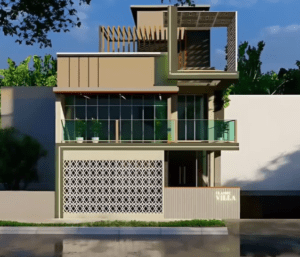
Elevation Drawings – Exterior views of the building from different directions (front, rear, left, right) showing exterior finishes, window and door placement, roof lines, and height dimensions.
Section Drawings – Cutaway views that reveal interior construction details like ceiling heights, foundation depth, slab thickness, and roof structure.
Door and Window Schedules – Tables listing dimensions, types, materials, and quantities for all doors and windows.
Structural Drawings (S Series)
Structural drawings provide details about the foundation, framing, and load-bearing elements:
-
Foundation plan with footing dimensions and locations
-
Column layout and beam layout
-
Slab reinforcement details
-
Stair reinforcement
-
Steel detailing and rebar information
Electrical Drawings (E Series)
Electrical drawings show:
-
Lighting layout and fixture locations
-
Switch locations
-
Socket and outlet positions
-
Distribution board information
-
Wiring routes
Plumbing Drawings (P Series)
Plumbing drawings illustrate:
-
Water supply layout
-
Drainage system
-
Septic tank (if applicable)
-
Pipe sizes and routing
HVAC and Mechanical Drawings (M Series)
Mechanical drawings show heating, ventilation, and air conditioning systems including ductwork, equipment locations, and airflow patterns.
Blueprint Sheet Numbering Explained
Construction drawings use a standardized numbering system to help users quickly identify different types of drawings.
Sheet Number Format: The sheet number typically consists of a letter prefix and a number. For example, “A-101” where “A” indicates Architectural and “101” indicates the specific sheet.
| Prefix | Drawing Type |
|---|---|
| A | Architectural Drawings |
| S | Structural Drawings |
| E | Electrical Drawings |
| P | Plumbing Drawings |
| M | Mechanical/HVAC Drawings |
| L | Landscape Drawings |
| I | Interior Design Drawings |
How to Identify Drawing Revisions
Revisions are typically indicated by a revision block or triangle near the title block. Look for:
-
Revision numbers or letters (Rev 1, Rev 2, or Rev A, Rev B)
-
Revision dates
-
Description of what was changed
-
Approval signatures
Always verify you are working with the most recent revision before starting any construction.
Parts of Every Construction Blueprint
Title Block
The title block is the information panel usually located in the bottom right corner of a blueprint sheet. It contains:
-
Project Name
-
Client Name or Homeowner Name
-
Architect or Designer Name
-
Drawing Number
-
Revision Number and Date
-
Scale
-
Sheet Number (e.g., 1 of 5)
-
Project Address
-
Date of Issue
Legend
The legend explains the meaning of all symbols, abbreviations, and line types used in the drawings. It is your key to understanding what you see on the plan. Never skip reviewing the legend, as symbols can vary between different architects and firms.
North Direction
The North Arrow indicates the orientation of the building on the site. Understanding north is important for:
-
Sunlight analysis and natural lighting
-
Natural ventilation planning
-
Energy efficiency
-
Vastu compliance in Indian homes
-
Understanding how the house sits on the property
Scale
Blueprints are drawn to scale because it is impossible to draw a full-size house on paper. The scale tells you the ratio between the drawing and the actual building.
Common scales used in residential construction:
| Scale | Meaning | Typical Use |
|---|---|---|
| 1:50 | 1 unit on paper = 50 units on site | Detailed floor plans |
| 1:100 | 1 unit on paper = 100 units on site | Overall floor plans |
| 1:200 | 1 unit on paper = 200 units on site | Site plans |
| 1:500 | 1 unit on paper = 500 units on site | Location plans |
For example, at a scale of 1:100, a wall that measures 1 centimeter on the blueprint equals 100 centimeters (1 meter) in real life.
How to Read Blueprints Step by Step
Step 1: Start with the Title Block
Always begin by reading the title block to understand the project name, sheet number, revision status, and scale. This ensures you are looking at the correct and most current drawing.
Step 2: Check Drawing Scale
Verify the scale of the drawing. Do not assume all sheets use the same scale. Different drawings within the same set may use different scales.
Step 3: Identify North Direction
Locate the North Arrow to understand the building orientation. This will help you understand which rooms receive morning sunlight, afternoon heat, and natural ventilation.
Step 4: Understand Room Layout
Look at the floor plan to understand the arrangement of spaces:
-
Living room
-
Bedrooms
-
Kitchen
-
Bathrooms
-
Balcony
-
Staircase
-
Entrance and exit points
Note how rooms connect and flow from one to another.
Step 5: Read Dimensions Carefully
There are three types of dimensions you will typically find on floor plans:
| Dimension Type | Description |
|---|---|
| Wall-to-wall dimensions | Distance between finished walls |
| Centerline dimensions | Distance measured from the center of one wall to the center of another |
| Overall dimensions | Total exterior dimensions of the building |
Always verify which type of dimension is being used. Mixing these up can lead to serious construction errors.
Step 6: Identify Wall Thickness
Walls on blueprints are shown with thick lines. There are two main types:
Load-bearing walls: These walls support the weight of the structure above. They are typically thicker and must not be removed or altered without structural review.
Partition walls: These walls only divide interior space and do not carry structural loads. They can be modified more easily.
Step 7: Understand Doors and Windows
Each door and window on a blueprint has a unique identifier:
-
Door numbers (D1, D2, D3, etc.)
-
Window numbers (W1, W2, W3, etc.)
-
Swing direction (shown with an arc line)
-
Sizes indicated in the door/window schedule
Pay attention to the door swing direction, as doors should not block pathways, furniture, or other doors.
Step 8: Read Stair Details
Stairs are critical circulation elements. Look for:
-
Direction of travel (up or down arrows)
-
Rise (height of each step)
-
Tread (depth of each step)
-
Landing dimensions
-
Width of the staircase
-
Number of steps
Step 9: Understand Levels
Construction drawings use reference levels to indicate height. Common levels include:
-
Ground Level (GL): Natural ground level
-
Plinth Level (PL): Level of the base of the building
-
Floor Level (FL): Finished floor height
-
Roof Level (RL): Height of the roof
Step 10: Check Notes
Blueprints contain various notes providing additional information:
-
General construction notes about quality standards
-
Material specifications
-
Site instructions
-
Reference notes pointing to other drawings
-
Special conditions or exceptions
Always read all notes carefully. They often contain critical information not shown graphically.
Blueprint Symbols Every Homeowner Should Know
| Symbol | Meaning | Used In |
|---|---|---|
| Door symbol with arc | Door and swing direction | Floor Plan |
| Rectangle with cross | Window | Floor Plan |
| Solid filled square | Column | Structural |
| Rectangle with diagonal lines | Beam | Structural |
| Series of parallel lines | Staircase | Architectural |
| Circle with cross | Electrical point | Electrical |
| Circle with line | Switch | Electrical |
| Circle with two lines | Socket/Outlet | Electrical |
| Oval or half-circle | Wash Basin | Plumbing |
| Rectangle with “WC” | Toilet | Plumbing |
| Rectangle with “S” | Sink | Plumbing |
| Circle with fan symbol | Ceiling Fan | Electrical |
Common Blueprint Abbreviations Explained
| Abbreviation | Full Form |
|---|---|
| CL | Centerline |
| FFL | Finished Floor Level |
| NTS | Not To Scale |
| TYP | Typical (same detail applies elsewhere) |
| AFF | Above Finished Floor |
| DW | Door Width |
| REF | Reference |
| WC | Water Closet (toilet) |
| UP | Up (stairs going up) |
| DN | Down (stairs going down) |
| EL | Elevation |
| RL | Roof Level |
| GL | Ground Level |
| PL | Plinth Level |
| Ø | Diameter |
| C/C | Center to Center |
How to Read Floor Plans
Floor plans are the most common and important drawings for homeowners. Here is how to read them:
Understanding Room Labels
Each room will have a label indicating its intended use. Look for names like “Living Room,” “Master Bedroom,” “Kitchen,” “Bathroom,” etc. Some plans also include room numbers that correspond to a room schedule.
Reading Dimensions
Floor plans include various dimension lines. Follow the dimension lines to understand room sizes. Pay attention to:
-
Which dimension lines measure wall-to-wall
-
Which dimension lines measure wall centerlines
-
Which dimensions include or exclude wall thickness
Wall Thickness
The thickness of walls is shown to scale. Interior partition walls are typically thinner than exterior walls. Understanding wall thickness helps with furniture planning and knowing which walls are load-bearing.
Door Openings
Doors are shown as a break in the wall with a line indicating the door and an arc showing the swing direction. The door size is usually indicated with text or a door schedule reference.
Window Placement
Windows are shown as rectangles or with a cross in the wall. They indicate natural light sources and ventilation points.
Furniture Layout
Some plans include suggested furniture layouts to help you understand room functionality and space planning.
How to Read Elevation Drawings
Elevation drawings show the exterior appearance of the building. A complete set typically includes four elevations:
-
Front Elevation
-
Rear Elevation
-
Left Elevation
-
Right Elevation
What elevation drawings provide:
-
Exterior finishes and materials
-
Window and door placement from the outside
-
Roof design and pitch
-
Chimney and other exterior features
-
Height measurements
-
Grade or ground level
How to Read Section Drawings
Section drawings are cutaway views that show the inside of the structure. They provide information about:
-
Internal floor-to-ceiling heights
-
Foundation depth
-
Slab thickness
-
Roof structure and pitch
-
Wall construction details
-
Insulation placement
To understand a section drawing, first locate the section cut line on the floor plan. This shows exactly where the building was “cut” to create the section view.
How to Read Structural Drawings
Structural drawings require some engineering knowledge but homeowners should understand the basics:
Column Layout
Shows the location and size of all columns that support the building.
Beam Layout
Shows beam locations, sizes, and reinforcement requirements.
Slab Details
Indicates slab thickness, reinforcement placement, and concrete grade.
Foundation Details
Shows footing dimensions, depth, and soil requirements.
Rebar Information
Includes bar sizes, spacing, and placement details.
Understanding Construction Measurements
Construction drawings use various units of measurement. In India, millimeters are the standard unit on construction drawings.
| Unit | Equivalent |
|---|---|
| 1 millimeter (mm) | 0.1 centimeters |
| 1 centimeter (cm) | 10 millimeters |
| 1 meter (m) | 100 centimeters |
| 1 foot | 12 inches |
| 1 inch | 25.4 millimeters |
| 1 meter | 3.28 feet |
Pro Tip: Always check the unit system used on your drawings before taking any measurements.
Blueprint Scale Conversion Examples
Here are practical examples of converting blueprint measurements:
Example 1: A bedroom wall measures 5 centimeters on a 1:50 scale drawing.
-
5 cm × 50 = 250 cm = 2.5 meters
Example 2: A room measures 3.5 centimeters on a 1:100 scale drawing.
-
3.5 cm × 100 = 350 cm = 3.5 meters
Example 3: A property boundary measures 7.2 centimeters on a 1:200 scale plan.
-
7.2 cm × 200 = 1440 cm = 14.4 meters
How to Measure Using an Architectural Scale
An architectural scale ruler has different scales printed on its edges. To measure:
-
Select the edge with the correct scale for your drawing
-
Place the zero mark at the starting point
-
Read the measurement directly from the scale
Color Coding in Digital Blueprints
Modern digital blueprints often use color coding to distinguish different elements:
| Color | Typically Represents |
|---|---|
| Black | Existing or structural elements |
| Red | New construction or changes |
| Blue | Electrical or plumbing |
| Green | Landscape or site elements |
| Yellow | Demolition or removal |
Different software packages may use different color schemes. Always check the legend for the specific color coding used.
Common Blueprint Mistakes Homeowners Should Avoid
Ignoring Scale
Never estimate dimensions. Always use the stated scale to measure distances. A small misinterpretation at 1:100 scale can become a major error in construction.
Missing Revision Notes
Always check the revision number and date. Construction might proceed from an outdated version if you overlook this.
Assuming Furniture Size
Do not assume standard furniture sizes. Check the actual room dimensions against planned furniture.
Ignoring Structural Drawings
Architectural drawings show the design, but structural drawings show how the building stands up. Review both sets together.
Skipping Plumbing Layout
Plumbing requires coordination with other services. Check plumbing drawings early to avoid conflicts.
Not Checking Electrical Plan
Electrical points must be coordinated with furniture layout. Review electrical drawings to ensure you have power where you need it.
Not Reviewing Door Swing
A door that opens into the wrong direction can block cabinets, fixtures, or create an awkward traffic pattern.
Ignoring Ceiling Height
Check section drawings and notes for ceiling height information. Standard ceiling height is important for comfort and function.
How to Read Blueprints Before Starting Construction
Before breaking ground, review this checklist against your blueprint set:
-
Plot dimensions match the site
-
Setbacks comply with local regulations
-
Room sizes meet your requirements
-
Stair location and size is appropriate
-
Window placement provides adequate light and ventilation
-
Structural layout supports the design
-
Plumbing layout is practical
-
Electrical plan meets your needs
-
Material notes are clear and specified
-
Roof plan is appropriate for the climate
Tools That Help Read Construction Blueprints
| Tool | Purpose |
|---|---|
| Scale ruler | Measuring distances accurately |
| Measuring tape | Cross-checking dimensions on site |
| PDF blueprint viewer | Viewing digital files on mobile or computer |
| AutoCAD Viewer | Reading DWG files |
| Bluebeam | Professional mark-up and measurement |
| Construction apps | Manage and share plans digitally |
Printed vs Digital Blueprints
| Feature | Printed Blueprints | Digital Blueprints |
|---|---|---|
| Portability | Heavy, bulky | Accessible on any device |
| Marking | Permanent, hard to revise | Easy to annotate and share |
| Measurement | Manual scale calculation | Automatic measurement tools |
| Collaboration | Must be physically together | Can share instantly |
| Cost | Printing costs | Minimal digital storage |
| Weather resistance | Must be protected | Safe from elements |
Blueprint Reading Tips for First-Time Homeowners
-
Always review all drawing sheets from cover to cover. Each sheet contains important information.
-
Match architectural and structural drawings side by side. They should complement each other.
-
Verify dimensions before construction begins. Do not assume anything.
-
Ask your architect about unclear symbols or notes. It is better to ask than to guess.
-
Check revision dates before starting any work. Confirm you have the latest version.
-
Never rely only on verbal instructions. Always refer to the written and drawn specifications.
-
Keep a copy of the blueprints handy during construction. Regular reference helps catch errors early.
-
If using digital plans, always confirm you have the most current file version.
How SmartScale House Design Helps Homeowners Understand Their Blueprints
At SmartScale House Design, we understand that construction blueprints can be overwhelming. That is why we create drawings that are clear, accurate, and easy to understand.
What we provide:
-
Detailed architectural drawings that clearly show every room and feature
-
Structural drawings with complete reinforcement details for safety and stability
-
Electrical layouts that show every switch, socket, and light point
-
Plumbing layouts with clear pipe routing and fixture placement
-
Realistic 3D elevations to help you visualize the finished home
-
Construction-ready plans that contractors can follow without confusion
-
Online consultation with expert architects
-
Revision support to accommodate changes
-
Easy-to-understand documentation with clear legends and labels
Whether you are building a new home or planning extensive renovations, SmartScale House Design makes the blueprint reading process straightforward and hassle-free.
Conclusion
Understanding how to read construction blueprints is a crucial skill that saves time, money, and prevents costly construction errors. When you can read and understand your house plans, you become an informed participant in the building process rather than a passive observer.
Take the time to review every drawing carefully before construction begins. Familiarize yourself with common symbols, abbreviations, and measurement systems. Ask questions about anything that is unclear. A few hours spent understanding your blueprints can save you from months of headaches during construction.
Remember: construction is a team effort. The blueprints are the language that unites the entire team. Learn that language, and you will build with confidence.
Build with Confidence Using SmartScale House Design
Reading construction blueprints is easier when your drawings are clear, accurate, and professionally prepared. At SmartScale House Design, we create construction-ready house plans that are easy for homeowners, contractors, and engineers to understand.
Whether you are building a new home or planning renovations, our team provides:
-
Custom architectural house plans
-
Structural drawings with reinforcement details
-
Electrical and plumbing layouts
-
Realistic 3D elevation designs
-
Vastu-compliant house plans
-
Online architect consultation across India
-
Unlimited design guidance throughout the planning process
Ready to build your dream home with confidence?
Contact SmartScale House Design today and get professionally designed blueprints that make construction simple and hassle-free.
Frequently Asked Questions
What are blueprints in construction?
Blueprints are detailed technical drawings that communicate the design, measurements, materials, and specifications of a building project. They serve as the primary reference for architects, engineers, contractors, and homeowners throughout the construction process.
How do beginners learn to read construction blueprints?
Beginners should start by understanding the title block, legend, and scale. Then learn to identify basic symbols for doors, windows, walls, and fixtures. Practice reading dimensions and following floor plans. The guide above provides a step-by-step approach for beginners.
What is the first thing to look at on a blueprint?
Always start with the title block to understand the project name, sheet type, revision status, and scale. Then check the north direction and legend before diving into the drawing details.
What do the symbols on construction blueprints mean?
Symbols represent building elements like doors, windows, walls, electrical points, plumbing fixtures, and structural components. Each drawing set includes a legend that explains all symbols used.
How do I understand blueprint measurements?
Blueprint measurements are shown using dimension lines and are provided in millimeters or other units. The scale of the drawing tells you how to convert measured distances into real-world dimensions.
What is the difference between architectural and structural drawings?
Architectural drawings show the design, layout, aesthetics, and functionality of the building. Structural drawings show the engineering details of foundations, columns, beams, and slabs that keep the building standing.
How do I read house floor plans?
Start by identifying the overall layout of rooms. Read dimension lines to understand room sizes. Locate doors and windows. Check wall thickness. Use the legend to understand symbols. Review the scale to determine actual dimensions.
What do blueprint abbreviations mean?
Abbreviations are shortened forms of common construction terms. Examples include CL (Centerline), FFL (Finished Floor Level), TYP (Typical), and AFF (Above Finished Floor). A complete list is usually provided in the legend.
Are construction blueprints difficult to understand?
Blueprints can seem complex at first, but with basic knowledge of symbols, scales, and conventions, they become much easier to read. This guide provides the foundation you need to understand residential construction drawings.
Can homeowners read blueprints without engineering knowledge?
Yes, homeowners can learn to read and understand basic blueprint information without engineering training. However, complex structural and engineering details should be reviewed by qualified professionals.
Why is blueprint scale important?
Scale determines the relationship between the drawing and the actual building. Without understanding scale, you cannot determine real-world dimensions from the drawing.
What software is used to read construction blueprints?
Common software includes AutoCAD, Bluebeam Revu, PDF readers (Adobe Acrobat, Foxit), and various construction management apps. Many professionals also use specialized mobile apps for on-site viewing.
How many blueprint sheets does a residential house usually have?
A typical residential house plan set includes 10 to 25 sheets, depending on the complexity of the design. This includes architectural, structural, electrical, plumbing, and other drawings.
What happens if builders don’t follow the blueprint?
Deviation from the blueprint can lead to structural issues, code violations, safety hazards, cost overruns, and legal disputes. Homeowners should ensure their builder follows the approved drawings.
Who prepares construction blueprints?
Construction blueprints are prepared by qualified professionals including architects, structural engineers, civil engineers, and specialized draftspersons. For residential projects, an architect typically coordinates the complete drawing set.