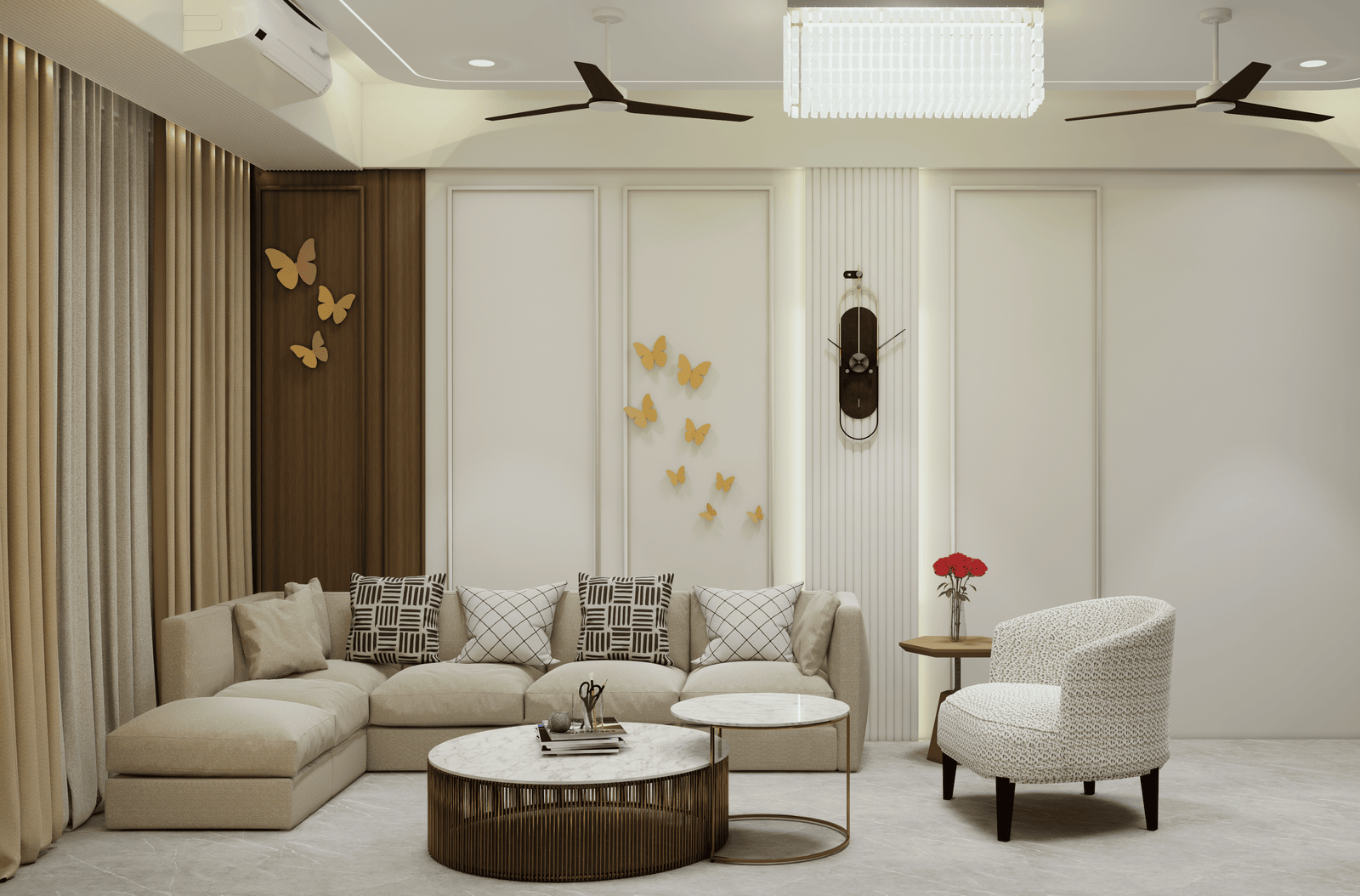
A simple false ceiling design for living room can make your home look more modern, improve lighting, hide electrical wiring, and give the room a clean architectural finish. For most homeowners, the best false ceiling is not the most complicated one. A simple gypsum or POP ceiling with concealed LED lighting, recessed spotlights, and a well-planned layout can create an elegant living room without unnecessary decoration.
If you are renovating or building a new home, this guide explains the best simple false ceiling designs for living rooms, suitable materials, lighting ideas, room-size considerations, costs, and mistakes to avoid.
What Is the Best Simple False Ceiling Design for a Living Room?
The best simple false ceiling design for a living room is usually a minimal rectangular or square ceiling with a clean perimeter border, concealed LED cove lighting, and strategically placed recessed lights.
This design works because it adds depth and lighting without making the ceiling visually heavy. It is particularly suitable for modern Indian homes, apartments, compact living rooms, and rooms with straightforward rectangular layouts.
For homeowners, a good false ceiling should provide four things:
- A clean and modern appearance
- Proper ambient and task lighting
- Space to conceal electrical wiring and services
- Easy maintenance and long-term durability
The ceiling should also complement your living room furniture, wall colors, flooring, curtains, and overall interior design.
Simple False Ceiling Design for Living Room
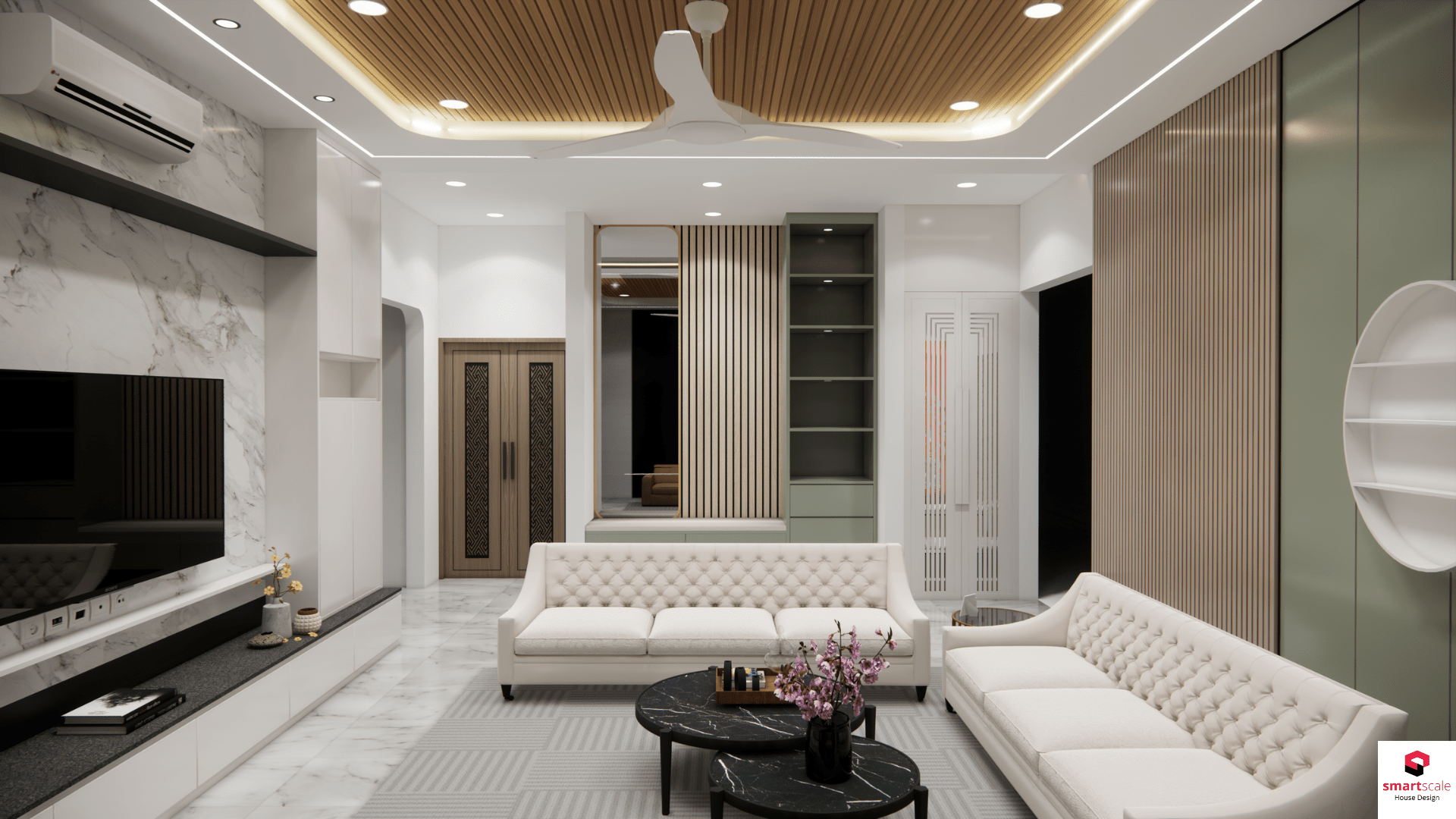
A simple ceiling does not mean a plain or unfinished ceiling. The right combination of proportions, lighting, and materials can make a minimal design look premium.
One of the most versatile layouts is a rectangular perimeter false ceiling. The outer border can accommodate concealed LED strips, while the central portion remains simple and uncluttered.
For homeowners who prefer contemporary interiors, this approach is often better than elaborate multi-level ceilings because it maintains visual openness.
15 Simple False Ceiling Ideas for Living Rooms
1. Simple Rectangular False Ceiling
A rectangular false ceiling is one of the easiest designs to adapt to a living room.
The design follows the room’s geometry and can include a narrow border around the perimeter. Recessed lights can be positioned according to the seating arrangement.
Best for: Modern and contemporary homes.
2. False Ceiling with Cove Lighting
Cove lighting creates indirect illumination by hiding LED strips inside a ceiling recess.
Instead of seeing the light source directly, homeowners see a soft glow around the ceiling edge. This creates a warm and sophisticated atmosphere.
Best for: Modern, minimalist, and luxury interiors.
3. Simple Gypsum False Ceiling
A gypsum board ceiling provides a smooth, clean surface and works particularly well with straight-line designs.
It can accommodate recessed lights, LED strips, fans, electrical wiring, and other ceiling services.
Best for: Contemporary living rooms.
4. Simple POP False Ceiling
POP can be shaped into custom profiles and is suitable when homeowners want slightly more decorative detailing.
A simple POP border around the ceiling can provide definition without creating an overly elaborate design.
Best for: Homeowners who want customized ceiling detailing.
5. Single-Level False Ceiling
A single-level ceiling keeps the design extremely clean.
It is particularly useful when the existing ceiling height is limited because there are fewer layers and visual interruptions.
Best for: Apartments and compact living rooms.
6. Floating False Ceiling
A floating ceiling creates the appearance that part of the ceiling is suspended independently from the main surface.
LED lighting around the edges enhances the floating effect.
Best for: Modern and premium interiors.
7. Border False Ceiling Design
A simple border can frame the living room while leaving most of the original ceiling visually open.
This is an excellent option for homeowners who want a false ceiling without covering the entire ceiling area.
8. False Ceiling with Recessed Spotlights
Recessed lights can be integrated directly into the false ceiling.
Their positions should be determined based on the furniture layout rather than simply placing lights at equal distances.
9. Wooden Accent False Ceiling
A simple gypsum ceiling can be combined with limited wooden or wood-finish elements.
The combination works particularly well with beige, cream, white, and neutral interiors.
10. White False Ceiling with Warm Lighting
A white ceiling combined with warm LED lighting is one of the safest choices for a residential living room.
The white surface reflects light while warm illumination creates a comfortable atmosphere.
11. Minimal Two-Level False Ceiling
A two-level ceiling introduces a small change in depth without becoming excessively decorative.
Use this approach when the room has sufficient ceiling height and you want more visual definition.
12. Tray Ceiling Design
A tray ceiling has a recessed central portion surrounded by a raised border.
It can create a strong architectural focal point while maintaining a relatively simple appearance.
13. Linear False Ceiling Design
Linear grooves or LED lines can introduce a contemporary appearance without requiring complex decorative patterns.
This design works particularly well with modern furniture and minimalist interiors.
14. Cream Living Room False Ceiling
Cream and beige interiors work well with white or cream-colored ceilings.
Use warm lighting to enhance the softness of the cream color palette.
15. Scandinavian-Style Minimal Ceiling
Scandinavian interiors prioritize simplicity, natural materials, neutral colors, and functional lighting.
A plain gypsum ceiling with subtle recessed lighting can work better here than an ornamental POP ceiling.
Simple False Ceiling Design for a 12×15 Living Room
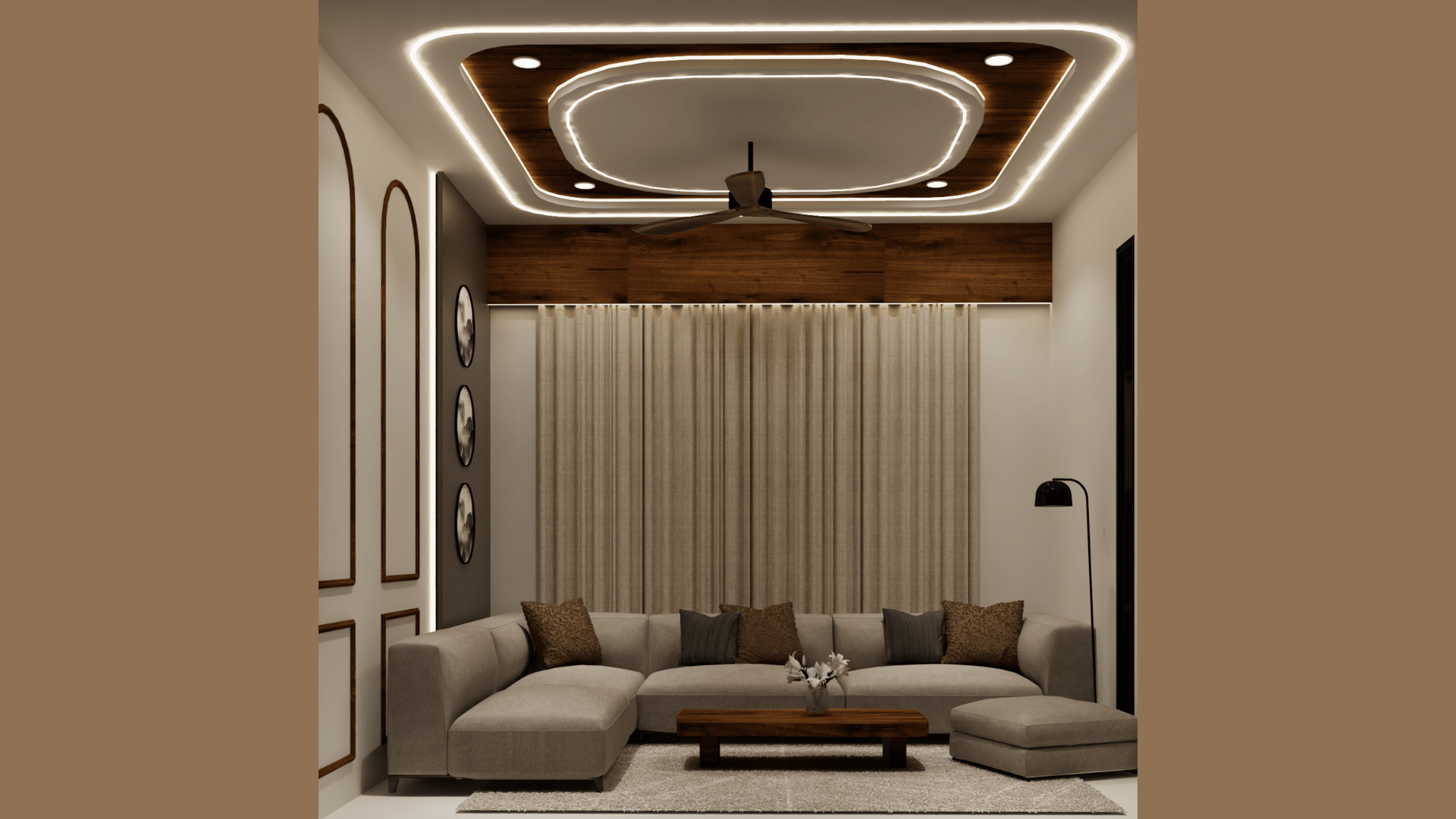
A 12×15 living room has approximately 180 square feet of floor area, making it large enough for a well-defined false ceiling while still requiring attention to proportions.
For this room size, a practical design is a rectangular perimeter ceiling with:
- A clean gypsum or POP border
- Concealed LED cove lighting
- Recessed spotlights
- A simple central ceiling
- A ceiling fan positioned according to the seating arrangement
Avoid excessive layers. The objective should be to enhance the room rather than reduce its perceived height.
Simple False Ceiling Design for Small Living Room
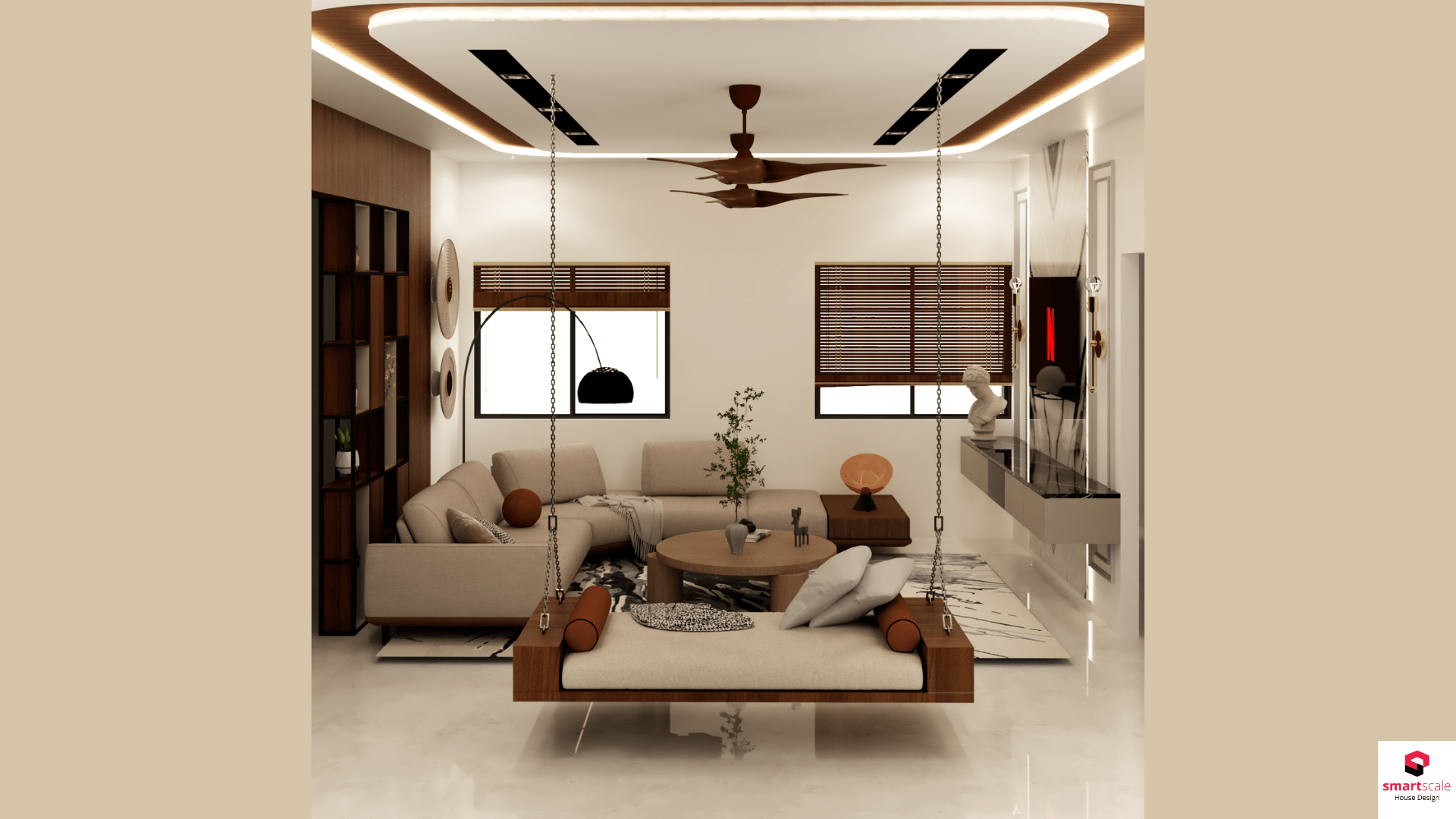
For a small living room, less is usually more.
A deep multi-level false ceiling can make a compact room feel visually shorter. Instead, homeowners should consider a shallow perimeter design, single-level gypsum ceiling, or a small floating panel.
Recommended small living room ceiling
A practical combination is:
White gypsum ceiling + thin perimeter border + concealed warm LED + limited recessed spotlights
Light colors can also help maintain a brighter and more spacious appearance.
POP vs Gypsum False Ceiling: Which Is Better?
Both POP and gypsum can produce attractive living room ceilings, but they have different characteristics.
| Feature | POP | Gypsum |
|---|---|---|
| Design flexibility | High | High |
| Straight-line designs | Good | Excellent |
| Custom decorative work | Excellent | Good |
| Smooth finish | Excellent | Excellent |
| Installation | More site work | Generally faster |
| Repairs | Can be more involved | Individual boards can be replaced |
| Modern minimalist designs | Suitable | Excellent |
For a simple modern false ceiling, gypsum is often a practical choice. POP can be preferable when you need customized decorative shapes or profiles.
The final choice should consider local availability, installer expertise, ceiling condition, design requirements, and budget.
What Lighting Is Best for a False Ceiling?
The best lighting depends on how the living room is used.
A layered lighting approach generally works better than relying on a single ceiling fixture.
Ambient lighting
Provides general illumination throughout the room.
Examples include:
- Cove lighting
- Ceiling-mounted lights
- Recessed downlights
Accent lighting
Highlights specific architectural or decorative elements.
Examples include:
- Wall artwork
- TV wall
- Decorative niches
- Curtains
- Feature walls
Decorative lighting
Adds visual character.
Examples include:
- Pendant lights
- Chandeliers
- Statement fixtures
For a simple ceiling, concealed LED lighting and recessed downlights are among the most practical combinations.
What Color Should a Living Room False Ceiling Be?
White remains the most versatile false ceiling color because it reflects light and works with almost every interior style.
However, homeowners can also consider:
- Off-white
- Ivory
- Cream
- Light beige
- Very light grey
For a modern living room, keep the ceiling lighter than the surrounding walls unless the design intentionally calls for a darker architectural effect.
How Much Does a Simple False Ceiling Cost?
The cost of a simple false ceiling varies according to the material, ceiling area, design complexity, lighting, labor charges, and location.
The basic calculation is:
False ceiling cost = Ceiling area × installed rate per square foot
However, the installed rate should not be considered the complete project cost until you confirm whether it includes:
- Framework
- Boards or POP
- Joint finishing
- Primer and paint
- Electrical wiring
- LED strips
- Recessed lights
- Installation labor
- Access panels
- Decorative elements
For this reason, homeowners should compare quotations based on the complete scope of work, rather than choosing a contractor solely on the lowest per-square-foot price.
Is a False Ceiling Worth It in a Living Room?
Yes, a false ceiling can be worthwhile when it solves a genuine design or functional requirement.
It can help:
- Conceal wiring and services
- Integrate modern lighting
- Improve ceiling proportions
- Define different areas in an open-plan room
- Add architectural depth
- Create a finished interior appearance
However, a false ceiling is not necessary simply because it is fashionable. If your existing ceiling already has an attractive finish and there is little need for concealed wiring or integrated lighting, a simpler ceiling treatment may be more appropriate.
How Low Should a False Ceiling Be?
There is no single drop that works for every living room.
The required ceiling drop depends on:
- Existing slab height
- Lighting fixtures
- Electrical wiring
- Air-conditioning services
- Fan installation
- Ceiling design
- Plumbing or other concealed services
The designer and contractor should determine the final height after checking all required services.
For homeowners, the important point is to avoid sacrificing unnecessary ceiling height for decorative detailing.
How to Choose a False Ceiling Design for Your Home
Before selecting a design from an online image, evaluate your actual room.
1. Measure the room
Record the length, width, and existing ceiling height.
2. Check the furniture layout
The sofa, TV unit, center table, and other furniture should influence lighting positions.
3. Decide your lighting requirements
Determine whether you need ambient, accent, decorative, or task lighting.
4. Select the material
Choose between gypsum, POP, wood, PVC, or another suitable ceiling system based on the project requirements.
5. Consider maintenance
Ensure that electrical components and other services remain accessible for future maintenance.
6. Match the interior style
The ceiling should complement the walls, furniture, flooring, curtains, and architectural style.
False Ceiling Mistakes Homeowners Should Avoid
A beautiful reference image does not necessarily mean the same design will work in your room.
Avoid these common mistakes:
Choosing a design without checking ceiling height: A design that works in a high-ceiling home may feel cramped in an apartment.
Using too many lights: More lights do not automatically mean better lighting.
Ignoring furniture placement: Ceiling lights should support the room’s functional zones.
Making the design too complicated: Multiple layers can increase cost and maintenance without improving the room.
Forgetting maintenance access: Electrical drivers, wiring, and other concealed components may eventually require servicing.
Copying an online design exactly: Every ceiling should be adapted to the room’s dimensions, structure, electrical requirements, and interior style.
Simple False Ceiling Design for Cream and Grey Living Rooms
Cream and grey are popular neutral colors for contemporary living rooms because they provide a balanced combination of warmth and contrast.
A white false ceiling can connect both colors while warm lighting prevents the grey elements from appearing too cold.
For this type of interior, consider:
Cream walls + grey furniture + white ceiling + warm LED cove lighting + wooden accents
This creates a cohesive palette without making the ceiling the dominant feature.
Simple False Ceiling Design vs Designer False Ceiling
The difference is primarily in complexity and detailing.
A simple false ceiling focuses on clean geometry, practical lighting, and controlled detailing.
A designer false ceiling may include multiple levels, decorative profiles, geometric patterns, wood accents, special lighting, and customized architectural elements.
For most homeowners, simple does not mean inferior. A carefully proportioned minimalist ceiling can look more contemporary and timeless than an overly decorated design.
Final Takeaway for Homeowners
The best simple false ceiling design for living room is one that balances appearance, lighting, ceiling height, functionality, durability, and budget.
For most modern homes, a clean gypsum or POP perimeter ceiling with concealed LED lighting and carefully positioned recessed lights offers a strong combination of aesthetics and practicality.
If your living room is approximately 12×15 feet, keep the design proportional and avoid unnecessary layers. If the room is small, prioritize visual openness. If the room has a higher ceiling, you have more freedom to introduce a tray, floating, or two-level design.
Most importantly, do not select a false ceiling based only on how it looks in a reference image. A professional should adapt the design to your actual room dimensions, electrical layout, furniture placement, ceiling height, lighting requirements, and overall house design.
Plan Your Living Room With SmartScale House Design
Looking for a living room design that combines floor planning, interior design, ceiling design, lighting, and 3D visualization? SmartScale House Design can help homeowners develop a coordinated home design based on their plot, requirements, and preferred style.
Explore professional house and interior design solutions with SmartScale House Design and turn your living room ideas into a practical, visually coordinated home.
Frequently Asked Questions
Which false ceiling is best for a living room?
A simple gypsum or POP false ceiling with concealed LED lighting and recessed spotlights is suitable for many living rooms. The right option depends on ceiling height, interior style, budget, and service requirements.
What is the simplest false ceiling design for a living room?
A single-level gypsum ceiling or a simple perimeter border with concealed LED lighting is one of the simplest and most versatile options.
Is POP or gypsum better for a simple false ceiling?
Gypsum is generally well suited to clean, modern, straight-line ceiling designs. POP offers excellent flexibility for customized decorative details. Both can produce high-quality results when properly installed.
Is a false ceiling suitable for a 12×15 living room?
Yes. A 12×15 living room can accommodate a simple perimeter, tray, floating, or single-level false ceiling. The design should be proportional to the available ceiling height.
Which ceiling design makes a living room look bigger?
A light-colored, minimal ceiling with concealed lighting can help a living room feel more open. Avoid excessively deep or visually heavy ceiling layers in compact rooms.
What lights should I use in a false ceiling?
Recessed LED downlights and concealed LED strips are practical choices. The number and position of lights should be determined by the room size, furniture arrangement, ceiling height, and desired lighting level.
Can I install a fan with a false ceiling?
Yes, but the fan must be securely supported from the structural ceiling or an appropriately engineered support system. It should not simply be attached to the decorative ceiling board.
Does a false ceiling reduce room height?
Yes. A false ceiling occupies some vertical space. The amount depends on the design, framework, lighting fixtures, and concealed services.
Is a false ceiling expensive to maintain?
Maintenance depends on the material and design. Simple ceilings with accessible electrical components are generally easier to maintain than complex multi-layer designs.
Should I use warm or cool LED lights?
Warm or neutral-white lighting is generally comfortable for residential living rooms. The choice should also consider wall colors, furniture, flooring, and the atmosphere you want to create.