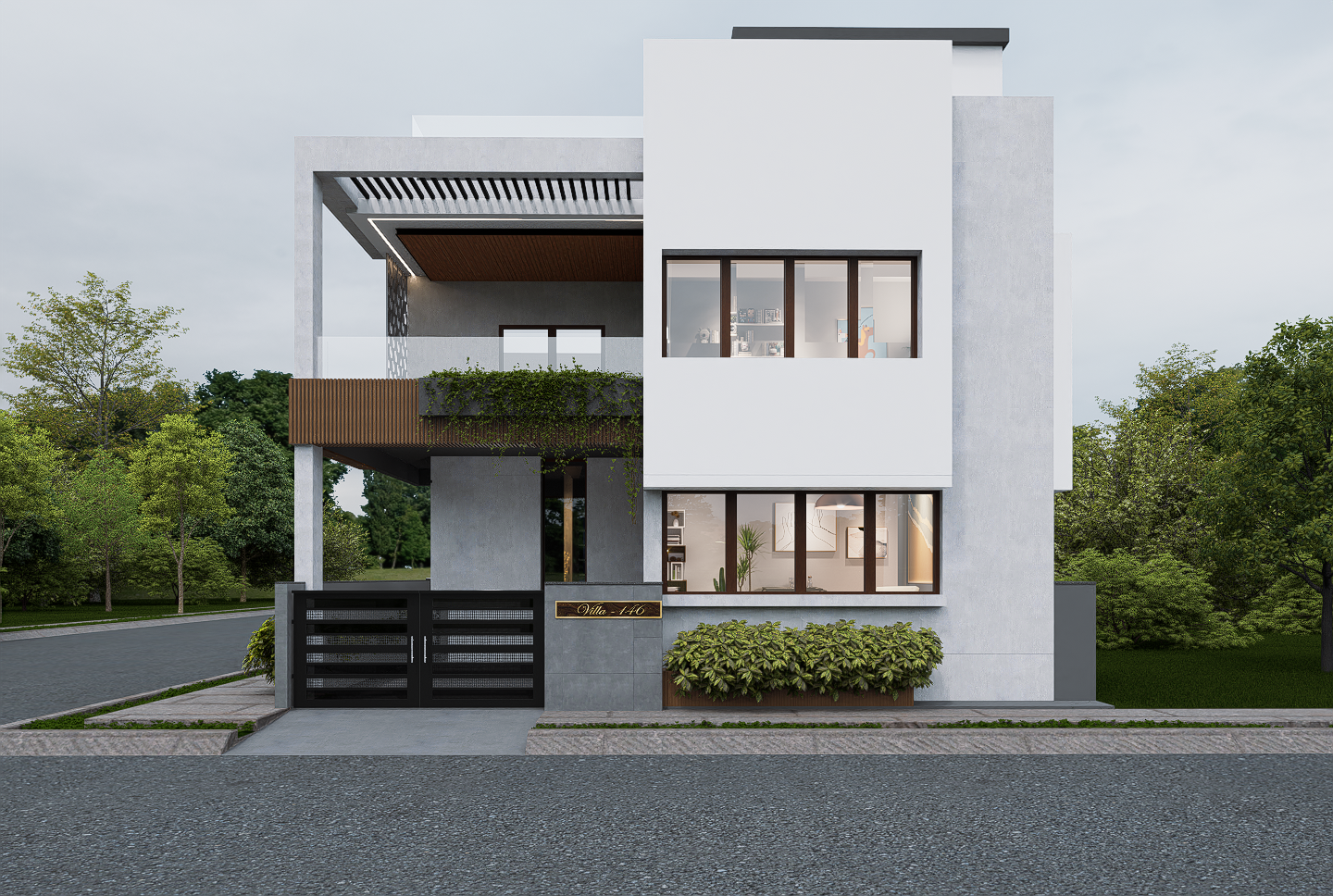
A 30×40 house construction cost in India typically ranges from ₹18 lakh to ₹45 lakh or more depending on location, construction quality, number of floors, design complexity, material choices, labor rates, and finishing specifications.
For a standard 30×40 house:
- Basic Construction: ₹1,500 to ₹1,800 per sq ft
- Standard Construction: ₹1,800 to ₹2,300 per sq ft
- Premium Construction: ₹2,300 to ₹3,500+ per sq ft
A 30×40 plot with a single-floor house generally costs between ₹18 lakh and ₹30 lakh.
Table of Contents
ToggleWhat Does a 30×40 House Mean?
A 30×40 house refers to a residential building constructed on a plot that is 30 feet wide and 40 feet long. The total plot area comes to 1,200 square feet.
Before estimating construction cost, it helps to understand three area terms that often confuse homeowners.
Built-up area is the total area covered by the walls and the floor. This is the measurement used to calculate construction cost. For a 30×40 plot, the built-up area on a single floor is typically between 900 and 1,100 sq ft after accounting for setbacks.
Carpet area is the actual usable floor space inside the house, excluding wall thickness. It is usually 70 to 80 percent of the built-up area.
Super built-up area includes common areas, staircase, and shared spaces. This term is more relevant for apartments than independent houses.
Construction cost estimates in this guide are calculated on built-up area, which is standard practice across India.
Why 30×40 Plots Are So Popular in India
The 30×40 plot size hits a practical balance that appeals to a wide range of homebuyers across urban and semi-urban India.
A 1,200 sq ft plot is spacious enough to build a comfortable 2 BHK or 3 BHK home on the ground floor alone. It also leaves room for a duplex if the family grows or if rental income is a goal.
Financing is easier on smaller plots. Banks and housing finance companies are more comfortable sanctioning loans for homes in the ₹20 lakh to ₹40 lakh range, and construction timelines are shorter. Property taxes, maintenance, and utility costs are all more manageable compared to larger plots.
For those in Tier 2 and Tier 3 cities like Nagpur, Jalgaon, or Nashik, a 30×40 plot is often the most practical choice in layouts and approved colonies. It also offers genuine expansion potential since a ground floor house can be converted to a duplex or G+2 structure in the future with proper structural planning from the start.
30×40 House Construction Cost Calculator
Use this table as a starting reference. Actual costs depend on location, materials, and design.
| Construction Quality | Cost Per Sq Ft | Approx Total Cost (Single Floor) |
|---|---|---|
| Basic | ₹1,500 to ₹1,800 | ₹18L to ₹22L |
| Standard | ₹1,800 to ₹2,300 | ₹22L to ₹28L |
| Premium | ₹2,300 to ₹3,500+ | ₹28L to ₹45L+ |
Formula:
Construction Cost = Built-Up Area (sq ft) × Cost Per Sq Ft
For example, if your built-up area is 1,000 sq ft and you are building to standard quality at ₹2,000 per sq ft, your base construction cost comes to ₹20 lakh. This does not include interior work, compound wall, borewell, or approval charges.
Factors That Affect 30×40 House Construction Cost
Location
Location is the single biggest variable in construction cost across India. Labor rates, material transport costs, and contractor charges all vary significantly by city and region.
Metro cities like Mumbai, Bangalore, and Pune have construction costs starting at ₹2,000 per sq ft for basic quality and going up to ₹4,000 per sq ft or more for premium work. High labor costs and material logistics drive these numbers.
Tier 2 cities like Nagpur, Indore, Jalgaon, and Nashik offer more competitive pricing. Standard construction typically falls between ₹1,800 and ₹2,500 per sq ft. Contractor availability is good and material supply chains are well established.
Tier 3 cities and semi-urban areas can offer construction at ₹1,500 to ₹2,000 per sq ft for standard quality, though material availability can sometimes be limited.
Rural areas may appear cheaper on paper, but transport costs for materials and the availability of skilled labor can reduce the savings significantly.
Soil Condition
Soil testing is one of the most underrated steps in house construction planning.
Normal soil supports standard strip or isolated footings. Foundation costs are predictable and typically fall within 10 to 12 percent of the total project budget.
Black cotton soil is expansive and swells with moisture. It requires deeper excavation, rubble soling, and in some cases pile foundations. This can add ₹1.5 lakh to ₹3 lakh to the foundation cost on a 30×40 plot. Black cotton soil is common across Vidarbha, parts of Maharashtra, and central India.
Rocky soil requires drilling and chiseling during excavation, which increases labor and equipment costs. However, the load-bearing capacity is excellent and structural requirements above ground may be reduced.
Filled land or plots on reclaimed areas carry the highest foundation risk. Compaction testing and engineered foundations are often mandatory, and costs can increase by 15 to 20 percent over normal soil construction.
Number of Floors
The number of floors directly affects both the structural system and the total construction cost.
Ground floor only: The most economical option. A straightforward RCC frame with standard columns and beams. Total cost for a basic to standard build on a 30×40 plot ranges from ₹18 lakh to ₹28 lakh.
Ground floor plus one floor (Duplex or G+1): Requires stronger columns, beams, and slab design to carry the additional load. The staircase also takes up floor area. Total cost for a G+1 structure typically ranges from ₹32 lakh to ₹55 lakh depending on quality.
Ground floor plus two floors (G+2): The structural engineer’s role becomes critical here. Column sizing, footing depth, and slab reinforcement all increase. This option suits homeowners planning rental income from upper floors. Total cost can range from ₹48 lakh to ₹80 lakh or more.
If you plan to build additional floors in the future, this must be communicated to the structural engineer at the design stage itself. Retrofitting columns for additional loads is costly and structurally risky.
Architectural Design Complexity
A simple rectangular box design costs less to build than a home with multiple projections, curved elements, or a complex facade.
Box or simple rectangular design minimizes formwork, shuttering, and labor. It is the most cost-efficient option and still looks modern with the right finishing.
Contemporary design with small projections and cantilevered features adds 8 to 15 percent to the structural cost due to additional RCC work and complexity in shuttering.
Modern elevation with cladding, ACP panels, or stone finish adds significantly to finishing costs. Facade materials alone can cost ₹1.5 lakh to ₹4 lakh depending on the area and material chosen.
Traditional or regional architectural styles with decorative columns, arches, or carved elements require skilled labor and custom materials, both of which are expensive.
Material Selection
Material quality has a direct and visible impact on total construction cost.
| Category | Economy Materials | Mid-Range Materials | Premium Materials |
|---|---|---|---|
| Cement | Standard OPC 43 grade | OPC 53 grade or PPC | Premium PPC or specialty cement |
| Steel | Fe415 TMT | Fe500 TMT | Fe500D or HYSD bars |
| Bricks | Local red bricks | Fly ash bricks | AAC blocks |
| Flooring | Ceramic tiles | Vitrified tiles | Marble or granite |
| Doors | Hollow flush doors | Solid core flush | Solid teak or engineered wood |
| Windows | Mild steel | Aluminum sections | UPVC or premium aluminum |
Choosing mid-range materials throughout is the most practical approach for most homeowners. It balances durability, aesthetics, and budget without unnecessary overspending.
Detailed Cost Breakdown of a 30×40 House Construction
Foundation Cost
Foundation work includes excavation, plain cement concrete (PCC) bedding, isolated or strip footings, and starter columns up to plinth level.
For a standard 30×40 house on normal soil, foundation cost typically ranges from ₹2 lakh to ₹4 lakh, representing 10 to 15 percent of the total construction budget.
On black cotton soil or filled land, this cost can rise to ₹4 lakh to ₹6 lakh or more.
Structural Frame Cost
The structural frame includes RCC columns, beams, and slabs. This is the most critical phase of construction and should never be compromised on material quality or mix design.
Structural frame cost accounts for 20 to 25 percent of the total budget. For a standard single-floor 30×40 house, expect to spend ₹4.5 lakh to ₹6.5 lakh on the structural frame.
Brickwork Cost
Brickwork forms the walls of the house. The choice of masonry unit affects cost, insulation, and construction speed.
| Masonry Unit | Cost Approx | Key Benefit |
|---|---|---|
| Red clay bricks | ₹6 to ₹9 per brick | Widely available, traditional strength |
| Fly ash bricks | ₹5 to ₹7 per brick | More uniform, eco-friendly, lighter |
| AAC blocks | ₹50 to ₹70 per block | Excellent insulation, faster construction |
For a single-floor 30×40 house, brickwork typically costs between ₹1.5 lakh and ₹3 lakh depending on wall heights and the masonry unit selected.
Roofing Cost
The RCC slab is the standard roofing choice for most Indian homes today.
A standard M20 grade RCC roof slab costs approximately ₹55 to ₹75 per sq ft of slab area including material and labor. For a 30×40 house, total slab cost ranges from ₹65,000 to ₹90,000 for a single floor.
Waterproofing treatment on the terrace is essential and costs an additional ₹20,000 to ₹40,000 depending on the product used.
Flooring Cost
| Flooring Type | Cost Per Sq Ft (Supply and Fix) |
|---|---|
| Ceramic tiles | ₹45 to ₹75 |
| Vitrified tiles | ₹75 to ₹150 |
| Granite | ₹100 to ₹200+ |
| Marble | ₹150 to ₹400+ |
For a 30×40 house with approximately 900 sq ft of carpet area, flooring cost can range from ₹40,000 for basic ceramic to ₹2.5 lakh or more for marble and granite.
Doors and Windows Cost
Doors:
- Hollow core flush door with frame: ₹5,000 to ₹8,000 per unit
- Solid core flush door: ₹8,000 to ₹15,000 per unit
- Solid teak wood door: ₹20,000 to ₹50,000 per unit
A standard 2 BHK home on a 30×40 plot needs approximately 7 to 9 doors. Budget ₹60,000 to ₹1.5 lakh for doors depending on quality.
Windows:
- MS windows: ₹250 to ₹350 per sq ft
- Aluminum windows: ₹350 to ₹600 per sq ft
- UPVC windows: ₹600 to ₹1,000 per sq ft
Electrical Work Cost
Electrical work for a standard 30×40 house includes concealed copper wiring, modular switches and sockets, a distribution board with MCBs, earthing, and provision for AC and geyser points.
Budget approximately ₹1 lakh to ₹2 lakh for standard electrical work in a single-floor 30×40 house. Homes with more appliances, home automation, or solar provision will cost more.
Plumbing Cost
Plumbing includes CPVC or UPVC supply lines, CPVC hot water lines, drainage with PVC pipes, and basic sanitary fittings.
For a 30×40 house with two bathrooms and a kitchen, plumbing costs typically range from ₹80,000 to ₹1.5 lakh depending on the number of fixtures and brand of sanitary ware.
Painting Cost
Interior painting with good quality emulsion costs ₹18 to ₹35 per sq ft (two coats on plastered surface). For a 900 sq ft carpet area house, interior painting costs approximately ₹25,000 to ₹50,000.
Exterior painting with weather-proof or texture paint costs ₹25 to ₹60 per sq ft. Budget ₹30,000 to ₹70,000 for exterior painting of a single-floor 30×40 house.
Material Quantity Required for a 30×40 House
Cement
For a standard single-floor RCC framed structure on a 30×40 plot, the approximate cement requirement ranges from 350 to 500 bags (50 kg each). This includes foundation, columns, beams, slab, plaster, and masonry mortar.
Quantity varies based on mix design, floor height, wall thickness, and the grade of RCC used.
Steel
Steel consumption for a standard single-floor 30×40 house ranges from 3.5 to 5 metric tons depending on slab thickness, column sizing, and structural design. Homes designed to carry future floors require higher steel quantities from the ground up.
A rough calculation: 3.5 to 4.5 kg of steel per sq ft of built-up area is a common industry thumb rule for single-floor construction.
Sand
Both fine sand (for plastering and masonry) and coarse sand or M-sand (for concrete) are required. Total sand requirement for a single-floor 30×40 house is approximately 1,800 to 2,500 cubic feet.
River sand is becoming increasingly regulated, and manufactured sand (M-sand) is now the preferred alternative in most major cities. M-sand is more consistent in quality and better regulated.
Aggregate (Coarse Gravel)
Coarse aggregate (20mm and 12mm jelly) is used in all RCC work including foundation, columns, beams, and slabs. Expect approximately 1,200 to 1,600 cubic feet of aggregate for a single-floor 30×40 house.
Bricks
For a standard single-floor house with 9-inch external walls and 4.5-inch internal partition walls, the brick requirement is approximately 12,000 to 15,000 bricks (standard size). If AAC blocks are used, the quantity in pieces is much lower due to larger block dimensions.
Cost of Building a 2 BHK on a 30×40 Plot
A 2 BHK layout on a 30×40 plot is the most common configuration across Indian cities. A well-designed plan typically includes a living room, kitchen, two bedrooms with wardrobes, two bathrooms, and a small utility or pooja area.
A practical 2 BHK on a 30×40 plot can be built with a built-up area of 900 to 1,000 sq ft on the ground floor, keeping the remaining area for setbacks, parking, and a small garden.
Estimated construction cost for a 2 BHK:
| Quality | Cost Range |
|---|---|
| Basic | ₹18 lakh to ₹22 lakh |
| Standard | ₹22 lakh to ₹27 lakh |
| Premium | ₹30 lakh to ₹40 lakh |
These figures cover structure, basic finishing, flooring, doors, windows, electrical, and plumbing. Interiors, furniture, and modular kitchen are separate.
Cost of Building a 3 BHK on a 30×40 Plot
A 3 BHK on a 30×40 plot requires more efficient space planning but is entirely achievable. The layout typically includes a living and dining area, kitchen, three bedrooms with attached or shared bathrooms, and a utility area.
Most architects recommend going to a G+1 structure for a comfortable 3 BHK on a 30×40 plot. However, a compact single-floor 3 BHK is also possible with a built-up area of approximately 1,050 to 1,100 sq ft.
Estimated construction cost for a 3 BHK:
| Configuration | Quality | Cost Range |
|---|---|---|
| Single floor | Standard | ₹25 lakh to ₹32 lakh |
| Duplex (G+1) | Standard | ₹38 lakh to ₹55 lakh |
| Single floor | Premium | ₹35 lakh to ₹45 lakh |
Ground Floor vs Duplex Construction Cost
| Parameter | Single Floor | Duplex (G+1) |
|---|---|---|
| Approximate cost | ₹18L to ₹28L | ₹32L to ₹55L |
| Usable area | 900 to 1,050 sq ft | 1,800 to 2,000 sq ft |
| Space utilization | Moderate | High |
| Future expansion | Possible with planning | Already expanded |
| Maintenance | Lower | Slightly higher |
| Rental income potential | Low | High (upper floor can be rented) |
The duplex option makes more sense for homeowners who need rental income, have a growing family, or want to maximize the value of their plot in urban areas.
Hidden Costs Most Homeowners Forget
Many construction budgets fall short not because of structural work but because of costs that never appear in a contractor’s quote.
Government Approval Charges
Building plan approval, development charges, and layout sanction fees are mandatory in most municipalities. These charges vary by city and plot area. In cities like Bangalore, Pune, or Nagpur, approval costs for a 30×40 house typically range from ₹50,000 to ₹1.5 lakh depending on the local authority and floor area being approved.
Borewell Cost
If municipal water supply is absent or unreliable, a borewell is essential. Borewell drilling costs vary significantly by region and depth. In most parts of central and south India, a 200 to 400 feet borewell costs ₹50,000 to ₹1.5 lakh including casing, pump, and motor.
Compound Wall Cost
A compound wall around the full perimeter of a 30×40 plot (perimeter of approximately 140 feet) with a height of 5 to 6 feet costs approximately ₹1.5 lakh to ₹2.5 lakh depending on material and design.
Gate Installation
A standard fabricated MS gate costs ₹15,000 to ₹35,000. Decorative wrought iron or stainless steel gates can cost ₹40,000 to ₹1 lakh or more.
Water Tank Cost
An overhead water tank (500 to 1,000 liter capacity) costs ₹5,000 to ₹15,000 for the tank itself. Installation with PVC plumbing connections adds another ₹5,000 to ₹10,000.
An underground sump (2,000 to 5,000 liter capacity) built with RCC or brick masonry costs ₹25,000 to ₹60,000 depending on size.
Septic Tank Cost
In areas without an underground drainage connection, a septic tank with soak pit is mandatory. A standard two-chamber brick masonry septic tank costs ₹20,000 to ₹50,000 depending on capacity and depth.
Interior Cost
Contractor quotes almost never include modular kitchen, wardrobes, false ceilings, decorative lighting, or custom furniture. Interior work for a 2 BHK home ranges from ₹3 lakh to ₹15 lakh depending entirely on the choices made. This is a separate budget that must be planned for independently.
How to Reduce 30×40 House Construction Cost Without Compromising Quality
Optimize House Design
A simple, compact design is the single most effective way to control costs. Every additional projection, cantilever, or irregular angle adds to shuttering, RCC volume, and labor hours.
Standard room dimensions also help reduce material wastage. Rooms designed to tile sizes and standard door dimensions require less cutting and custom work on site.
Choose Cost-Effective Materials Without Going Cheap
Fly ash bricks instead of red clay bricks save 15 to 20 percent on masonry material cost while offering comparable strength. M-sand replaces river sand at similar or lower prices with better consistency. OPC 53 grade cement in concrete reduces the cement-to-aggregate ratio compared to OPC 43 grade, which means fewer bags for the same strength mix.
These are not quality compromises. They are informed material choices that deliver equivalent performance at lower cost.
Avoid Mid-Construction Design Changes
Design changes after construction begins are one of the most common reasons budgets overrun. Demolishing a completed wall, shifting a column, or adding a bathroom midway through plumbing work wastes material, labor, and time. The cost of a single design change during construction can exceed the cost of the original architectural drawings.
Finalize your floor plan, elevation, and material specifications completely before breaking ground.
Hire an Architect Before Construction
Many homeowners try to save ₹30,000 to ₹50,000 by skipping architectural services. This often leads to poorly proportioned rooms, inadequate ventilation, structural errors, or a layout that cannot be changed without demolition.
A good architect creates construction drawings that optimize material quantities, ensure proper ventilation and natural light, coordinate structure and services, and give you a reliable cost estimate before you spend a single rupee on site work.
Common Mistakes That Increase Construction Cost
Starting without detailed drawings leads to on-site decisions that cost more than planned and often compromise the final outcome. Verbal agreements with contractors are difficult to enforce without drawings.
Ignoring soil testing is a gamble that can result in foundation failures, cracks, or expensive remediation. A basic soil test costs ₹5,000 to ₹15,000 and can save lakhs in foundation corrections.
Selecting materials without research often means paying retail prices when wholesale or bulk rates are available. It also leads to mismatched tile sizes, incorrect brick grades, or steel that does not meet IS standards.
Hiring based only on the lowest quote is one of the most common traps. Contractors who win on price often recover margins through substandard materials, reduced reinforcement, or slow progress that extends the construction timeline and drives up supervision costs.
Poor site supervision allows quality to slip at every stage. Mix ratios, curing time, rebar placement, and waterproofing application all require active monitoring. Either hire a qualified site supervisor or schedule regular visits with your architect.
Is a 30×40 Plot Enough for a Comfortable Family Home?
For a family of three to five members, a 30×40 plot is genuinely sufficient for comfortable living.
A single-floor 2 BHK with living, kitchen, two bedrooms, two bathrooms, and utility space fits comfortably on this plot with space left for parking and a small sit-out.
A 3 BHK works well on a G+1 structure where each floor can be planned independently. The ground floor can house the main family unit and the upper floor can be reserved for parents, guests, or rental income.
Rental income potential is one of the strongest arguments for 30×40 duplex construction in cities like Bangalore, Pune, Nagpur, and Hyderabad. A well-constructed upper floor in a good locality can generate ₹8,000 to ₹20,000 per month in rent, which meaningfully offsets the home loan EMI.
Future floor expansion is also practical if the original structure was designed to carry additional load. A ground floor house can be extended to G+1 or G+2 within 10 to 15 years as the family’s financial capacity grows.
Why Professional House Planning Saves Money
The correlation between professional planning and lower final construction cost is well established in residential projects. Homes built without architectural drawings consistently face 15 to 25 percent cost overruns compared to homes built from detailed plans.
Proper planning ensures structural elements are sized correctly the first time, which eliminates retrofitting costs. It optimizes room placement so that plumbing lines run shorter distances, reducing pipe lengths and fitting counts. It coordinates window and door placement for natural ventilation, which reduces long-term energy costs.
A well-planned house also avoids the most expensive outcome in construction: demolition and rework. Once concrete sets, changing a column position or expanding a room width requires partial demolition that is both expensive and structurally disruptive.
Vastu compliance, if important to your family, is also best incorporated at the drawing stage. Retrofitting Vastu corrections after construction is rarely practical and often impossible without structural changes.
Get an Accurate 30×40 House Construction Cost Estimate Before You Build
Every plot, location, soil condition, and family requirement is different. Rough online estimates give you a starting range, but accurate budgeting requires a plan specific to your site and needs.
SmartScale House Design helps homeowners across India with:
- Custom 30×40 house plans
- 2 BHK and 3 BHK layouts
- Modern elevation designs
- Structural drawings
- Online architectural services
- Construction cost planning
Contact SmartScale House Design to discuss your 30×40 house project and receive a customized plan based on your actual budget and requirements.