A west-facing house can be suitable for many homeowners, and it is not automatically considered bad according to Vastu. When choosing a house based on Rashi, however, there is no single rule that says a west-facing home is perfect or unsuitable for one particular zodiac sign. Traditional astrology may consider your Rashi, Lagna and birth chart, while Vastu looks at the plot, entrance, room placement and overall layout.
If you have a west-facing plot, the exact position of the main entrance and the complete floor plan are often more important than the direction alone. Good ventilation, natural light, shading and practical planning should also be considered.
Table of Contents
ToggleQuick Answer: Is a West Facing House Good for Which Rashi?
There is no universally accepted Rashi that makes a west-facing house automatically good or bad. Traditional astrology may consider the individual’s Rashi, Lagna and birth chart, while Vastu considers the direction, entrance position, plot shape and house layout.
Some traditional interpretations discuss Simha (Leo), Makara (Capricorn) and Kumbha (Aquarius) in connection with west-facing homes, but these associations are not universal across all Vastu and astrology traditions.
Therefore, if you are buying or building a west-facing house, do not reject it only because of your Rashi. Check the main entrance, floor plan, plot orientation, sunlight, ventilation and your individual requirements before making a decision.
What Is a West Facing House?
A west-facing house is generally understood as a house where the main approach or entrance is toward the west. However, simply seeing a road on the west side does not tell you everything about the house.
The exact orientation should be checked with a compass, and the position of the main entrance should be identified separately.
For example, two houses can both be located on west-facing plots but have different entrance positions and completely different floor plans. Their Vastu considerations may therefore be different.
How to Identify a West Facing House
You can use a simple process to check the direction:
- Stand inside the house near the main entrance.
- Face toward the main door and the outside.
- Use a reliable compass to identify the direction.
- If the direction you face is west, the house is generally described as west-facing.
- Check the exact location of the entrance on the western side of the plot.
A smartphone compass can be useful for an initial check, but for construction planning, the orientation should be confirmed accurately.
West Facing Plot vs West Facing Entrance
A west-facing plot and a west-facing entrance are not exactly the same thing.
A plot may have its road on the west while the entrance is placed at a specific section of the western frontage. That exact location can be important in traditional Vastu planning.
This is why it is better to evaluate the entire property rather than deciding whether a house is good or bad simply from the words “west-facing.”
Is a West Facing House Good or Bad?
A west-facing house is not automatically bad. A well-planned west-facing home can provide comfortable living, good ventilation, attractive elevations and useful evening light.
The quality of the house depends on much more than its facing direction.
Important factors include:
- Main entrance position
- Plot shape
- Floor plan
- Room placement
- Natural light
- Ventilation
- Window placement
- Afternoon heat
- Open spaces
- Local climate
- Homeowner requirements
According to traditional Vastu, the placement of different spaces and the entrance can affect how a west-facing home is evaluated.
From a practical architectural point of view, the western side also needs attention because it can receive strong afternoon and evening sunlight.
Is a West Facing House Good According to Vastu?
Yes, a west-facing house can be designed according to traditional Vastu principles.
The idea that every west-facing house is bad is an oversimplification. Vastu evaluation normally considers several parts of the property together.
For example, a west-facing house can be planned with attention to:
- Main entrance location
- Living room placement
- Bedroom placement
- Kitchen location
- Staircase
- Toilets
- Pooja room
- Open spaces
- Windows and ventilation
A properly designed floor plan can make a major difference.
At the same time, practical building factors should not be ignored. A west-facing home should be designed to manage afternoon heat and provide comfortable ventilation.
Why Do Some People Consider West Facing Houses Unfavourable?
There are several reasons for this belief.
Afternoon Heat
The western side can receive strong afternoon sunlight. If the house has large unshaded windows on this side, indoor temperatures may increase.
Incorrect Entrance Placement
Some homeowners consider every west-facing entrance the same. Traditional Vastu, however, divides directions into different zones, so the exact entrance position can matter.
Poor Ventilation
A badly planned west-facing home can become uncomfortable if there is not enough airflow.
Misunderstanding of Vastu
Some people believe that only east-facing houses are good. Traditional Vastu is more detailed than simply classifying one direction as good and another as bad.
West Facing House Good for Which Rashi?
Rashi is one of the factors people sometimes consider when selecting a house direction. In traditional astrology, Rashi is connected with the Moon sign at the time of birth.
However, Rashi alone does not provide a complete picture.
Traditional astrology may also consider:
- Lagna
- Birth chart
- Planetary positions
- House-related planetary influences
- Individual circumstances
Vastu, meanwhile, focuses more directly on the property itself.
This means a person should not decide that a west-facing home is unsuitable simply because of their Rashi.
Rashi and House Direction
Rashi-based house direction recommendations can vary between different traditional systems.
Some astrologers may recommend particular directions for certain individuals based on their birth chart. Others may place greater importance on the home’s Vastu layout.
This is why you may find different answers online when searching for the best house direction for a particular Rashi.
The safest approach is to treat Rashi as one traditional consideration, rather than a fixed rule.
Why Rashi Alone Is Not Enough
There are several reasons.
1. Every Birth Chart Is Different
Two people can have the same Rashi but different birth details and planetary positions.
2. Lagna Can Also Matter
Traditional astrology may consider the ascendant or Lagna along with the Moon sign.
3. The Property Is Also Important
Vastu focuses on the actual plot and building, including its shape, orientation and layout.
4. Entrance Position Matters
Two west-facing houses can have different entrance locations.
5. Internal Layout Matters
The placement of bedrooms, kitchen, staircase, toilets and other spaces can affect traditional Vastu evaluation.
6. Practical Design Matters
Sunlight, heat, ventilation, privacy and local climate all affect the comfort of a house.
Which Rashi Is Traditionally Considered Suitable for a West Facing House?
There is no single answer accepted by every Vastu or astrology tradition.
Some traditional interpretations associate the west direction with certain zodiac signs or planetary influences. Simha (Leo), Makara (Capricorn) and Kumbha (Aquarius) are sometimes discussed in relation to west-facing homes.
However, these associations should not be treated as universal rules.
Leo (Simha Rashi) and West Facing Houses
Some traditional interpretations discuss Simha Rashi in connection with west-facing properties.
If you have Simha Rashi and are considering a west-facing home, you should still look beyond your Rashi. The entrance position, plot orientation, room arrangement and complete birth chart may also be considered in a traditional consultation.
From a practical design perspective, the same factors apply as they do to any west-facing home, especially protection from strong afternoon sunlight.
Capricorn (Makara Rashi) and West Facing Houses
Makara Rashi is also associated with west-facing homes in some traditional interpretations.
However, this does not mean that every west-facing house will automatically be suitable for every person with Makara Rashi.
The actual property and individual birth chart can provide a more detailed assessment.
Aquarius (Kumbha Rashi) and West Facing Houses
Kumbha Rashi is another sign sometimes mentioned in traditional discussions of west-facing houses.
As with other Rashi-based recommendations, this should be treated as a traditional belief rather than a fixed rule.
A west-facing home should still be checked for entrance placement, floor-plan arrangement, sunlight and ventilation.
What About the Other Rashis?
For other Rashis, it is better not to label a west-facing house as simply good or bad without considering additional factors.
| Rashi | West Facing House Consideration |
|---|---|
| Mesha (Aries) | Consider the complete birth chart and house Vastu |
| Vrishabha (Taurus) | Check the property, entrance and overall layout |
| Mithuna (Gemini) | Rashi alone is not sufficient |
| Karka (Cancer) | Consider the complete Vastu and birth chart |
| Simha (Leo) | Mentioned in some traditional interpretations |
| Kanya (Virgo) | Evaluate the complete property and layout |
| Tula (Libra) | Consider entrance and overall Vastu |
| Vrishchika (Scorpio) | Check the complete house plan |
| Dhanu (Sagittarius) | Consider birth chart and property orientation |
| Makara (Capricorn) | Mentioned in some traditional interpretations |
| Kumbha (Aquarius) | Mentioned in some traditional interpretations |
| Meena (Pisces) | Rashi alone does not determine suitability |
Important: These are traditional interpretations, not scientific rules. Different Vastu and astrology practitioners may use different methods.
West Direction in Vastu: What Does It Represent?
In traditional Vastu, different directions are associated with different qualities, deities and planetary influences.
The west direction is traditionally associated with Varuna, the deity connected with water and the western direction.
Some Vastu interpretations also connect the west direction with Saturn (Shani).
Traditional interpretations may associate the west with qualities such as:
- Stability
- Discipline
- Completion
- Maturity
- Experience
These associations belong to traditional Vastu and astrology systems and should not be confused with scientifically established effects.
From an architectural point of view, the west direction has another important characteristic: it receives strong sunlight later in the day. This makes shading, window placement and ventilation particularly important.
West Facing House Entrance Vastu
The main entrance is one of the most important parts of a west-facing house.
A west-facing house can have different Vastu considerations depending on exactly where the main door is positioned on the western side.
Why the Main Entrance Matters
Imagine two plots with the same dimensions and both facing west.
One has its entrance toward the northwest side of the frontage, while the other has its entrance closer to the southwest side.
Although both are west-facing, their layouts and traditional Vastu interpretations can be different.
This is why the statement “west-facing entrance is good” is too broad on its own.
West-Northwest Entrance
The northwest portion of the western side is treated differently from the southwest portion in traditional Vastu.
If you are planning a west-facing home, the entrance should be considered along with the entire floor plan rather than in isolation.
The road position, parking, room arrangement and plot shape should also be checked.
Central West Entrance
A centrally positioned entrance on the west side can also be evaluated through the specific Vastu method being followed.
Avoid assuming that every central west entrance will have exactly the same result because different Vastu systems may divide the frontage differently.
West-Southwest Entrance
The southwest side is generally treated more carefully in traditional Vastu.
If an existing house has an entrance in this area, it is better to evaluate the complete property rather than assuming that the direction alone determines the home’s suitability.
How to Check the Entrance Position
You can follow these steps:
- Confirm the exact west direction with a compass.
- Identify the complete western boundary of the plot.
- Mark the position of the main entrance.
- Divide the frontage according to the Vastu method being used.
- Review the entrance together with the complete floor plan.
- Consider practical requirements such as parking, access and ventilation.
West Facing House Vastu for Different Rooms
The entrance is important, but the rest of the floor plan also needs to work well.
Living Room
The living room should be planned to provide comfortable movement, natural light and ventilation.
For a west-facing house, windows on the western side should be planned carefully to avoid excessive afternoon heat.
Shading devices, balconies and suitable window placement can help improve comfort.
Master Bedroom
The master bedroom should have enough privacy, ventilation and comfortable temperatures.
Traditional Vastu recommendations may suggest certain zones for the master bedroom. However, the final position should also work with the plot size and the needs of the family.
Kitchen
The kitchen needs good ventilation because cooking produces heat, moisture and odours.
Traditional Vastu gives importance to the kitchen’s direction and placement. At the same time, practical factors such as exhaust, windows and easy access should be considered.
Pooja Room
Many homeowners prefer to include a separate pooja room or prayer area.
Traditional Vastu recommendations often give importance to the location of this space. The exact position can depend on the size and layout of the home.
Staircase
The staircase should be located where it does not unnecessarily reduce useful living space.
Its position should also be considered with structural requirements, circulation and traditional Vastu preferences.
Bathroom and Toilet
Bathrooms and toilets should have good ventilation and drainage.
If Vastu is important to the homeowner, their traditional placement recommendations should be considered during the initial floor-plan stage rather than after construction.
Balcony
A west-facing balcony can receive strong afternoon and evening sunlight.
If you want a usable balcony on the west side, consider:
- Deep overhangs
- Screens
- Louvers
- Plants
- Shading structures
These features can make the space more comfortable.
West Facing House and Afternoon Heat
One of the biggest practical considerations for a west-facing house is afternoon sunlight.
The western side of a building can receive strong solar exposure later in the day. Large unprotected windows can allow heat into the house.
This issue is related to building orientation and climate rather than Rashi or Vastu.
Why West-Facing Homes Get More Afternoon Sun
The sun moves across the sky during the day, and the western side receives direct sunlight later in the day.
This can be particularly noticeable during hot months.
The effect depends on factors such as:
- Local climate
- Window size
- Glass type
- Building design
- Shading
- Insulation
- Surrounding buildings
- Trees and landscaping
How to Reduce Heat in a West Facing House
You can improve comfort through several design choices.
External Shading
Use overhangs, fins, screens or other shading elements to reduce direct sunlight.
Balcony or Verandah
A balcony or verandah can provide an additional layer of protection for the wall and windows.
Louvers
Vertical or horizontal louvers can help control sunlight while maintaining ventilation and daylight.
Trees and Landscaping
Trees can provide useful shade, particularly when placed appropriately.
Suitable Glazing
The right window and glass specification can help reduce unwanted heat gain.
Insulation
Proper roof and wall insulation can improve indoor thermal comfort.
Cross Ventilation
Good window placement can help air move through the home and improve ventilation.
Why Vastu Should Not Replace Climate-Smart Design
If you are building a house, traditional Vastu preferences and practical architecture do not necessarily have to compete.
You can consider Vastu while also planning for:
- Local climate
- Sun path
- Natural ventilation
- Energy efficiency
- Shading
- Insulation
- Window design
- Structural requirements
- Local building regulations
A house should ultimately be comfortable, safe and functional for the people living in it.
Benefits of a West Facing House
A west-facing home can have several practical advantages when designed properly.
Good Evening Light
The western side can receive natural light later in the day, which can create a bright and attractive environment during evening hours.
Strong Front Elevation Opportunities
West-facing plots can work well with many modern elevation styles.
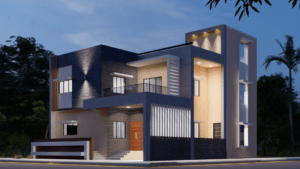
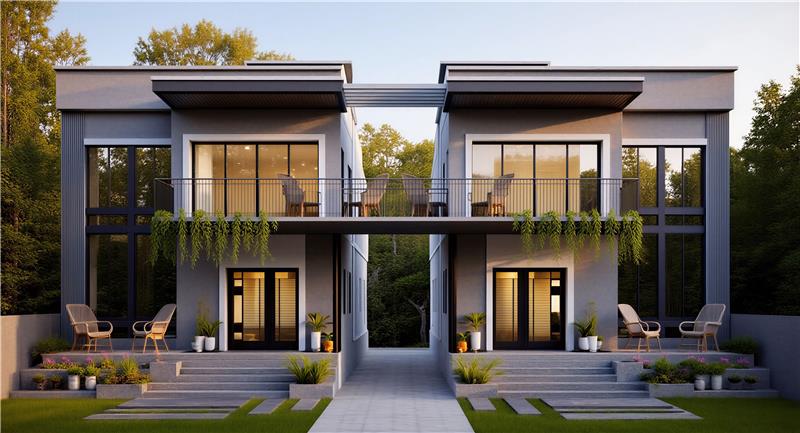
Architects can use balconies, fins, screens, textures, pergolas and other design elements to create an attractive front elevation while managing sunlight.
Suitable for Different Plot Configurations
West-facing homes can be designed for many plot sizes and requirements.
The floor plan can be customized around:
- Plot width
- Plot depth
- Road location
- Parking
- Number of bedrooms
- Number of floors
- Family requirements
Can Be Designed According to Vastu
A west-facing house does not prevent homeowners from following traditional Vastu preferences.
The entrance and internal layout can be planned with Vastu considerations during the design stage.
Can Provide Good Ventilation and Privacy
With proper window placement and open spaces, a west-facing house can have good airflow and privacy.
The exact approach depends on the site and surrounding properties.
Common Problems With West Facing Houses
West-facing homes are not automatically problematic, but poor planning can create issues.
Excessive Afternoon Heat
Problem: Large western windows without shading can increase indoor heat.
Solution: Use suitable shading, glazing, balconies, louvers, landscaping and insulation.
Incorrect Main Entrance Placement
Problem: Choosing the entrance only because the house faces west can ignore the exact location of the door.
Solution: Evaluate the entrance location and complete floor plan together.
Poor Cross Ventilation
Problem: Rooms may become hot and uncomfortable if there is not enough airflow.
Solution: Plan windows and openings to support cross ventilation where the site allows it.
Poorly Planned Windows
Problem: Large west-facing windows can create glare and heat.
Solution: Use appropriate window sizes, shading and glazing based on the local climate.
Following Vastu Without Considering the Actual Plot
Problem: Copying a Vastu layout from another house may not work for your plot.
Solution: Start with your actual plot dimensions, road position, setbacks, family requirements and structural needs.
Choosing a House Only Based on Rashi
Problem: Rashi alone cannot describe the complete property or an individual’s complete birth chart.
Solution: If astrology is important to you, consider your broader birth chart along with the actual house plan and traditional Vastu principles.
West Facing House Vastu Dos and Don’ts
| Do | Don’t |
|---|---|
| Check the exact entrance position | Don’t judge the house only by its facing |
| Plan for afternoon heat | Don’t ignore western sunlight |
| Consider the complete floor plan | Don’t rely only on Rashi |
| Provide adequate ventilation | Don’t block useful airflow |
| Use suitable shading | Don’t leave large west-facing windows unprotected |
| Consider the plot and road position | Don’t copy another house blindly |
| Plan Vastu requirements early | Don’t wait until construction is complete |
West Facing House vs East Facing House
East and west-facing homes both have their own design considerations.
| Feature | West Facing House | East Facing House |
|---|---|---|
| Main front sunlight | More afternoon/evening exposure | More morning exposure |
| Heat management | Western heat needs attention | Different solar exposure |
| Vastu suitability | Depends on planning | Depends on planning |
| Entrance | Exact position matters | Exact position matters |
| Rashi suitability | Depends on traditional system | Depends on traditional system |
| Design approach | Shading and ventilation are important | Morning light and heat management are important |
Is East Facing Always Better Than West Facing?
No.
An east-facing house is not automatically better for every homeowner, and a west-facing house is not automatically worse.
The best choice depends on:
- Plot orientation
- Road position
- Entrance location
- Floor plan
- Climate
- Sunlight
- Ventilation
- Family requirements
- Traditional Vastu preferences
- Individual astrology preferences
A well-designed west-facing house can be more comfortable and functional than a poorly designed east-facing house.
Does Rashi Matter More Than Vastu?
Rashi and Vastu answer different questions.
What Is Rashi?
Rashi is an astrology-based concept connected with a person’s birth details and Moon sign.
People following traditional astrology may use Rashi and other birth-chart factors when making decisions about homes, marriage, careers and other parts of life.
What Is Vastu?
Vastu is a traditional system focused on the arrangement and orientation of buildings.
It considers factors such as:
- Directions
- Entrance
- Rooms
- Plot shape
- Open spaces
- Internal arrangement
What Should a Homeowner Consider?
If you want to consider both traditions, look at:
Rashi + birth chart + plot orientation + entrance + floor plan + practical building design
This gives you a much broader basis for making a decision than using Rashi alone.
How to Check Whether a West Facing House Is Suitable for You
If you already own a west-facing plot or are considering buying one, use this checklist.
Step 1: Check the Direction
Confirm the plot orientation using a reliable compass.
Step 2: Check the Road Position
Identify which side of the plot has the road.
Step 3: Check the Plot Shape
Look at the width, depth and overall shape of the plot.
Step 4: Check the Main Entrance
Identify exactly where the main door will be positioned.
Step 5: Check the Floor Plan
Review the placement of:
- Living room
- Bedrooms
- Kitchen
- Toilets
- Staircase
- Pooja room
- Parking
- Open spaces
Step 6: Consider Your Rashi
If you follow astrology, use your Rashi as one traditional factor rather than the only deciding factor.
Step 7: Consider Sunlight and Ventilation
Pay particular attention to the western side because of afternoon sunlight.
Step 8: Get the Plan Reviewed Before Construction
If Vastu is important to you, discuss your preferences while the plan is still being designed.
Making changes before construction is usually easier than trying to correct a completed house.Get a West Facing House Designed for Your Plot
Have a west-facing plot and want a house plan that fits your family requirements?
A good house plan should consider more than just the direction of the plot. The design can be planned around your plot size, road position, number of floors, BHK requirement, parking, Vastu preferences, natural light, ventilation and front elevation.
SmartScale House Design can help with:
- Custom house plans
- 2D floor plans
- 3D elevation design
- Vastu-based house planning
- Plot-specific house designs
- Online architect consultation
You can share your plot dimensions, facing direction, road location, number of floors and requirements to get a house plan designed around your property.
Have a west-facing plot? Get a house plan designed specifically for your plot and requirements.