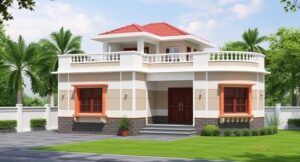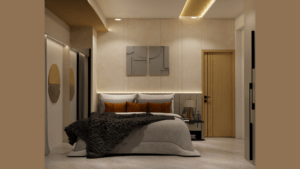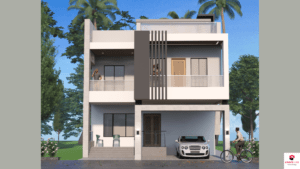
A 30 by 30 house design is built on a 900 sq ft plot and can comfortably accommodate a 2 BHK, 3 BHK, duplex, or rental house depending on the family’s requirements. With proper planning, homeowners can include car parking, modern elevations, spacious living areas, and future expansion options within this footprint.
What Is a 30 By 30 House Design?
A 30 by 30 house design refers to a home built on a plot measuring 30 feet wide and 30 feet deep, giving a total plot area of 900 square feet.
This plot size has become one of the most popular dimensions for residential construction across Indian cities and towns. It works well for compact urban plots while still offering enough room to plan a functional, well-ventilated home.
Homeowners choose this plot size because it fits urban and suburban locations without requiring large land investments, supports both 2 BHK and 3 BHK configurations, allows vertical expansion into a duplex or G+1 structure, and keeps construction and maintenance costs manageable compared to larger homes.
Is a 30×30 Plot Good for Building a Home?
Yes. A 900 sq ft plot is practical for a wide range of residential needs.
Small families with one or two children can build a comfortable 2 BHK with all essential spaces. First-time homeowners working with a limited budget find this plot size easier to develop in phases. Joint families often build duplex structures with separate floors for each generation. Investors use 30×30 plots to construct ground-floor rental units while living above.
A well-designed 30×30 home can include car parking, a living room, dining area, kitchen, two to three bedrooms, attached bathrooms, a balcony, and a utility space, all within the 900 sq ft footprint.
30 By 30 House Design Specifications
| Feature | Details |
|---|---|
| Plot Size | 30 ft × 30 ft |
| Plot Area | 900 sq ft |
| Built-up Area (Ground Floor) | 750 to 820 sq ft (after setbacks) |
| Typical Configuration | 2 BHK / 3 BHK |
| Slab Height | 10 ft to 10.5 ft (floor to ceiling) |
| Wall Thickness | 9 inches (exterior) / 4.5 inches (interior) |
| Floors | Ground Floor / G+1 |
| Foundation Type | Isolated Footing / Strip Footing |
| Parking | Yes (single car) |
| Ideal Family Size | 3 to 6 Members |
| Future Expansion | Possible with RCC column provision |
Modern 30 by 30 House Designs
The elevation style defines how a home looks from the street and directly affects resale value, curb appeal, and neighbourhood fit. For a 30×30 plot, three elevation styles consistently perform well. Each style also carries specific technical considerations around roof structure, material selection, and façade depth that homeowners should understand before finalising a design.
Kerala Style 30×30 House Design
Kerala-style elevations are among the most visually distinctive choices for a compact residential plot. The defining feature is the sloped or gabled roof, typically designed at a pitch of 30 to 45 degrees to allow effective rainwater runoff and natural ventilation through roof vents or overhangs.
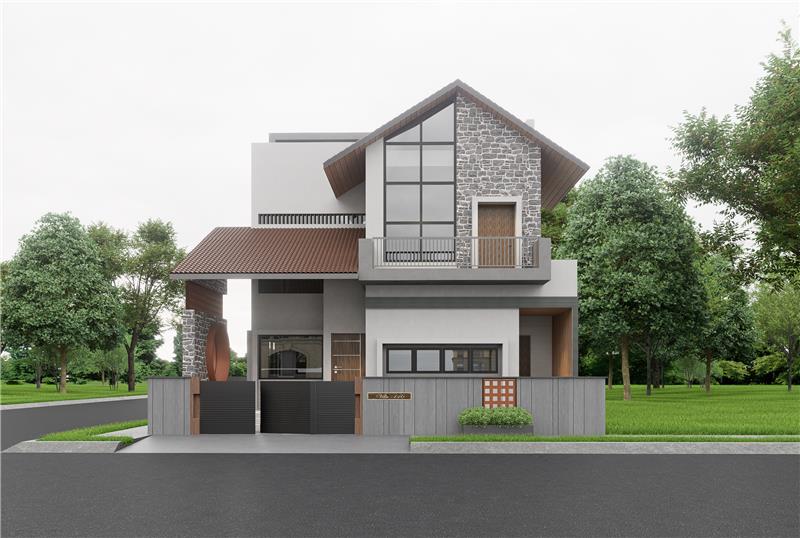
Technically, a Kerala-style roof on a 30×30 plot typically uses Mangalore clay tiles or concrete roofing tiles laid over timber or steel purlins. The roof overhang, usually extending 2 to 3 feet beyond the wall line, protects the exterior walls from rain and reduces direct solar heat gain on the façade, which keeps the interior cooler in humid climates.
The balcony in a Kerala-style elevation is typically supported by RCC brackets or wooden cantilever beams and features turned wooden railings or brick jali panels. Exterior walls are often finished with textured plaster or exposed laterite stone cladding, both of which perform well in coastal and high-rainfall regions.
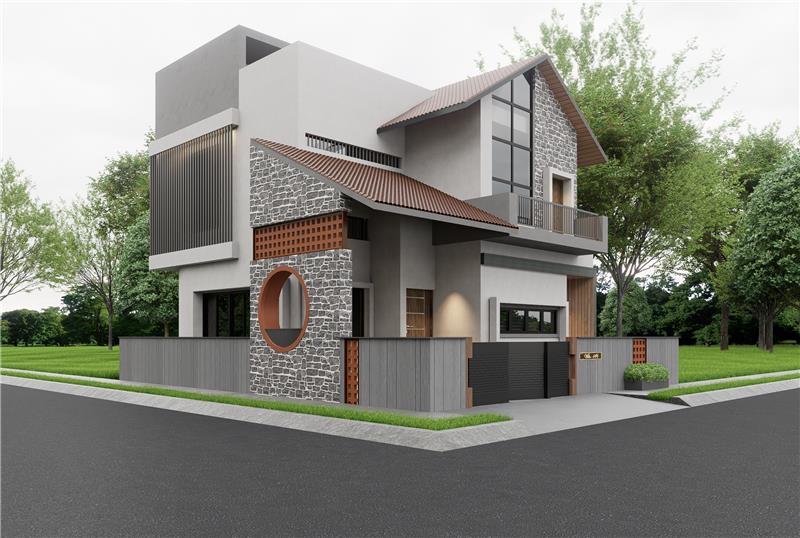
Ceiling heights in Kerala-style homes are usually kept at 10.5 to 11 feet to allow adequate air circulation under the sloped roof. The internal floor plan under this elevation needs to account for the roof pitch when planning rooms near the perimeter, as ceiling height at the edges can be lower in rooms directly under the slope.
This style suits families building in Kerala, coastal Karnataka, and high-rainfall regions of Maharashtra or Tamil Nadu. It also works for homeowners who want a home with traditional material warmth and lower long-term exterior maintenance
Contemporary 30×30 Elevation Design
Contemporary elevations are the most common choice for urban 30×30 plots across Indian cities. The design philosophy is built on geometric precision, clean transitions between materials, and a restrained use of colour and texture.
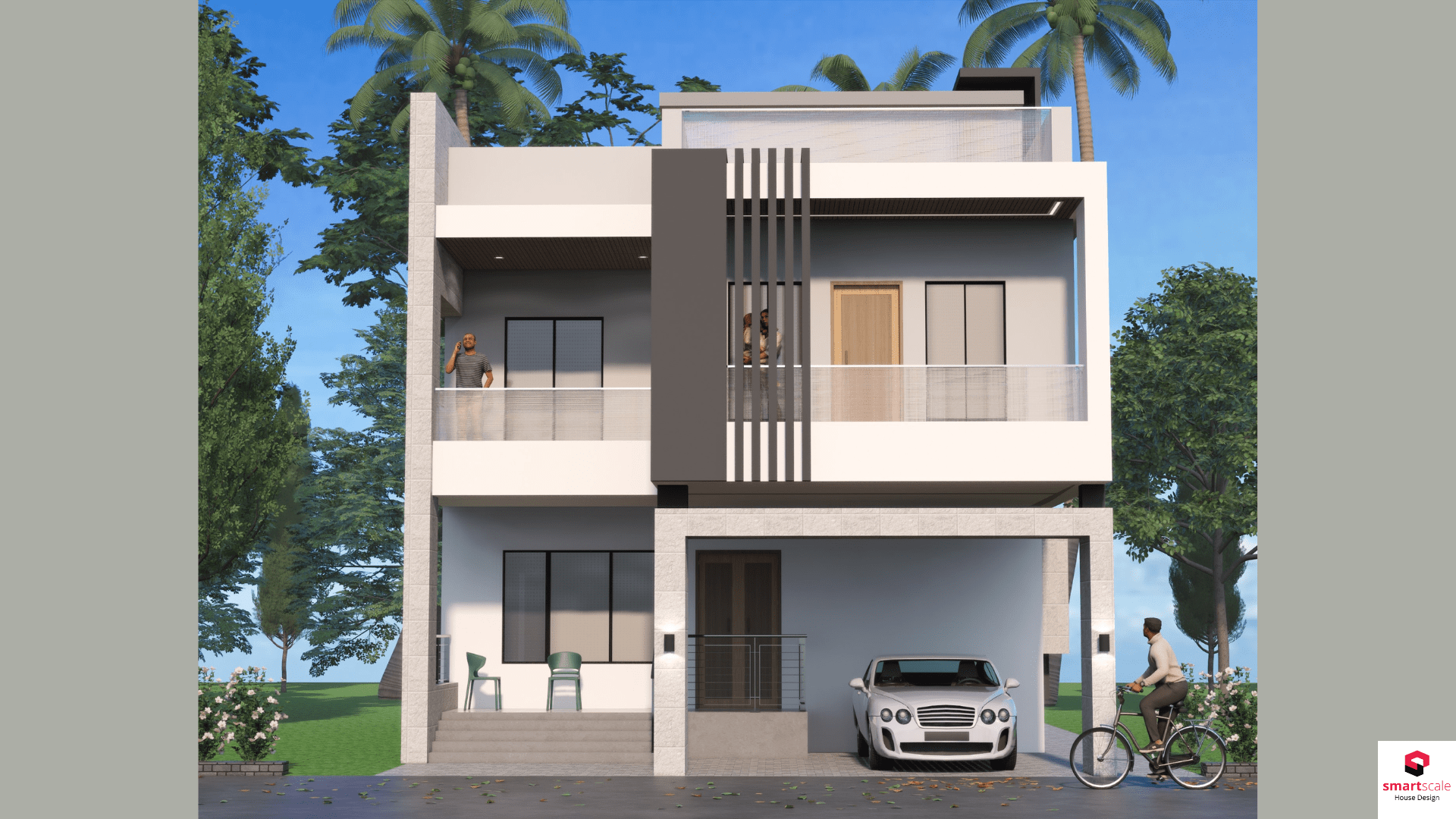
Technically, contemporary elevations on a 30-foot-wide plot use a flat or low-slope RCC slab roof with a waterproofing treatment layer, usually a polymer-modified bitumen membrane or crystalline waterproofing compound applied over the structural slab. The parapet wall along the roof perimeter is typically 2.5 to 3 feet tall and finished with a drip mould to prevent water streaking on the façade.
The façade itself typically uses a combination of two to three exterior finishes. Common pairings include textured sand-faced plaster with ACM (aluminium composite material) panel accents, or smooth cement plaster with stone cladding panels in basalt, sandstone, or granite. Colour choices stay in the white, grey, beige, and charcoal range to maintain the clean visual weight the style depends on.
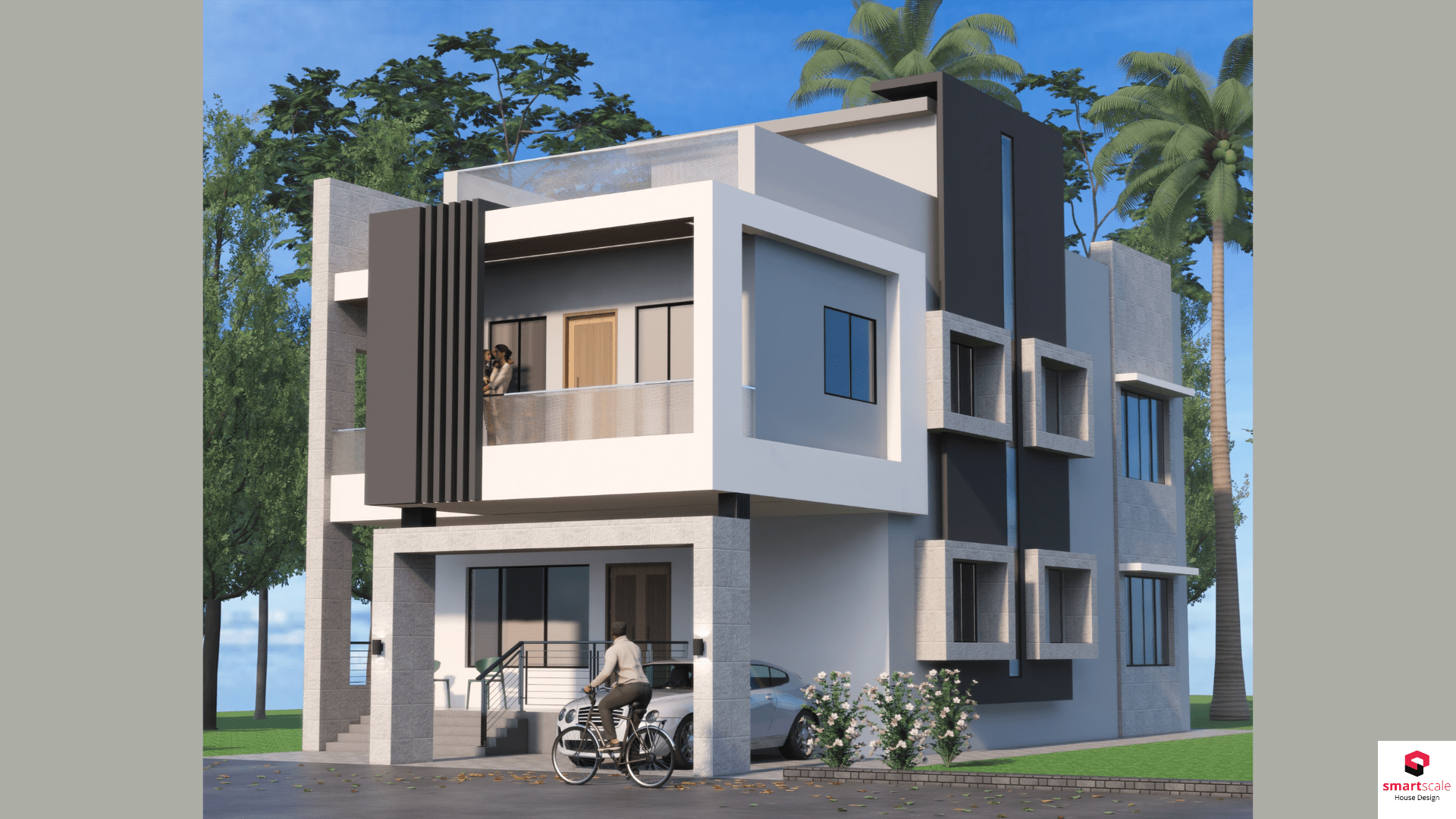
Glass balcony railings in contemporary designs are typically 12 mm toughened glass panels fixed in stainless steel or aluminium channels. These railings need proper channel depth of at least 100 mm and anchoring into the balcony slab edge beam to meet structural safety requirements.
Window placement in a contemporary 30×30 elevation is strategic. Large horizontal or floor-to-ceiling windows on the living room face maximise natural light while maintaining the flat-façade visual language. UPVC or aluminium sliding windows with 5 mm clear float glass or 4+4 mm double-glazed units are the standard specification.
This style works well for plots in Pune, Bangalore, Hyderabad, and similar urban centres where a modern, low-maintenance exterior is preferred.
30 by 30 House Design Double Floor
A double floor elevation on a 30 by 30 plot treats both floors as a single unified architectural composition rather than stacking two independent floors. This is a technical and aesthetic distinction that significantly affects how the home reads from the street.
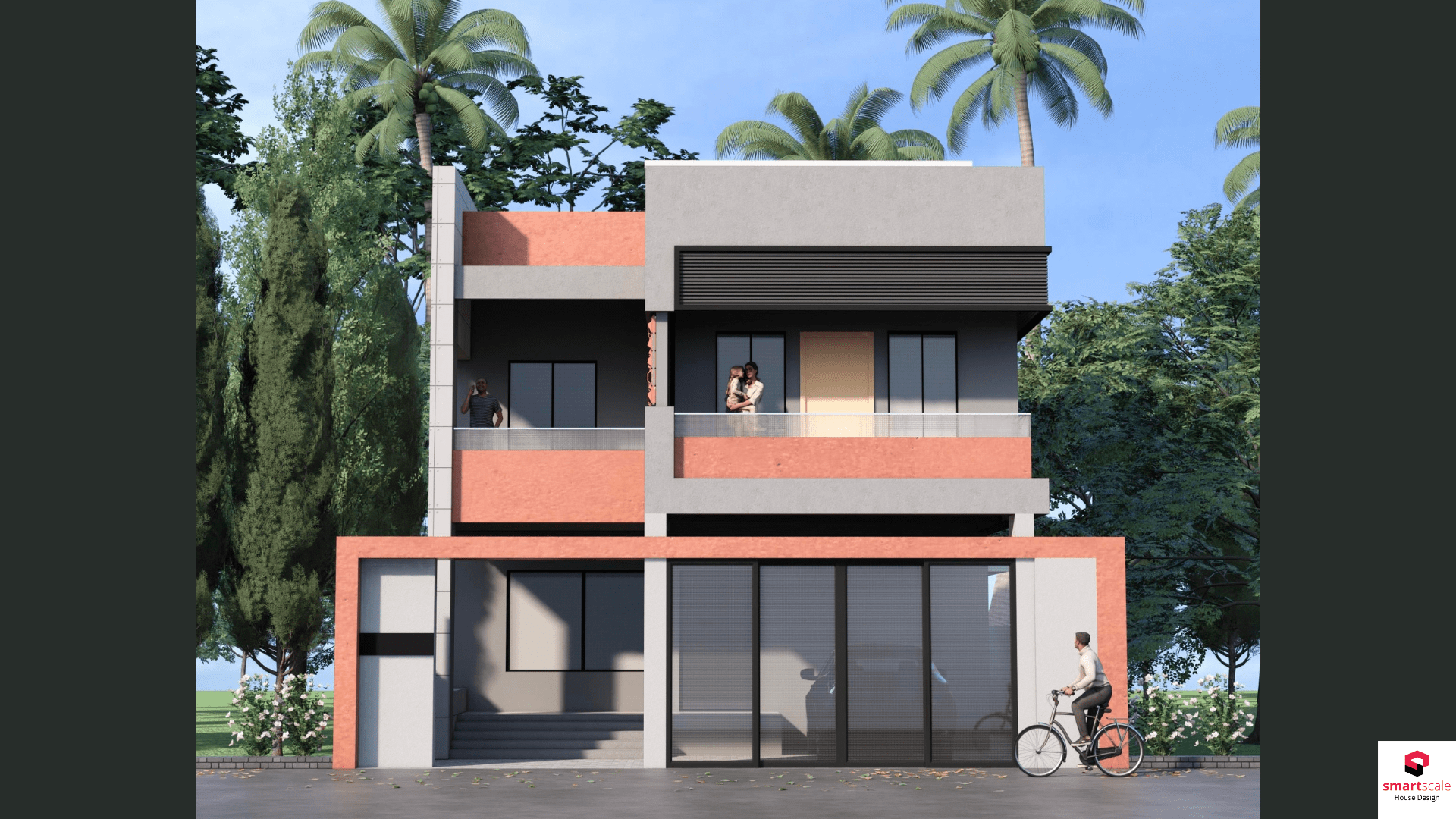
Structurally, a G+1 duplex on a 30×30 plot uses an RCC framed structure with isolated or combined footings depending on soil bearing capacity. The standard column grid for this plot size is typically 3 metres by 3 metres or 3 metres by 3.5 metres, giving four to six columns across the plan depending on the structural layout. Beam depth is usually kept at 300 to 450 mm to maintain slab-to-ceiling height above 9.5 feet on both floors.
The first-floor slab is a two-way RCC slab, typically 125 to 150 mm thick, designed for a live load of 2 kN/m² as per IS 456 standards. Staircase placement on a 30×30 plot needs careful planning, as the stair run and landing must fit within the built-up area without eating into bedroom or living room space. A dog-legged staircase with a 9-foot run and 150 mm rise per step is the most common configuration for this plot size.
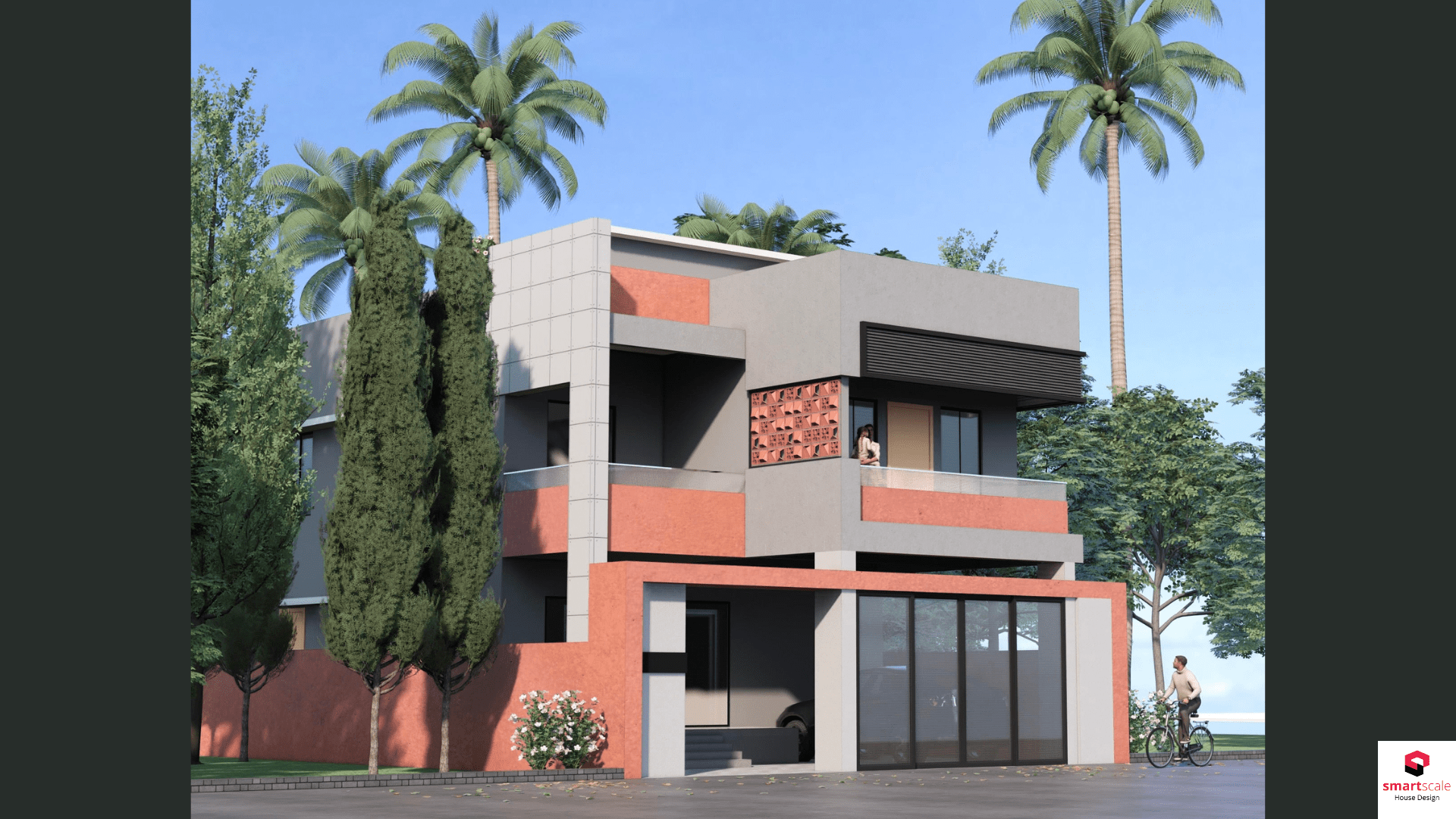
The duplex elevation typically uses vertical feature elements to visually connect both floors. These include double-height entrance porticos, vertical louvre panels, or stacked stone cladding that runs floor to floor on one section of the façade. The balcony on the first floor is usually cantilevered 1.2 to 1.5 metres beyond the building line and designed as a functional outdoor extension of the master bedroom or family lounge.
Exterior lighting is an often-overlooked technical element in duplex elevations. Linear LED cove lights, spotlights recessed into the soffit of the first-floor balcony, and wall washers on textured façade panels significantly improve night-time kerb appeal and require conduit planning at the construction stage.
This design suits homeowners building in jalgaon, Pune, and similar cities where plot sizes are moderate but families want a home with a premium visual presence and long-term resale value.
Best Floor Plan Options for a 30×30 Plot
Which floor plan works best for a 30×30 house?
The right floor plan depends on family size, lifestyle, and whether the home is single-storey or duplex. Three configurations are most commonly built on 900 sq ft plots.
2 BHK House Plan
A 2 BHK layout on a 30×30 plot is the most straightforward configuration and leaves adequate room for comfortable circulation throughout the home.
On a 900 sq ft plot, after accounting for mandatory setbacks (typically 3 feet on sides and 5 feet at the front depending on local municipal rules), the usable built-up area on the ground floor comes to approximately 750 to 810 sq ft. This space is sufficient to plan a living room of 180 to 200 sq ft, a kitchen of 80 to 100 sq ft, a master bedroom of 130 to 150 sq ft, a second bedroom of 110 to 120 sq ft, two bathrooms of 35 to 45 sq ft each, a utility area, and a small passage or foyer.
Room dimensions in a functional 2 BHK on this plot typically follow these standards: living room at 12 ft by 15 ft, master bedroom at 11 ft by 12 ft, second bedroom at 10 ft by 11 ft, kitchen at 8 ft by 10 ft, and bathrooms at 5 ft by 7 ft. These dimensions allow standard furniture placement without the rooms feeling cramped.
Layout includes a living room, kitchen, dining area, master bedroom, children’s bedroom, two bathrooms, and a utility area.
This plan works best for couples, small families, and retired homeowners who prefer manageable maintenance and easy movement within the home.
3 BHK House Plan
A well-planned 30×30 house can fit three bedrooms while maintaining adequate ventilation, storage, and circulation. The key is discipline in bedroom sizing. Rooms that are slightly smaller but well-proportioned with built-in wardrobes perform better in daily use than oversized bedrooms that leave no room for a functional living area.
To fit a 3 BHK within 750 to 810 sq ft of usable built-up area, the typical room distribution keeps the master bedroom at 10 ft by 11 ft, the second bedroom at 9 ft by 10 ft, and the third bedroom at 9 ft by 9 ft. The living and dining area is planned as a combined space of approximately 150 to 170 sq ft rather than two separate zones. The kitchen is kept at 7 ft by 9 ft with an L-shaped or straight counter layout.
Ventilation planning becomes critical in a 3 BHK on this plot. Each bedroom should have at least one cross-ventilation window opening to an exterior wall or light well. Bathrooms need either an exterior window or a mechanical exhaust fan with a duct run. Corridor widths should not fall below 3 feet to allow comfortable movement between rooms.
Layout includes a living room, dining area, kitchen, master bedroom, two additional bedrooms, a common bathroom, and an attached bathroom to the master bedroom.
This configuration suits growing families, joint families living under one roof, and homeowners who want the flexibility to use the third bedroom as a home office or guest room.
Duplex House Design
A duplex on a 30×30 plot divides the home across two floors and effectively doubles the living area to approximately 1,500 to 1,600 sq ft of total built-up area across both floors. This is a practical solution for joint families or for homeowners who want to generate rental income from the ground floor while occupying the first floor independently.
The ground floor in a duplex plan typically covers parking for one car (approximately 9 ft by 18 ft), a living room, kitchen, dining area, and a guest bedroom or single-occupancy rental unit. The first floor holds the master bedroom with an attached bathroom, children’s room, a family lounge or study, and a balcony.
The staircase connecting both floors is usually placed along an interior wall to avoid losing exterior wall space that would otherwise serve a bedroom or the living area. A standard dog-legged staircase on this plot requires approximately 40 to 50 sq ft of floor area per floor, including the landing.
Waterproofing the first-floor slab (which acts as a roof over the ground floor) is a critical construction step. A three-layer waterproofing system, typically a bonding agent followed by a polymer-modified screed and a final waterproofing membrane, is the recommended specification for Indian climatic conditions.
Ground floor includes parking, living room, kitchen, dining area, and a guest bedroom. The first floor holds the master bedroom, children’s room, family lounge, and balcony.
This layout creates natural privacy between floors and makes the home future-ready for extended family arrangements or rental income.
Vastu Tips for 30×30 House designs
Vastu compliance is a priority for most Indian homeowners, and a 30×30 plot allows for Vastu-aligned layouts without compromising on functionality.
| Space | Vastu Direction | Practical Reason |
|---|---|---|
| Main Entrance | North or East | Morning sunlight, positive energy flow |
| Kitchen | Southeast | Fire element alignment, avoids west heat |
| Master Bedroom | Southwest Corner | Stability, heavier wall mass to the south |
| Pooja Room | Northeast Corner | Maximum morning light, quiet zone |
| Staircase | South or West Zone | Keeps north and east zones open and light |
| Bathrooms | Northwest or South | Avoids northeast and brahmasthana |
| Living Room | North or East | Natural light through the day |
Following these placements from the planning stage is easier than retrofitting them later. A Vastu-compliant layout on a 30×30 plot also tends to support natural light and cross-ventilation, which are practical benefits independent of the traditional reasoning behind the guidelines.
Construction Cost of a 30 By 30 House Design
How much does it cost to build a 30×30 house in India?
Construction cost on a 30×30 plot depends on location, material quality, number of floors, structural complexity, and interior specifications. There is no single fixed rate, but most homeowners plan budgets based on per-square-foot construction rates applicable to their city.
| Finish Quality | Estimated Cost Per Sq Ft | Approx Total (900 sq ft, Ground Floor) |
|---|---|---|
| Basic | ₹1,700 to ₹2,000 | ₹15.3 lakh to ₹18 lakh |
| Standard | ₹2,000 to ₹2,500 | ₹18 lakh to ₹22.5 lakh |
| Premium | ₹2,500 to ₹3,500+ | ₹22.5 lakh to ₹31.5 lakh+ |
Basic construction covers standard brick and mortar structure, cement plaster finish, basic sanitary fittings, and simple flooring. Standard construction adds vitrified tile flooring, modular kitchen frames, better sanitary ware, and exterior texture paint. Premium construction includes imported tiles, full modular kitchen, concealed electrical conduits, UPVC windows, and a designer elevation treatment.
For a G+1 duplex, the total built-up area increases to approximately 1,500 to 1,600 sq ft, and the construction budget scales accordingly. Structural costs including foundation, columns, beams, and first-floor slab typically add ₹4 to ₹6 lakh over a single-floor build, depending on soil conditions and structural design.
These are approximate figures. Actual costs vary by city, contractor, and material choices. A detailed estimate from a local architect before finalising the design is strongly advisable
Common Design Mistakes to Avoid in a 30×30 House
Ignoring Ventilation
Poor airflow makes compact homes feel smaller and less comfortable year-round. Cross-ventilation should be planned at the floor plan stage by ensuring opposing windows on at least one axis of each room. Bathrooms and kitchens without exterior openings need mechanical exhaust planning from the start.
Oversizing the Bedrooms
Large bedrooms reduce space available for living and dining areas, which are the shared spaces families actually use daily. Bedrooms should be functional with built-in storage rather than oversized with empty floor area.
Skipping Storage Planning
Built-in wardrobes, overhead loft storage above door frames, and utility cabinets should be part of the architectural drawing set from the beginning. Retrofitting storage into a compact home is expensive and often forces structural changes.
No Structural Provision for Expansion
If a second floor is a possibility in the future, the foundation size and RCC column design must account for that additional load from day one. Strengthening an existing structure to carry a second floor costs significantly more than designing for it upfront.
Choosing the Elevation Before Finalising the Layout
Many homeowners select a front elevation style first and then struggle to make a workable floor plan fit behind it. The interior layout should always drive design decisions. Structural column positions, staircase placement, and room arrangement determine what the elevation can realistically achieve.
Undersizing Windows
On a 30-foot-wide plot, natural light is directly linked to window placement and sizing. Windows that are too small or placed on secondary walls reduce light and ventilation. As a general guideline, window area should be at least 10 to 15 percent of the floor area of the room it serves.
Why Homeowners Choose SmartScale House Design
Designing a 30×30 house requires balancing space efficiency, ventilation, aesthetics, Vastu compliance, structural planning, and future expansion, all within a compact 900 sq ft footprint.
SmartScale House Design provides customised floor plans, 3D elevation designs, structural drawings, Vastu-compliant layouts, online architect consultation, and construction-ready drawing sets. Whether a family is planning a compact 2 BHK or a modern duplex, SmartScale helps homeowners make confident, informed decisions before construction begins.